Bulk T-shirt shrinkage becomes difficult to discuss when buyer and factory use different measurements or care procedures. One team may check body length after tumble drying, while another measures width after line drying. A statement that shrinkage is acceptable leaves too much interpretation. The solution is an agreement connecting the method, result and garment-fit requirement.
Define measurement points, washing and drying conditions, calculation and acceptance requirements. Review relevant dimensions separately and identify the sample. Use a recognized test method where formal evidence is needed rather than assuming a universal tolerance from a material description.
Start with usable fit
Use the approved garment measurements and intended wearer needs. Identify which dimensions are important for fit, such as length, chest width or sleeves. A change can matter differently at each location, so a single summary number may hide a relevant issue.
Distinguish initial measurement tolerance from dimensional change after care. A garment beginning near one edge of its allowed size range may have a different practical outcome after washing. Review both requirements as part of the complete product brief.
Define the measuring points
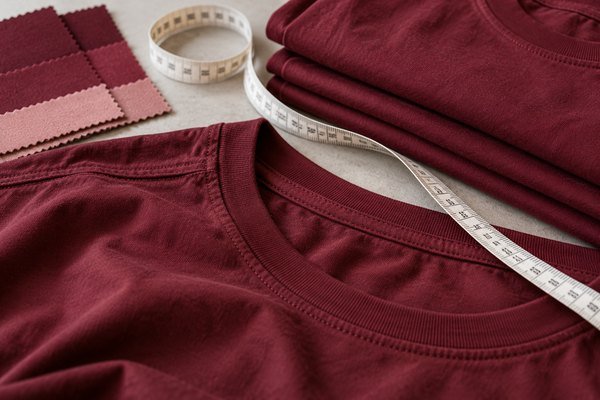
Use a diagram or an exact description of each location. Specify how the garment is prepared and how the tape is positioned. Terms such as body length can be interpreted differently without a shared reference.
Avoid stretching the garment during the review. Use the same approach before and after care. If several reviewers are involved, align their technique. Otherwise an apparent change may reflect handling rather than what happened to the fabric.
Include the care procedure
A dimensional result is associated with the specified washing and drying combination. Ask for those conditions with the values and sample description. A percentage without its method is incomplete for a meaningful comparison.
ISO 5077 describes determination of dimensional change following appropriate specified washing and drying procedures. Its scope is a measurement method, not a guarantee of unchanged garments. Ask qualified personnel to establish the relevant procedure where a formal report is required.
Calculate the result transparently
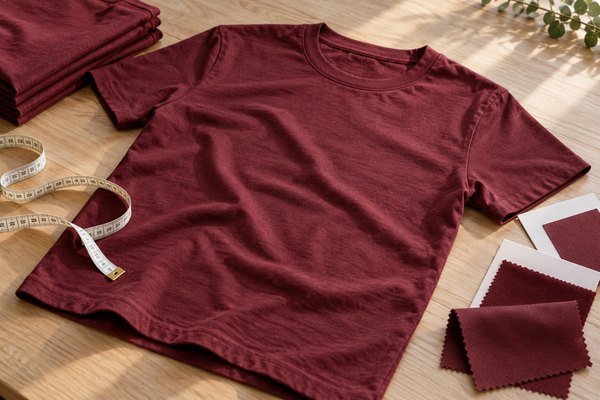
One simple calculation is the after-care dimension minus the before-care dimension, divided by the original dimension and multiplied by one hundred. State the sign convention so reviewers understand whether a negative number represents reduction.
For an illustrative arithmetic example, a measurement moving from 70 cm to 68.6 cm is a two percent reduction. This is not an acceptance recommendation. Compare the actual result with the requirement agreed for that garment and care procedure.
Set product-specific requirements
Agree limits before reviewing the sample. Do not copy a value from an unrelated garment and assume it fits the program. Consider initial dimensions, intended ease, use and customer expectations. Keep the requirement precise enough for both parties to apply.
Observe the complete shirt as well. Dimensional values do not fully describe twisting, seam appearance or print condition. Add relevant observations so a numerical result does not conceal another issue that affects usability.

Investigate before enlarging the pattern
If the result misses the agreed requirement, share the measurement and care records with the supplier. Preserve the actual sample. Ask for an assessment of material, finishing and construction before deciding which attribute to change.
Simply making the initial shirt larger can create poor fit before washing without resolving the cause. Review the corrective action on another identified sample. The target is a garment suitable across its intended care routine, not a favorable result on one isolated dimension.
Connect the sample to the bulk specification
Record material, finish, measurements, construction, care instruction and approved sample reference. A change to fabric or finishing may need another dimensional review. Do not allow a substitute to inherit approval only because its composition or nominal GSM sounds similar.
Make the supplier’s acknowledgement part of the order file. Confirm which version will be produced and how material changes will be communicated. This keeps the test evidence connected to the actual goods rather than an earlier development option.
Preserve an understandable result
Keep before-and-after values, calculation, care method and decision together. A future colleague should be able to understand the result without relying on the original conversation. Note any limitation or unresolved condition.
The technical buying recommendation is to prioritize a shared method. An unsupported phrase such as preshrunk quality cannot replace a defined procedure and a usable-fit assessment. A clear record reduces disagreement and supports repeat purchasing.
Frequently asked questions
Does preshrunk mean no future dimensional change?
Do not assume it. Ask what processing was used and review the actual garment.
Should length and width be combined?
Record them separately so relevant changes remain visible.
Can a household review replace formal testing?
It can inform buying decisions but should not be presented as a formal report without the appropriate method and controls.
Is every change unacceptable?
Assess it against the product-specific requirements agreed before review.
Agree the dimensional brief
Send Polltee your garment measurements, care expectations and acceptance needs. Request an identified sample and a shared review plan before bulk release.
Further reading: ISO 5077 dimensional-change method.
Related buying resources
Review customization options · Read the related purchasing guide · Discuss your B2B project with Polltee