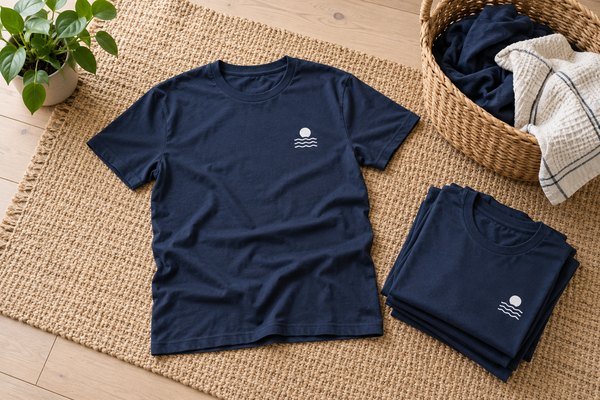
Wash testing promotional T-shirts helps buyers review the garment beyond its first appearance. A fresh sample can look convincing while leaving questions about fit, seams and print after care. The review is useful when buyer and supplier agree the procedure and record the same observations. Washing casually and reporting that a shirt changed does not create a reproducible approval process.
Identify the sample, record its initial condition, follow an agreed washing and drying procedure, and compare the result with a retained reference. Separate a practical purchasing review from formal laboratory testing. Define acceptance requirements before deciding whether a result is suitable.
Step 1: define the review’s purpose
List what needs to be assessed for this order. Relevant questions may concern dimensions, seam appearance, twisting, print condition or color. Select the review according to intended use rather than copying a long checklist from another garment.
Decide whether the activity is an informal sample review or a formal test. If the customer requires a recognized method or documented claim, involve qualified personnel. ISO 5077 addresses dimensional change after specified washing and drying procedures; it does not establish a universal pass limit for every T-shirt.
Step 2: identify the exact sample
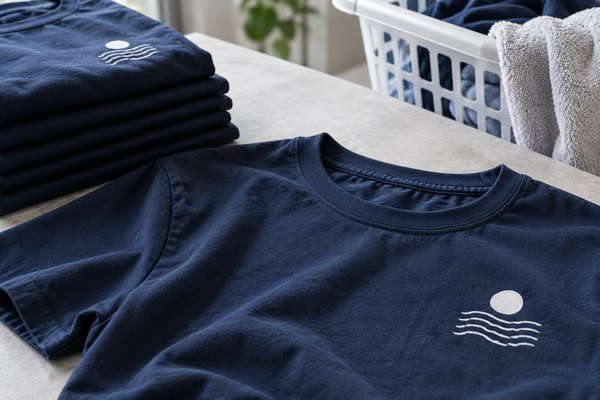
Record fabric, composition, nominal weight, size, garment shade, artwork and decoration process. Mark the sample so it cannot be confused with an earlier version. Include the care instruction intended for the finished garment.
Retain an unwashed reference where practical. Photograph relevant areas before care, including any existing issue. Images support the record, but dimensions should be measured when they are part of the requirement. Keep each measurement point clearly described.
Step 3: establish the initial condition
Prepare and measure the garment using the agreed approach. Avoid stretching it while placing the tape. If several people perform measurements, align their technique so reviewer differences do not appear as product changes.
Note seam alignment and print condition before washing. Separate an existing workmanship issue from a later care observation. Record factual findings alongside any preferences about feel or appearance, rather than treating all comments as equivalent evidence.
Step 4: agree the care procedure
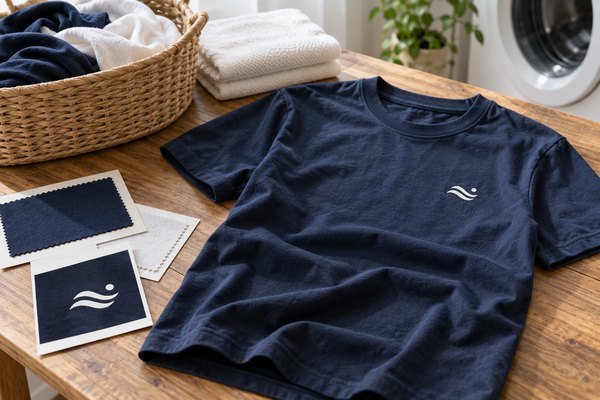
Document relevant settings, detergent, load arrangement and drying approach for the chosen review. Follow the agreed procedure and approved care instruction. Do not compare garments handled differently and assume that every difference comes from the product.
For formal testing, ask the laboratory to confirm the applicable method and report information. Do not describe a household wash as compliance with a standard unless the required controls are actually followed. Informal reviews remain useful when their scope is accurately stated.
Step 5: compare the same locations
Use the agreed post-care preparation and repeat the original measurement points. Record before and after values. Review print edges, surface appearance, seams and overall shape against the initial condition.
Assess results against the requirements established for this order. If no criteria were agreed, discuss the findings before declaring a pass or failure. A numerical change does not explain by itself whether the garment remains suitable for the wearer.

Step 6: investigate an unsatisfactory result
Preserve the sample and share the review record with the supplier. Ask for an assessment of the actual material, finishing, construction, decoration and care procedure. The corrective action should address the cause rather than merely improving the appearance of one photograph.
Where a revision affects the product, request another identified sample and repeat the relevant review. A fabric substitution should not be used to solve a print problem without checking the rest of the garment. Keep the revised version separate from the first approval reference.
Step 7: connect the evidence to bulk release
Store measurements, photographs, procedure, sample identity and approval outcome together. Identify which version may proceed to production. Keep unresolved conditions visible rather than letting a general approval message hide them.
Ask whether the bulk configuration matches the reviewed sample. A different material, print system or construction may require another assessment. The record should help the factory understand what was approved and help a future buyer interpret the findings.
Use a repeatable record
The quality recommendation is to build a clear, modest procedure instead of an impressive demonstration with unknown conditions. Evidence becomes useful when another reviewer can understand which garment was checked and how.
Agree who owns the review and where its results will be stored. This makes later comparison more practical if the delivered product appears different. A short completed sheet can provide more value than a long checklist with no sample identification.
Frequently asked questions
Does one wash prove long-term durability?
No. It provides information about that review. Use a suitable plan for the intended claim or service expectation.
Should I review fabric or the complete shirt?
Both can be relevant. A garment review includes construction and decoration that fabric alone cannot represent.
Who sets the acceptance requirements?
Buyer and supplier should agree them, with appropriate technical input where needed.
Should care instructions be approved too?
Yes. They should suit the actual finished garment and the intended care review.
Prepare a sample care plan
Share your intended use, care expectations and required evidence with Polltee. Agree the sample identity and review approach before releasing bulk production.
Further reading: ISO 5077 dimensional-change method.
Related buying resources
Review customization options · Read the related purchasing guide · Discuss your B2B project with Polltee