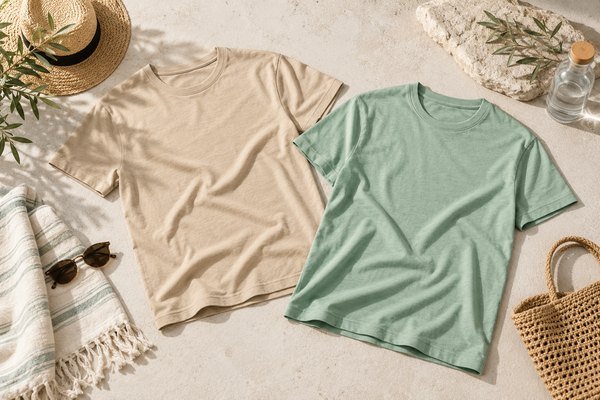
Hot-weather campaign T-shirts should be selected around the work people will do. A team walking between neighborhoods has different circumstances from staff inside an air-conditioned venue. Duration, movement, shade and opportunities to change clothing all affect the brief. A comfortable-looking catalog garment does not answer those operational questions, and a fiber label alone does not establish performance.
Choose fabric, fit and decoration together for the actual field conditions. Review complete samples with representative users and document the findings. Keep specific performance claims tied to suitable evidence, and coordinate ordinary apparel choices with the program’s heat-management arrangements.
Describe a realistic shift
Write a short description of the wearer’s day. Identify walking, standing, carrying materials or moving between indoor and outdoor locations. Record the expected duration and whether the garment will be worn once or repeatedly.
For an illustrative program, compare mobile volunteers with reception staff before deciding whether one shirt serves both. A shared garment simplifies purchasing, but that advantage should be considered alongside actual differences in use. Do not create variants without a practical reason.
Ask what the fabric description means
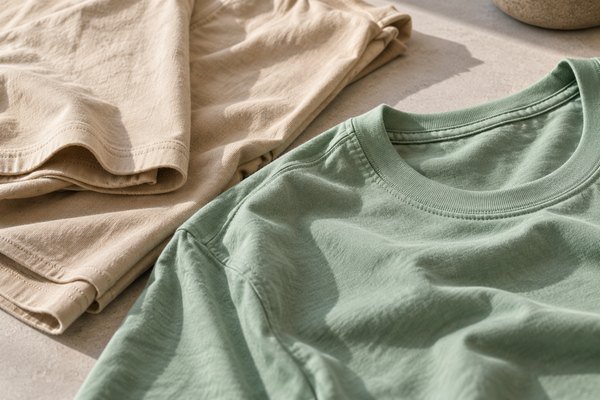
Request composition, nominal weight, knit construction and finishing details. Terms such as breathable or quick-dry need an explanation. Ask whether they are general sales descriptions or measured properties of the exact material.
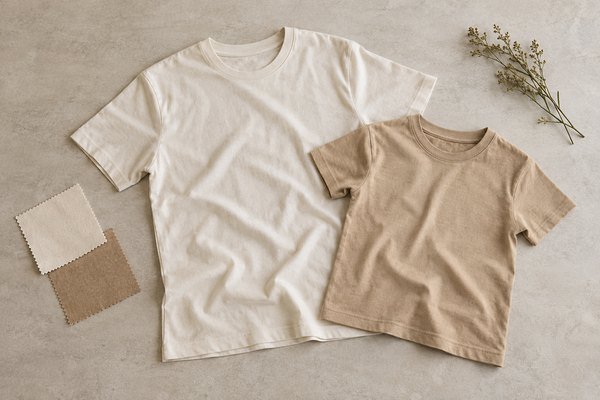
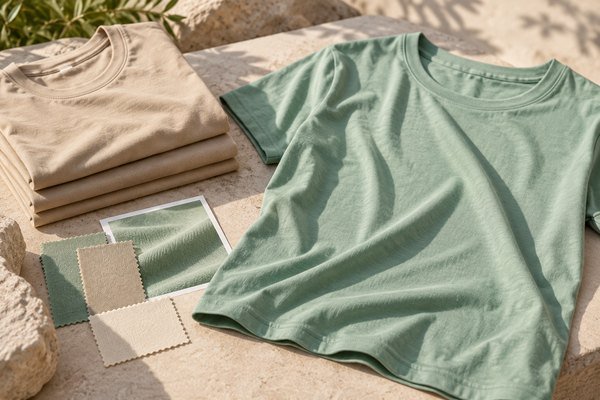
Compare identified samples. Review feel, opacity and handling rather than anonymous swatches with attractive labels. Where a performance requirement is essential, discuss appropriate evidence. Do not build a program-wide promise on an undocumented term.
Review fit during movement
Check body width, shoulders, sleeves and length using defined garment measurements. Ask representative users to move as they would in their roles. A sample that feels comfortable while standing still may be awkward during reaching or carrying.
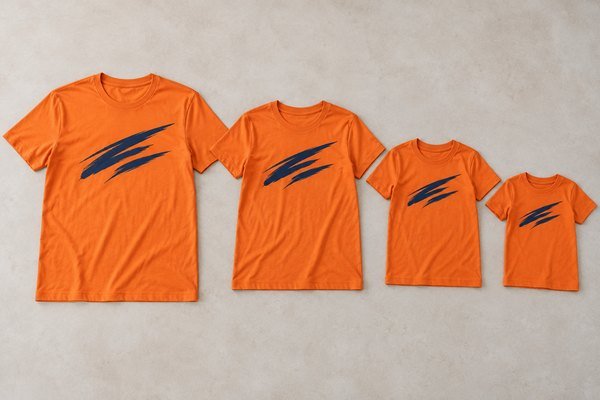
Provide usable size information before collecting selections. Do not rely only on familiar letter sizes. If several silhouettes are offered, keep their charts separate. Accurate selection can be more useful than switching material to address a problem caused by fit.
Assess artwork coverage
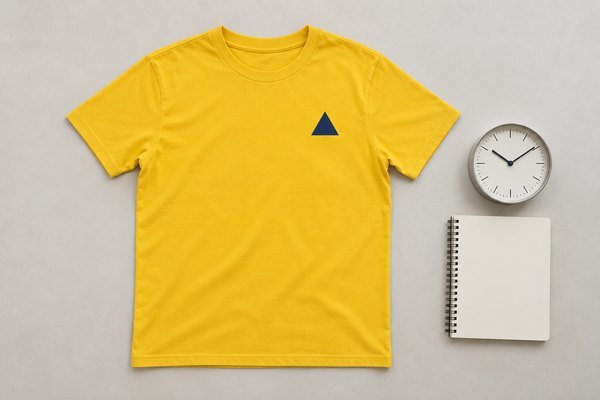
Review the planned graphic on the actual shirt. A large decorated area can change feel and handling. Ask whether a smaller mark or another placement can serve the same communication goal without removing necessary identification.
The designer and operations team should define what must be recognizable under normal use conditions. Approve the complete physical layout. A fabric sample and an unrelated graphic mockup do not show how the final garment will behave together.
Run a modest wearer review
Select a representative group of people who choose to participate. Describe the conditions and ask consistent questions about movement, neckline comfort, feel and practicality. Record the garment version and size used.
Keep observations separate from technical claims. A few favorable comments do not prove a cooling or moisture-management property. Use feedback to improve the purchasing brief, and request suitable testing if the buyer needs to make a formal performance statement.
Plan care and repeat use
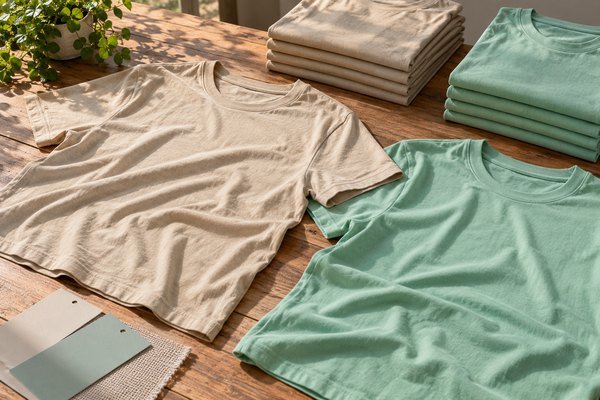
Confirm how users are expected to wash and dry the garment. Review the instruction against fabric, print and trims. Where repeated use matters, include a suitable sample care review before committing to bulk production.
Discuss whether staff working several shifts need spare garments. Calculate that need from the actual role plan and local arrangements. It is a distribution choice, not proof that a particular fabric is inadequate. Record the reason behind any spare allocation.
Prepare a complete field specification
Include roles, wearing duration, setting, composition, weight, measurements, decoration coverage and care expectations. Attach the approved sample and identify who can authorize revisions. Make the brief usable by both the supplier and issue team.
If an available substitute is proposed, review it against those needs. A similar product name does not establish equivalence. Consider whether material, fit, artwork or care has changed before allowing the substitution to inherit earlier approval.
Review what happened after use
Ask field teams whether garment selection and issue worked as expected. Record repeated concerns with the relevant version and circumstances. Distinguish product problems from inaccurate size estimates or unclear distribution instructions.
The field recommendation is to remove assumptions early and learn from actual use. A shirt can match a factory description while missing the operational need if the buyer never explained the wearer’s day. A focused sample review helps identify that gap.
Frequently asked questions
Is the lightest fabric always best?
No. Compare construction, coverage, fit, decoration and intended use.
Can every polyester shirt be called quick-dry?
Use a specific claim only when the exact product has suitable supporting evidence.
Should indoor and outdoor staff use different garments?
Only where a clear operational benefit justifies the added complexity.
Can a T-shirt solve heat risk?
Coordinate clothing with the event’s appropriate heat-management arrangements.
Review a field-uniform option
Send Polltee the roles, conditions, quantity and artwork. Ask for identified complete samples and a practical review before approving the program.
Related buying resources
Review customization options · Read the related purchasing guide · Discuss your B2B project with Polltee