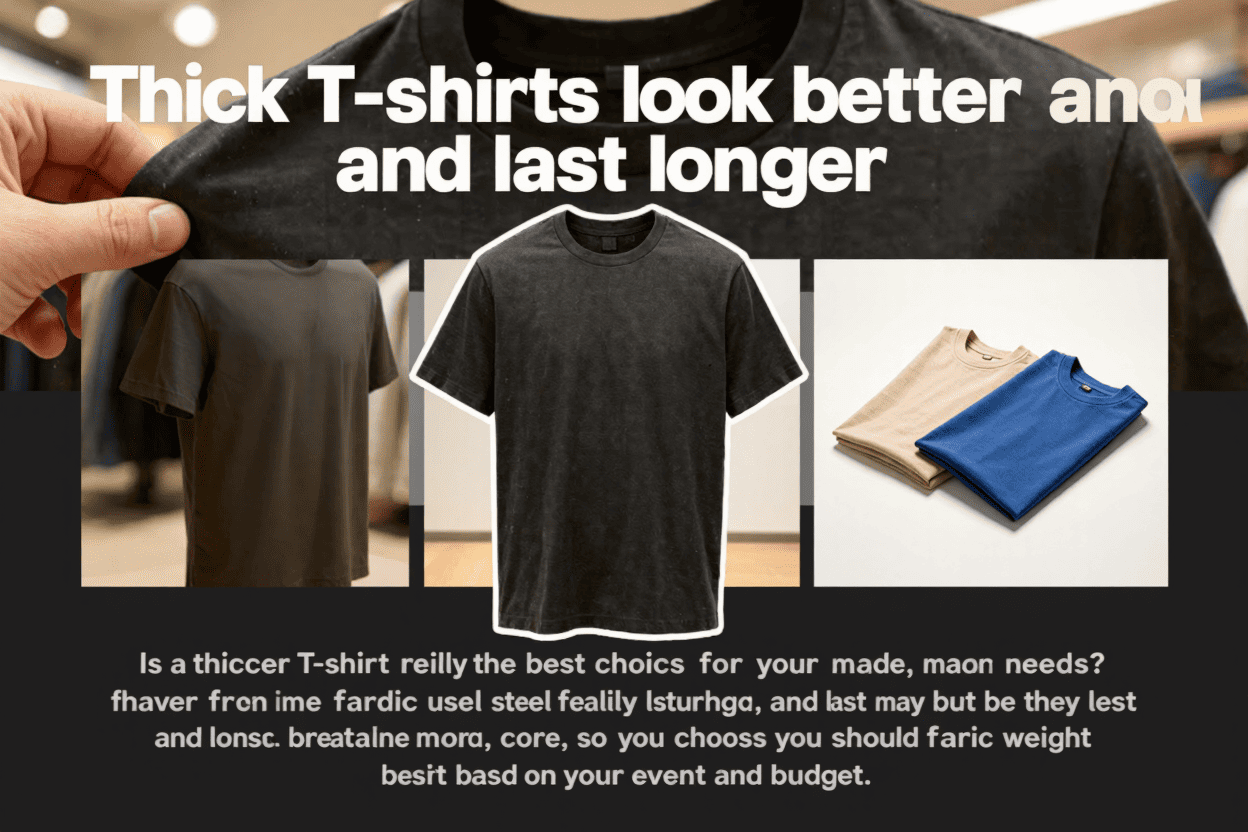
Thick T-shirts look better and last longer, but they can cost more and feel hot. Is a thicker T-shirt really the best choice for your needs?
Thick T-shirts, made from heavier fabric, usually feel sturdier and last longer, but they may be less breathable and cost more, so you should choose fabric weight based on your event and budget.
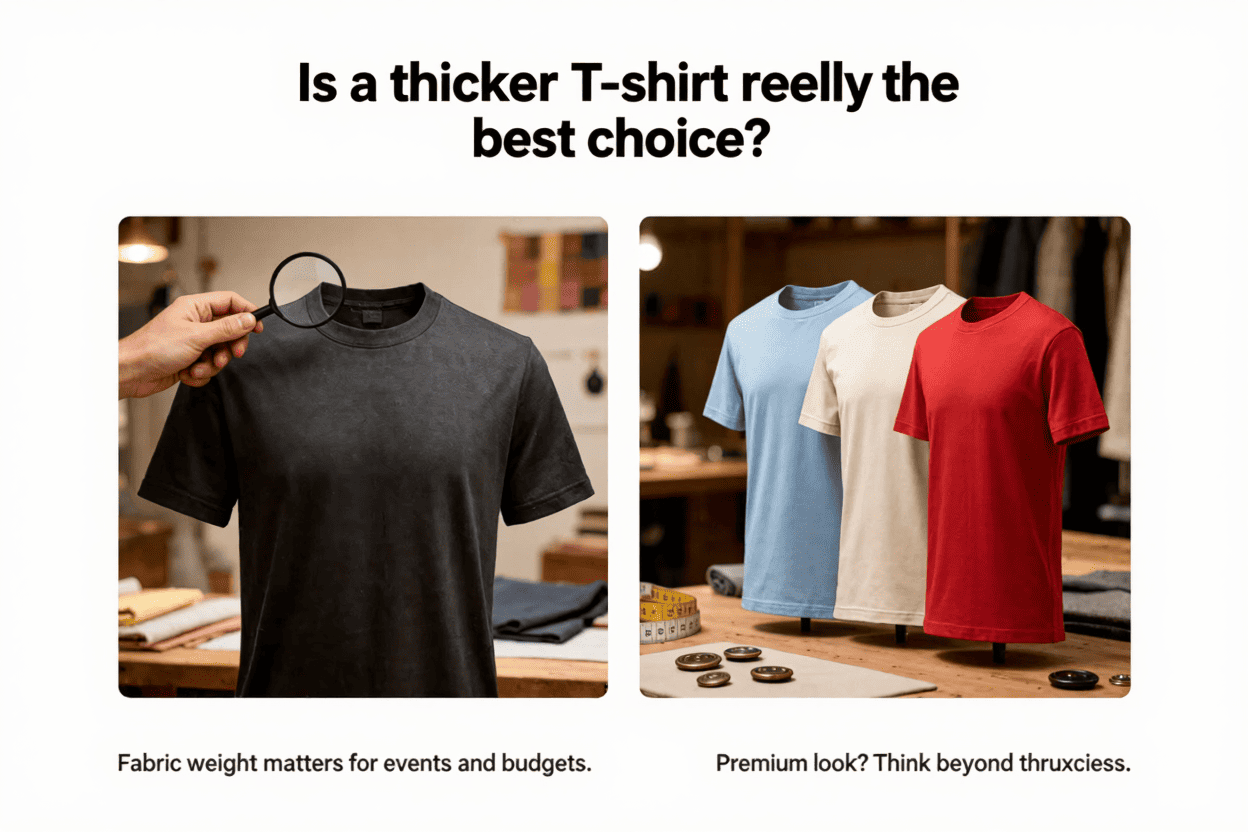
If you’re picking T-shirts for your business, a campaign, or an event, you need to think about more than just how they look. Thick T-shirts can seem more “premium,” but context matters. I’ve helped clients choose T-shirts for government campaigns and private labels. I know the right fabric weight can make or break a project. Before you choose, keep reading to see if thicker shirts are really better for you.
Thick T-shirts often make a strong first impression. They seem high-end because the fabric feels solid and holds its shape. But does thick always mean premium?
A thick T-shirt usually feels more premium because of its weight and structure, but other factors like the craftsmanship, fit, and print quality also affect the overall quality.
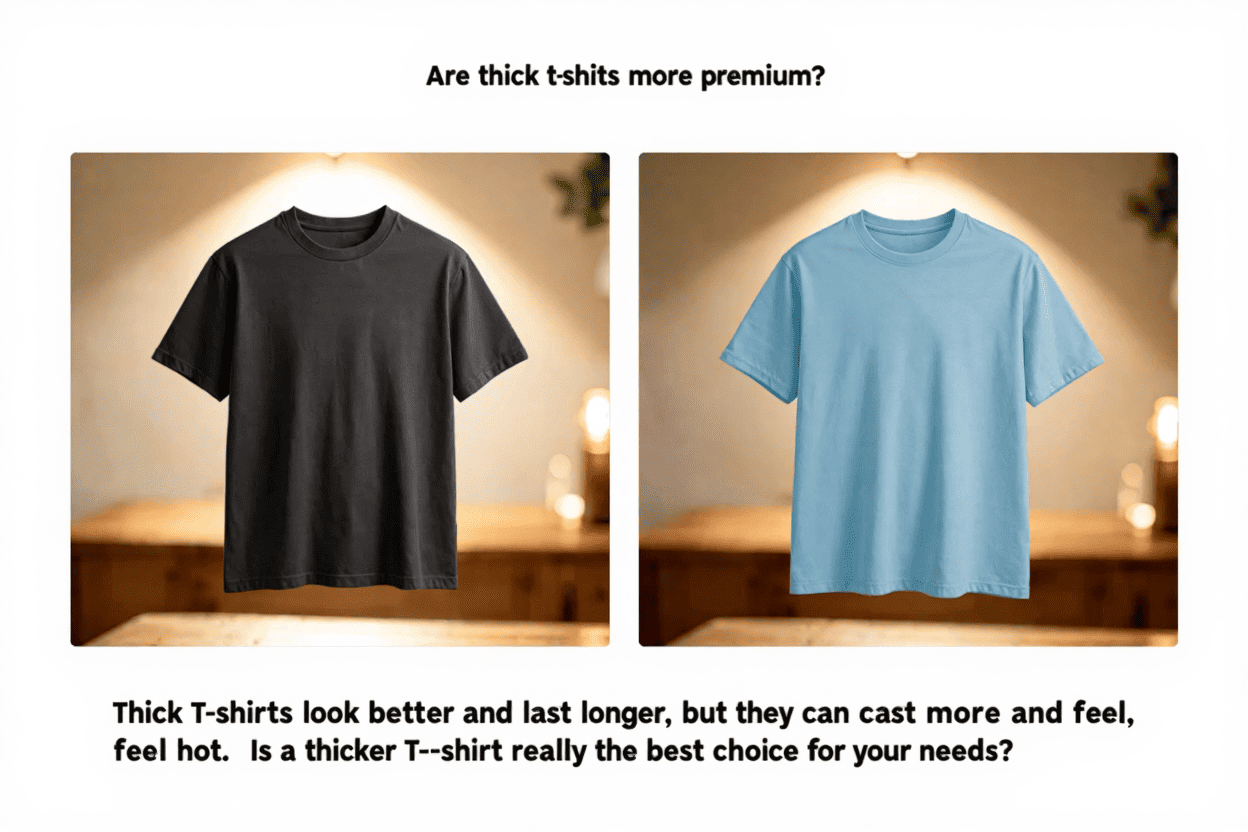
When customers ask about premium T-shirts, most of them mean shirts that look and feel special—something you’d want to keep, not just wear once. In my experience, thick T-shirts do a lot to support that premium feeling. Here’s why: thick fabric means higher “gram weight,” and this makes the shirt feel solid in your hands. It stands up straight, doesn’t get floppy, and it doesn’t wear out as quickly. These are things that impress both buyers and wearers at first touch.
However, I’ve seen many projects where teams focus too much on thickness, thinking it’s the only sign of quality. It’s not. For example, some thin fabrics have a smooth finish or special treatments that make them feel luxurious. Sometimes, a thick shirt can feel stiff and hot, especially in summer events. The sewing, the shape, and the way prints or embroidery are applied all matter as much as the fabric weight.
Let’s break it down in a quick table:
| Factor | Thick T-Shirt | Thin/Medium T-Shirt |
|---|---|---|
| First Impression | Feels solid, expensive | Can look casual or sleek |
| Durability | Lasts longer | May wear faster |
| Comfort (Hot Weather) | Can be less breathable | Usually more comfortable |
| Cost | Higher | Lower |
| Print Quality | Good for all techniques | Needs careful selection |
So, thick T-shirts help with a premium look, but they’re not always the best or only way to show quality. I always suggest matching thickness with the event, budget, and brand image you want.
How do thick T-shirts perform in different scenarios?
Thick T-shirts are not always the best choice for every occasion. When and where do they really shine?
Thick T-shirts work best for long-term use, formal events, or situations where you want strong branding, while thinner shirts are better for hot weather or one-time use.
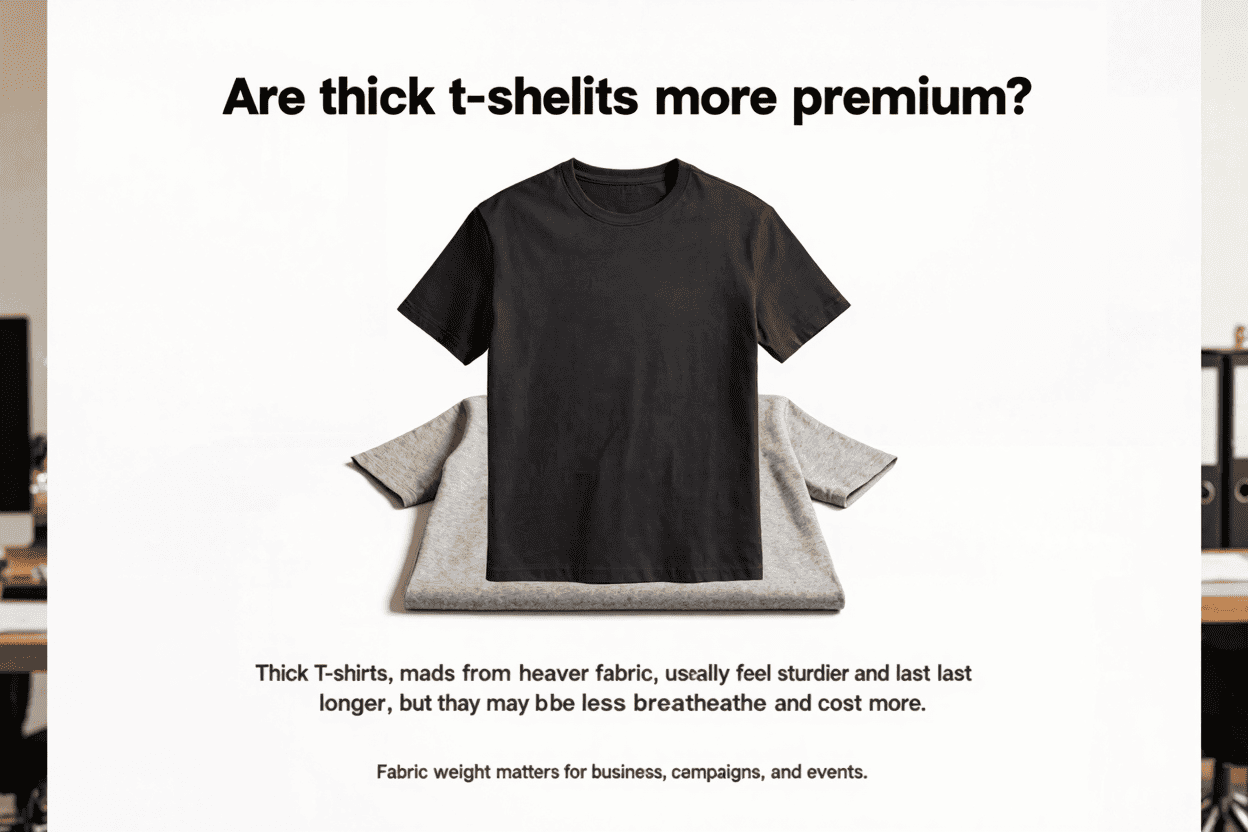
I often help B2B customers order in bulk for events, campaigns, and private labels. In my experience, thicker T-shirts are a great fit for colder weather or situations where shirts need to last—like uniforms, trade shows, or branded gifts. They’re also the top pick if you want to make your volunteers or staff look more professional and stand out.
But there are important downsides. Thick T-shirts can be uncomfortable during summer or in crowded, unventilated spaces. I once provided shirts for a summer election rally. The client insisted on thick shirts for a “quality” feel, but people complained about the heat. For single-use events, or when you need to control costs, a medium-weight shirt can feel just as nice if you choose a soft, smooth fabric and focus on print quality. Don’t forget, thick shirts weigh more, so shipping and storage costs go up too.
Here’s a simple guide:
| Scenario | Best T-Shirt Choice | Why? |
|---|---|---|
| Brand/Corporate Uniform | Thick | Looks sharp, lasts longer |
| Summer Outdoor Event | Thin/Medium | Cooler and comfortable |
| Short-Term Campaign | Medium | Balances cost and quality |
| Retail Product | Depends on target | Match brand and price point |
From my own work, I always ask clients about their real needs: Will the shirts be worn often? Do you want a luxury image? Is your event indoors or outdoors? The answer guides the fabric weight, not just the “thick equals premium” myth.
What else matters besides thickness?
We often focus on fabric weight, but are there other things that matter just as much when choosing a quality T-shirt?
Quality depends on many things: sewing, fit, print technique, and the kind of cotton or polyester used, not just thickness.
I remember a big order for a supermarket client. They wanted shirts that looked upscale for their new product launch. At first, they asked for the thickest shirt possible. But after showing them samples, they realized the fit, neck shape, and smooth screen printing mattered as much as thickness. We ended up using a medium-weight fabric but paid extra attention to the sewing, labels, and finishing. The result was a shirt that felt premium and looked great, even though it wasn’t the thickest option.
Here are a few things I always recommend checking:
Fabric Type
Not all thick fabrics feel the same. Some thick polyester shirts can be stiff, while combed cotton is soft even at high weights.
Fit/Pattern
A good cut makes even a basic shirt look professional. Poor fit makes thick shirts look bulky.
Print and Embroidery
High-quality printing or embroidery stands out more on a clean, smooth shirt. Choose the best decoration for your logo.
Labels/Finishing
Private labels, custom tags, or unique packaging can make shirts look premium, regardless of thickness.
Let’s compare the impact of these factors:
| Factor | Impact on Premium Feel |
|---|---|
| Thickness | High |
| Sewing/Construction | High |
| Fit/Pattern | High |
| Print/Embroidery | High |
| Labels/Packaging | Medium |
| Fabric Treatment | Medium |
In my view, thickness helps, but it works best as part of an overall package. That’s why I tell clients: focus on all the details, not just the weight.
Conclusion
Thick T-shirts add a premium touch and last longer, but they’re not always the best or only choice. Match thickness to your real needs and project goals.