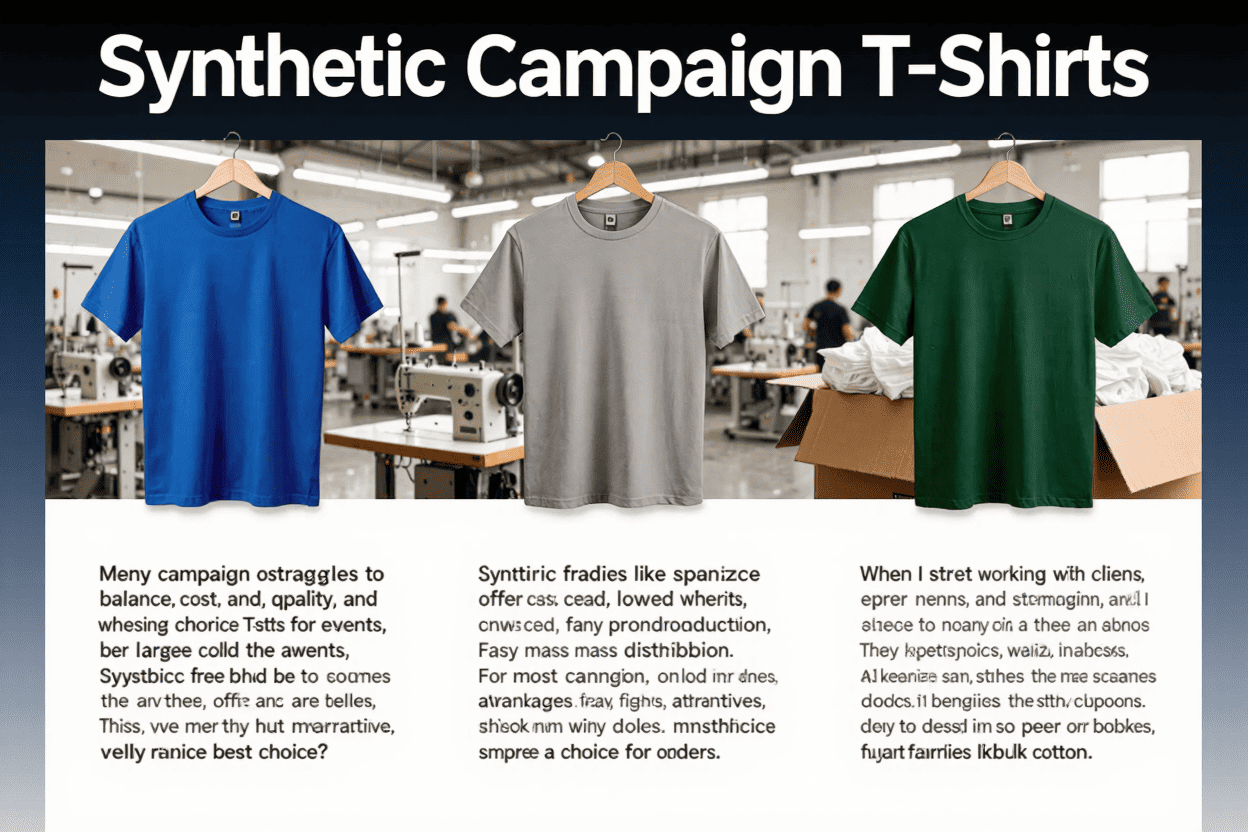
Many campaign organizers struggle to balance cost, speed, and quality when choosing T-shirts for large events. Synthetic fabrics could be the answer, but are they really the best choice?
Synthetic fabrics like polyester offer lower costs, fast production, and easy mass distribution. For most campaigns, these advantages often outweigh alternatives, making synthetics a smart choice for bulk orders.
When I first started working with clients running election campaigns and store promotions, I noticed a clear trend. Many buyers asked about synthetic fabrics right away. They wanted to know if synthetics could save them money, deliver faster, or look better in photos. As I kept seeing the same questions, I realized there must be strong reasons behind their choices. This pushed me to look deeper into why so many buyers prefer synthetic over natural fabrics like cotton.
Why many buyers choose them?
Buyers want to cut costs, meet tight deadlines, and avoid last-minute surprises. Synthetic fabrics seem to deliver on all three goals.
The main reason buyers pick synthetic fabrics is price. Synthetic T-shirts are cheaper, easier to deliver quickly, and much better for large-scale handouts at events.
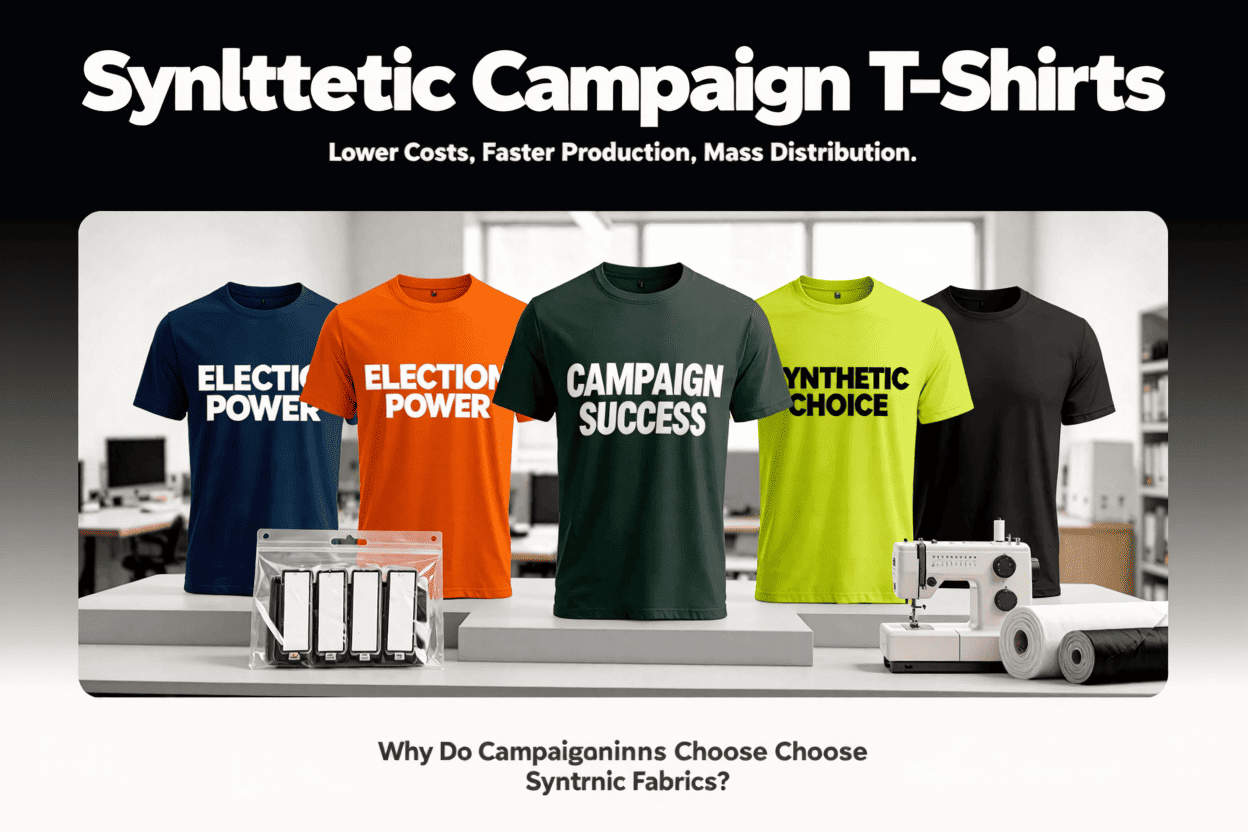
When I talk with clients, the first thing they ask is usually, "How can we keep costs low for thousands of shirts?" For campaign and promotional T-shirts, the price per piece matters. Synthetic fabrics, mainly polyester, are less expensive to produce in large batches. Polyester is made in high volumes, which keeps costs down. Factories can run the same process every time, which means fewer mistakes and more stable quality.
Here’s a simple table showing how polyester compares with cotton for big orders:
| Feature | Polyester | Cotton |
|---|---|---|
| Unit Price (USD) | Lower | Higher |
| Production Speed | Fast | Slower |
| Weight | Light | Heavier |
| Color Vibrancy | High | Medium to low |
| Durability | High | Lower after washing |
| Shrink/Wrinkle Risk | Low | High |
| Quality Consistency | More stable | Varies with batches |
| Storage & Shipping | Easier, lighter | Bulkier, heavier |
Synthetic T-shirts are lighter. This makes them easier to pack and ship. For example, when one of my clients needed 20,000 shirts for a campaign, we used polyester. The shirts arrived fast, and shipping costs](https://www.abstractprintingsolutions.com/2025/10/17/bulk-t-shirt-orders-7-mistakes-youre-making-and-how-to-save-hundreds/)s were much lower than if we had used cotton. Polyester also does not wrinkle easily. The shirts looked neat even after a long trip. In big events, where volunteers hand out T-shirts to crowds, saving on shipping and keeping shirts clean matters.
Many buyers work with limited budgets. For them, synthetic fabrics are not just a cheap fix. They are a practical solution that lets them get more shirts for their money. This is especially true for short-term campaigns, where shirts might only be worn a few times.
Durability and Outdoor Performance
Buyers also care about how shirts look and last during events. Campaigns often take place outdoors or in busy venues. Polyester handles both better than cotton.
Polyester T-shirts are more durable and do not shrink or deform easily. For outdoor rallies or festivals, this is important. The shirts can take rough handling, and the colors stay bright. One time, a client had a week-long outdoor campaign. The polyester shirts stayed crisp and colorful, even after repeated use and exposure to sun and rain. Cotton shirts might have faded or lost their shape.
Let’s break down the outdoor benefits in a simple table:
| Challenge | Synthetic Fabric Response | Cotton Response |
|---|---|---|
| Sun Exposure | Color stays bright | Fades easily |
| Rain/Moisture | Dries quickly, holds shape | Absorbs water, sags |
| Frequent Washing | Keeps form, no shrinking | Shrinks/fades fast |
| Physical Stress | No tearing/stretching | More likely to deform |
This kind of reliability means less stress for buyers. They do not have to worry about shirts looking messy halfway through an event. Consistent quality also means organizers can focus on their message, not on fixing wardrobe problems.
Speed and Consistency Matter
In campaign season, time is always tight. Buyers want shirts fast, and they want them to look the same in every batch.
Synthetic fabrics are a good fit for fast production. Polyester can be dyed and printed quickly. The process is standardized, and factories can meet tight deadlines. I remember a last-minute order for a supermarket opening. The buyer needed 10,000 shirts in less than a week. With polyester, we hit the deadline and shipped on time. With cotton, we would have needed more time.
Batch-to-batch consistency is also important. Synthetic fabrics make this easier. With natural fabrics, each batch can look or feel different. With polyester, shirts from different runs look the same. That makes it easier for big events where shirts must match.
Logistics and Visual Impact
Big campaigns often involve moving thousands of T-shirts across cities or countries. Buyers need lightweight, easy-to-pack shirts that look great when handed out.
Synthetic T-shirts are lighter than cotton. This lowers transport and storage costs. For one event, shipping 30,000 polyester shirts cost much less than cotton. The shirts took up less space, so trucks and storage rooms were used more efficiently.
In addition, synthetic fabrics hold color better. The shirts look bright and sharp, which is important for events and media photos. Cotton T-shirts can look dull after washing or sun exposure. Polyester shirts stay vibrant, making the campaign more visible and memorable.
I have seen this difference at rallies. Volunteers in polyester shirts stand out, even in large crowds. The colors do not fade, and the shirts do not wrinkle. This helps the campaign make a stronger impression.
Meeting Budget Constraints
Most campaigns and promotional projects have limited budgets. Every dollar counts. Synthetic fabrics allow buyers to outfit more people without going over budget.
For example, a local government client needed shirts for a voter drive. They chose polyester to save money and reach more people. The shirts were affordable, and the project succeeded because everyone involved had a uniform look.
Here’s why synthetic fabrics are practical for tight budgets:
- Lower unit price per shirt
- Cheaper shipping and handling
- Fewer replacements due to damage or fading
- Consistent quality, less waste
For buyers planning big events or mass handouts, these savings add up. They can spend more on other campaign needs, like banners or ads, instead of stretching to cover T-shirts.
Conclusion
Synthetic fabrics are often the best choice for campaign T-shirts. They are cost-effective, fast to produce, durable, and visually strong—helping buyers meet event and budget needs with ease.