If you struggle to get sharp, stable prints on your T-shirts, the answer often lies in the fabric weight. Low or high GSM can impact everything from clarity to cost.
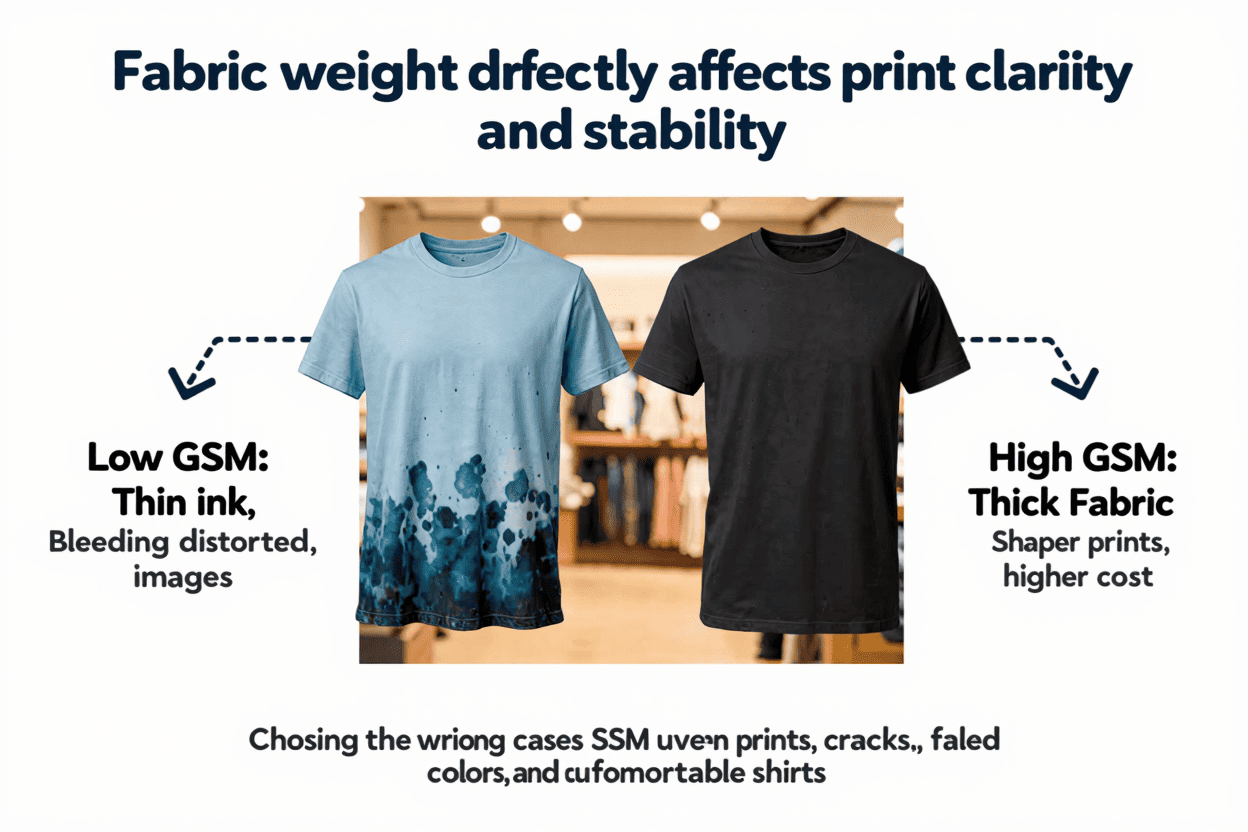
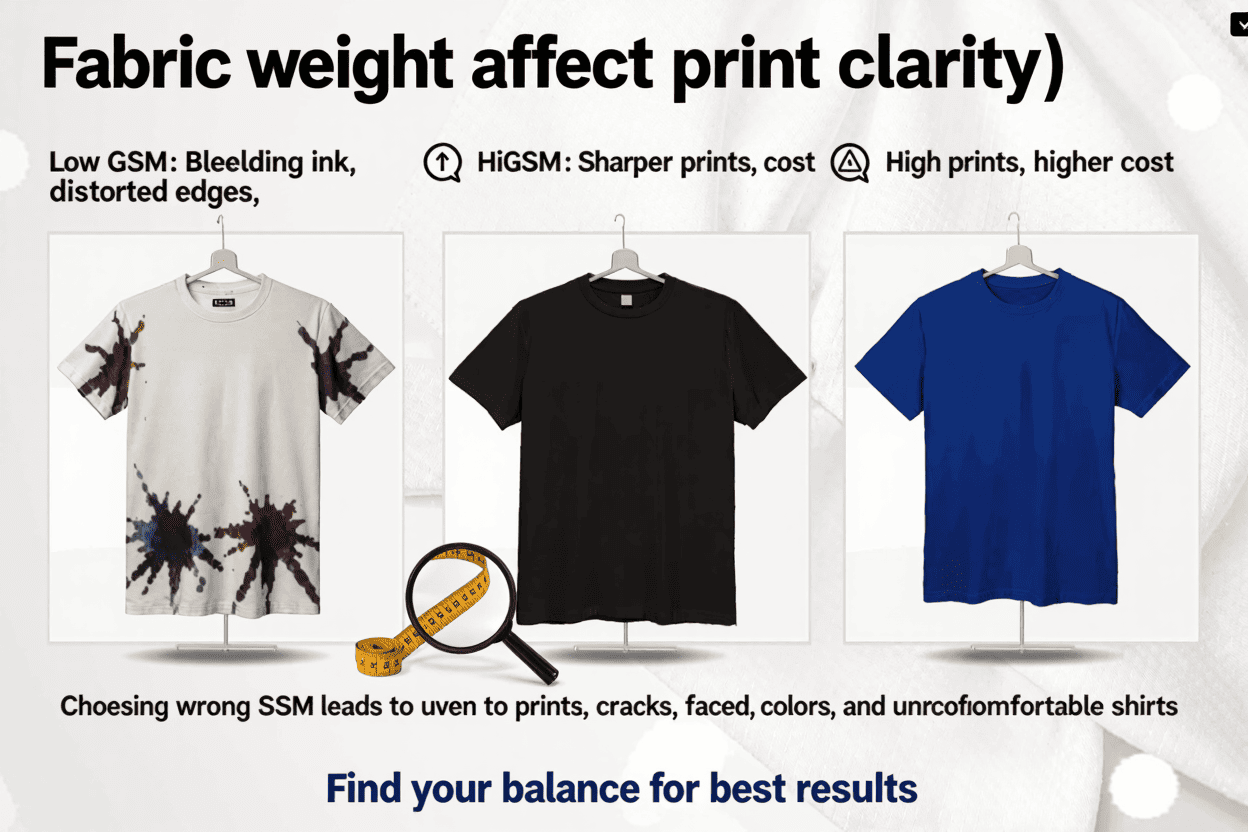
Fabric weight directly affects print clarity and stability. Low GSM fabrics bleed ink and distort images. High GSM gives sharper prints, but increases price and changes feel.
If you do not know how GSM changes printing, you might waste money or lose customers. Stay with me as I explain the difference, and how to choose the right fabric weight for your campaign or promotional T-shirt.
What happens if you choose wrong?
Many buyers overlook fabric weight, thinking all T-shirts look the same. But printing on thin fabric (like 130-150 GSM) leads to faded colors, blurry edges, and even ink bleeding. High GSM (180-220) can be too stiff and costly.
Choosing the wrong GSM causes uneven prints, cracks, faded colors, and uncomfortable shirts. Low GSM distorts images, high GSM boosts cost. Find your balance for best results.
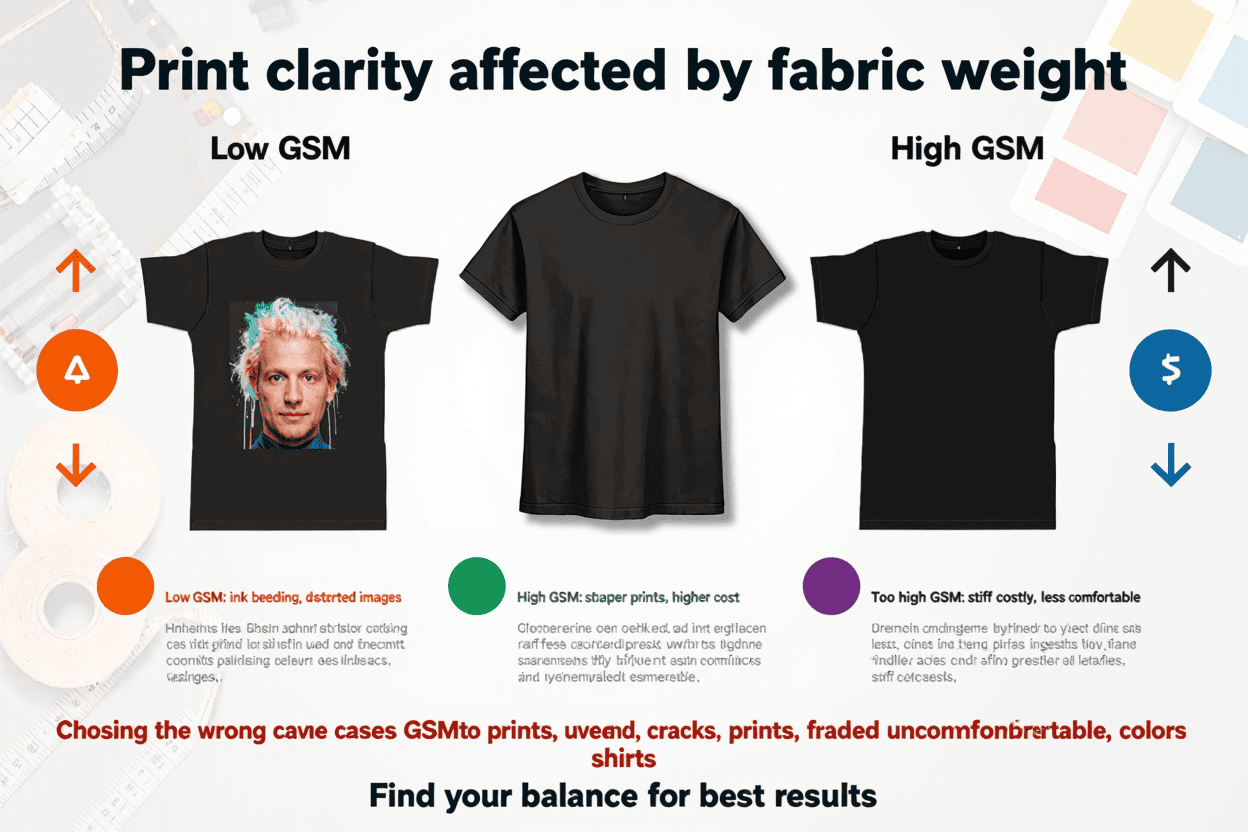
When I first started making campaign shirts, I ignored GSM and focused on price. My client received thin shirts that were see-through and prints that cracked after one wash. I learned that low GSM lets ink seep through, making colors dull and unstable. High GSM, though stable, raised costs and made shirts less comfortable. I found that 160-180 GSM gives the best balance. This weight helps prints stay crisp, resists cracking, and keeps cost in check.
Below is a breakdown of how GSM affects print results and what happens when you pick the wrong weight:
GSM vs. Print Quality Table
| GSM Range | Print Clarity | Ink Stability | Shirt Feel | Cost | Typical Problems |
|---|---|---|---|---|---|
| 130-150 | Low | Low | Thin, light | Lowest | Bleeding, fading, cracking |
| 160-180 | Medium-High | High | Soft, balanced | Medium | Good balance |
| 180-220 | High | Highest | Thick, firm | Highest | Heavy feel, high price |
Printing methods also change the equation. Screen printing works best on medium to high GSM. Thin fabrics do not hold ink well and show uneven pigment. When you use heat transfer or embroidery, thicker fabrics keep the design sharp and resist distortion. Always match your printing process to your fabric weight.
If you buy for campaigns, you want shirts that last at least until the event is over. Low GSM shirts might cost less, but prints will not survive frequent wear or washing. High GSM shirts last longer, but are expensive for large orders. I recommend 160-180 GSM for most campaign shirts as a sweet spot. You get stable prints, comfortable wear, and a price that fits most budgets.
Conclusion
Fabric weight sets the foundation for printing quality, stability, and cost. Choose GSM wisely to avoid faded, cracked, or uncomfortable shirts.