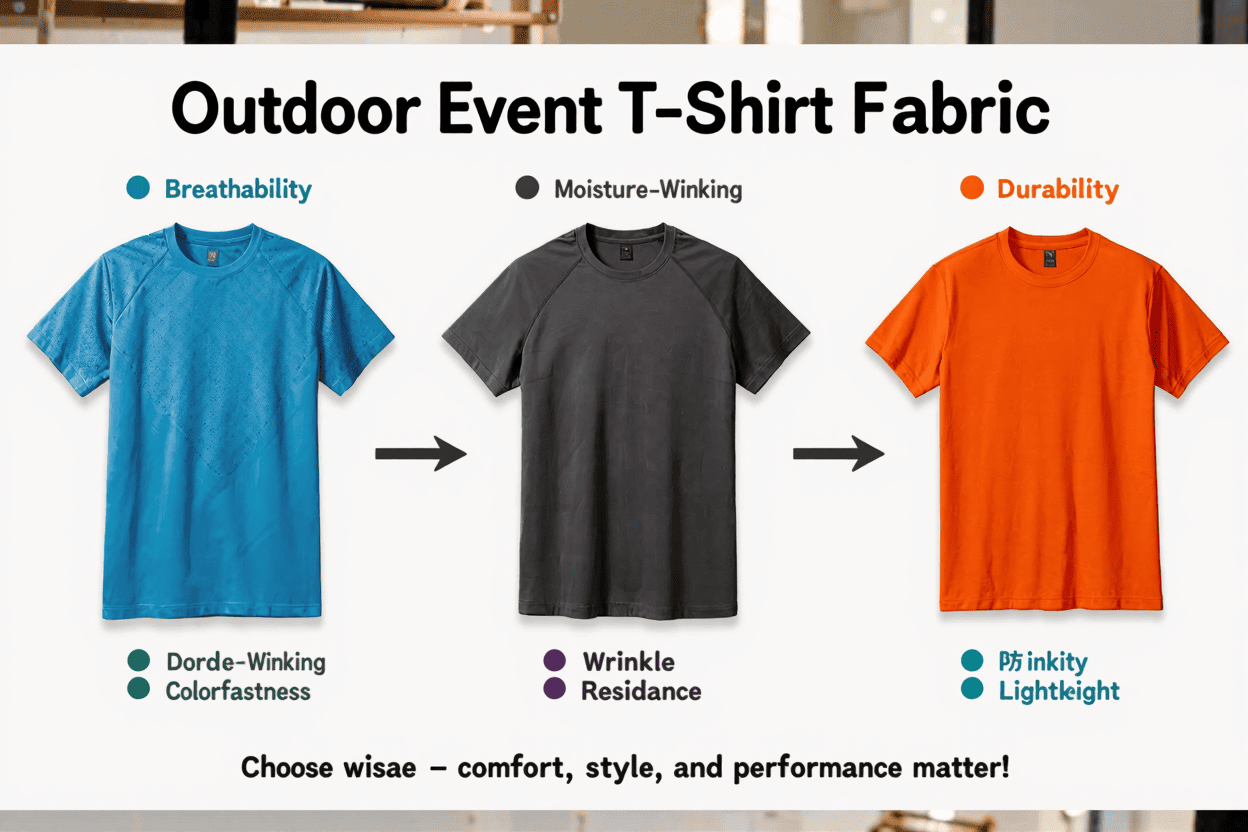
Choosing the right fabric for outdoor events can be overwhelming. If you pick poorly, people get uncomfortable, branding looks bad, or the event even faces delays.
To choose fabric for outdoor events, focus on breathability, moisture-wicking, durability, colorfastness, wrinkle resistance, and lightweight properties. Balance these needs with cost control, reliable supply, and print compatibility for best results.
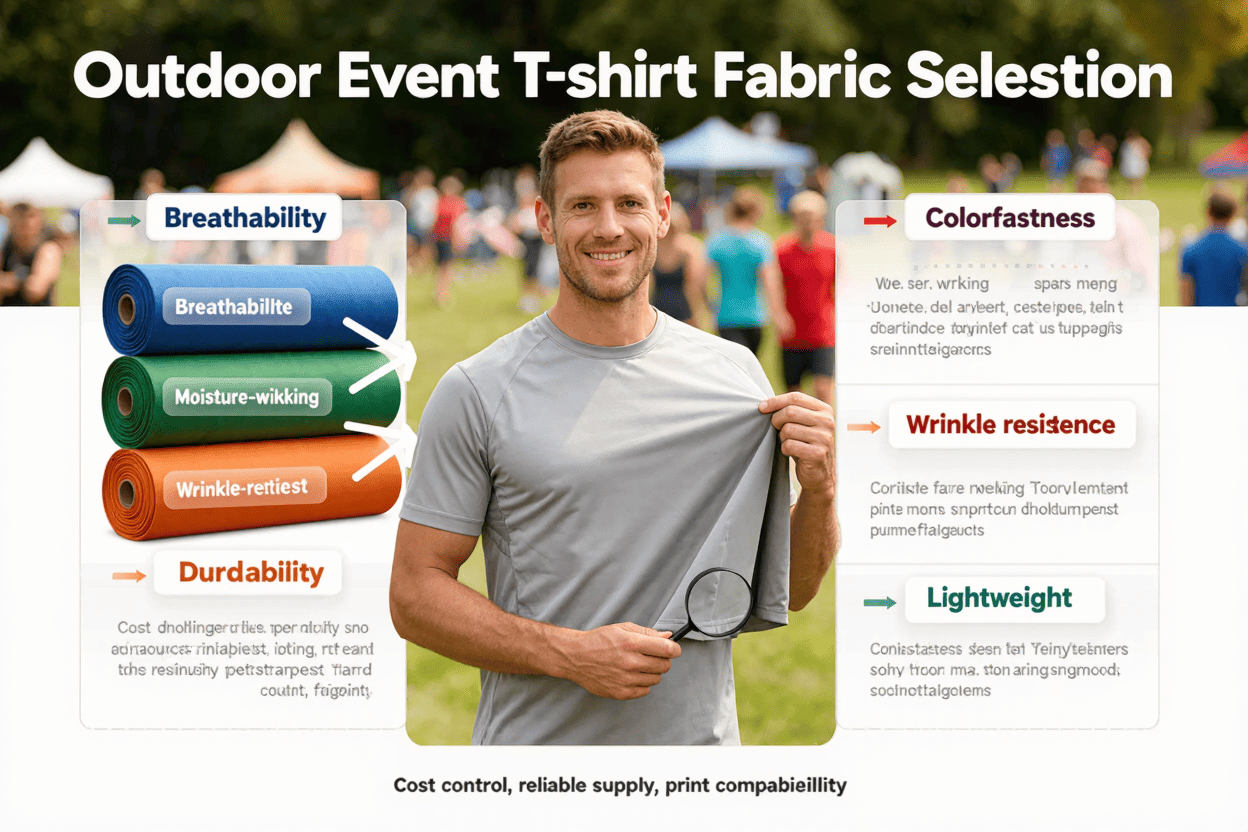
If you want your event t-shirts to actually work for you—keeping participants cool, comfortable, and looking sharp—there’s a lot to consider. Missing even one detail can cause big problems. Let’s break down the most important factors so you can avoid common mistakes.
What really matters most?
When you’re planning for an outdoor event, picking the right t-shirt fabric is not just a small detail—it's crucial. The wrong choice means overheated, sweaty, or rumpled shirts that people hate to wear.
The most important factors are breathability, moisture-wicking, durability, lightweight feel, good color fastness, anti-wrinkle properties, print compatibility, cost control, and stable supply.
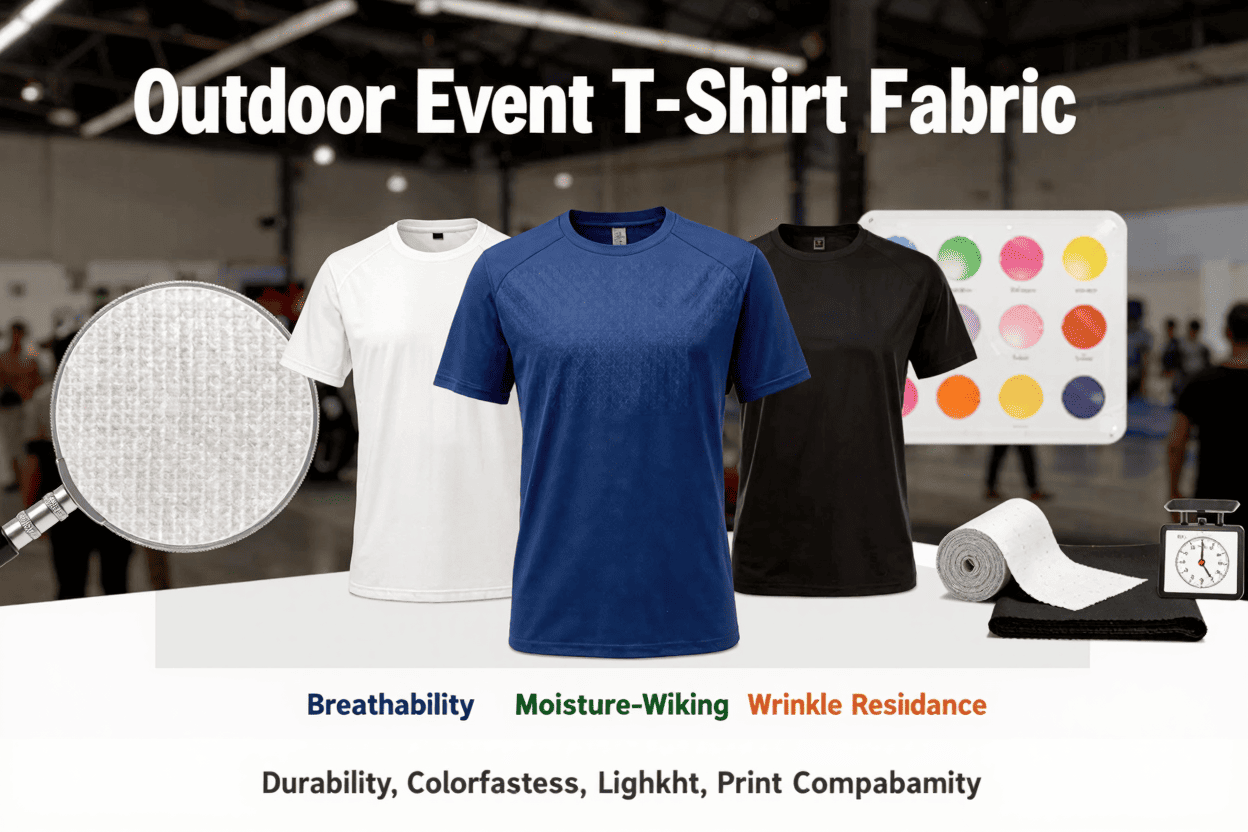
Let’s break down these priorities so you can make smart decisions. I have been through these choices many times for clients running political rallies, brand activations, and marathons. In every case, comfort and brand image were at stake. Here’s what I have learned.
Why is breathability so important for outdoor event fabrics?
Outdoor events often mean hours in the sun, constant movement, and crowds. Poor breathability leads to overheating and discomfort. That could ruin the event for participants and even limit how long they stay.
Breathable fabrics let air move through easily, helping sweat evaporate. This keeps the wearer cool and dry. Fabrics like polyester mesh or cotton blends offer good breathability. But pure cotton, while soft, can get heavy when wet. I always advise clients to test a sample shirt for breathability before a big order. Just wearing the sample outside for an hour reveals a lot.
| Fabric Type | Breathability | Moisture Wicking | Weight |
|---|---|---|---|
| Polyester Mesh | High | High | Light |
| Cotton | Medium | Low | Medium |
| Cotton-Poly Blend | High | Medium | Light |
Breathability is always my first filter. If a fabric fails here, it doesn’t matter how cheap or colorful it is.
How does moisture-wicking affect outdoor comfort?
Staying dry is as important as staying cool. For outdoor events, sweat is inevitable. If fabric traps moisture, shirts get heavy, stick to the skin, and look awful in photos.
Moisture-wicking fabrics pull sweat off the skin and move it to the outer surface, where it can evaporate. This keeps shirts light and helps participants feel fresher. Modern polyesters are best for this task. I have seen teams in all-cotton shirts soaked through before noon, while those in moisture-wicking polyester stayed dry and comfortable even after hours outdoors.
| Feature | Poor Choice | Good Choice |
|---|---|---|
| Moisture-Wicking | 100% Cotton | Polyester/Poly-blend |
This one factor can be the difference between a shirt people keep wearing and one they toss after the event.
Why does fabric weight matter for outdoor events?
Heavy shirts are a pain to wear and a pain to ship. For outdoor use, lighter is almost always better. Lightweight fabrics reduce fatigue for wearers and lower your shipping costs. This is especially important for big events with hundreds or thousands of shirts.
When I work with event organizers, I always recommend lightweight polyesters or blends. These feel almost weightless and fold compactly for easy transport. Once, a client insisted on heavier cotton shirts for a sports day. They looked good but nobody wanted to wear them after an hour in the sun. It’s a lesson I try to share with everyone: go light whenever possible.
| Benefit | Result |
|---|---|
| Lightweight | Less heat stress, easy to pack |
How important is durability in outdoor event t-shirts?
Outdoor events can be rough on shirts. There’s sun, rain, movement, and sometimes even mud. If you use flimsy fabric, shirts tear or lose shape fast. This hurts your event’s image and wastes your budget.
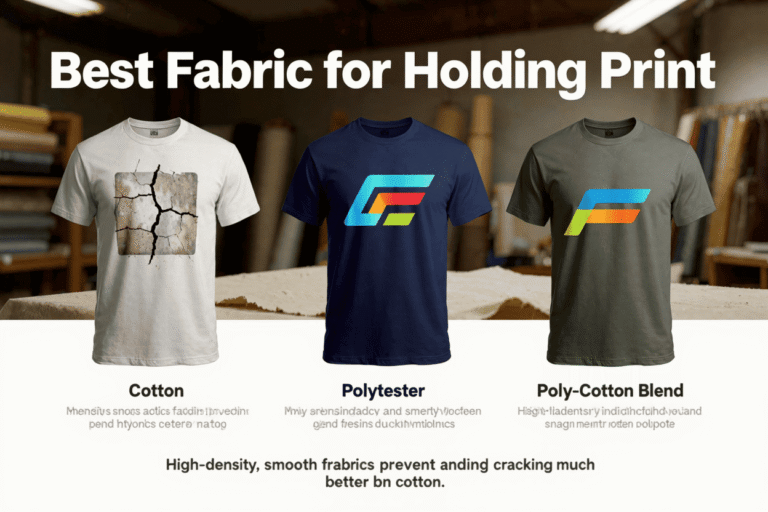
Durable fabrics like good polyester or high-quality blends withstand wear and repeated washing. I always check the fabric’s denier (thickness) and ask for abrasion tests before confirming a bulk order. A strong shirt doesn’t just survive the event—it becomes a keepsake that spreads your brand long after.
| Property | Why It Matters |
|---|---|
| Abrasion Resistance | Withstands rough use |
| Color Fastness | Looks good after washing |
Why is colorfastness a key consideration?
Nothing looks worse than shirts fading after a single day in the sun. Outdoor events mean exposure to sunlight, and poor dye quality leads to fast fading. That’s embarrassing and ruins brand impact.
Always check that your supplier uses high-quality dyes and runs colorfastness tests. Polyester holds color better than cotton in most cases. I’ve seen poorly dyed shirts turn pale halfway through a parade—don’t let it happen to your event.
| Test Type | What to Request |
|---|---|
| UV Colorfastness | Exposure to sunlight |
| Wash Colorfastness | Laundering durability |
Does wrinkle resistance really matter for event shirts?
Wrinkle-free shirts look better in photos and in person. For events, you want every participant to look sharp—no rumples or creases. Outdoor logistics mean shirts often arrive folded or packed tightly. Wrinkle-resistant fabrics save time and stress.
Polyester and blends resist wrinkles better than cotton. I always recommend a test: pack a sample shirt tightly for 24 hours, then unpack. If it springs back, you’ve found a winner.
| Fabric Type | Wrinkle Resistance |
|---|---|
| Polyester | High |
| Cotton | Low |
A crisp, tidy look sets a positive tone and makes your event feel professional.
How does cost control influence fabric choice?
Budget matters, especially for large groups or campaigns. The best fabric in the world is pointless if it blows your budget. I always work closely with clients to balance features with cost. Sometimes, small changes in fabric weight, blend, or source can save a lot.
I help clients by requesting multiple quotes and sample runs. This gives a clear view of price versus quality. For big orders, a small saving per shirt adds up fast.
| Factor | Impact |
|---|---|
| Fabric Cost | Budget fit |
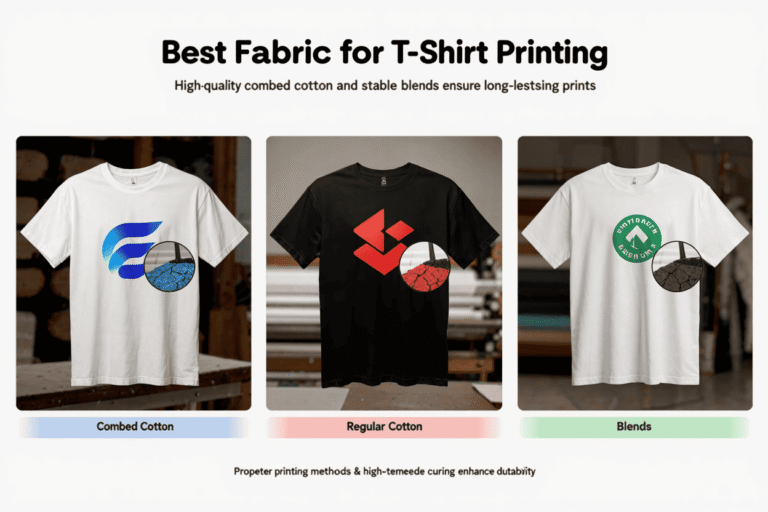
| Print Compatibility | Clear, bright logos |
Why does stable supply and lead time matter?
An event can’t wait for late shirts. Reliable suppliers with proven on-time delivery are a must. I’ve seen projects go wrong because of fabric shortages or shipping delays. Always ask your supplier to confirm inventory and production lead times.
I often recommend phased delivery for huge events—getting part of the order early as a backup. This lowers risk. Stable sourcing is just as important as quality.
| Priority | Why It Matters |
|---|---|
| Stable Inventory | Avoids stockouts |
| Fast Lead Time | On-time delivery |
Conclusion
Choosing fabric for outdoor event shirts is about comfort, durability, appearance, and budget. Make careful decisions upfront to keep your event running smoothly and looking great.