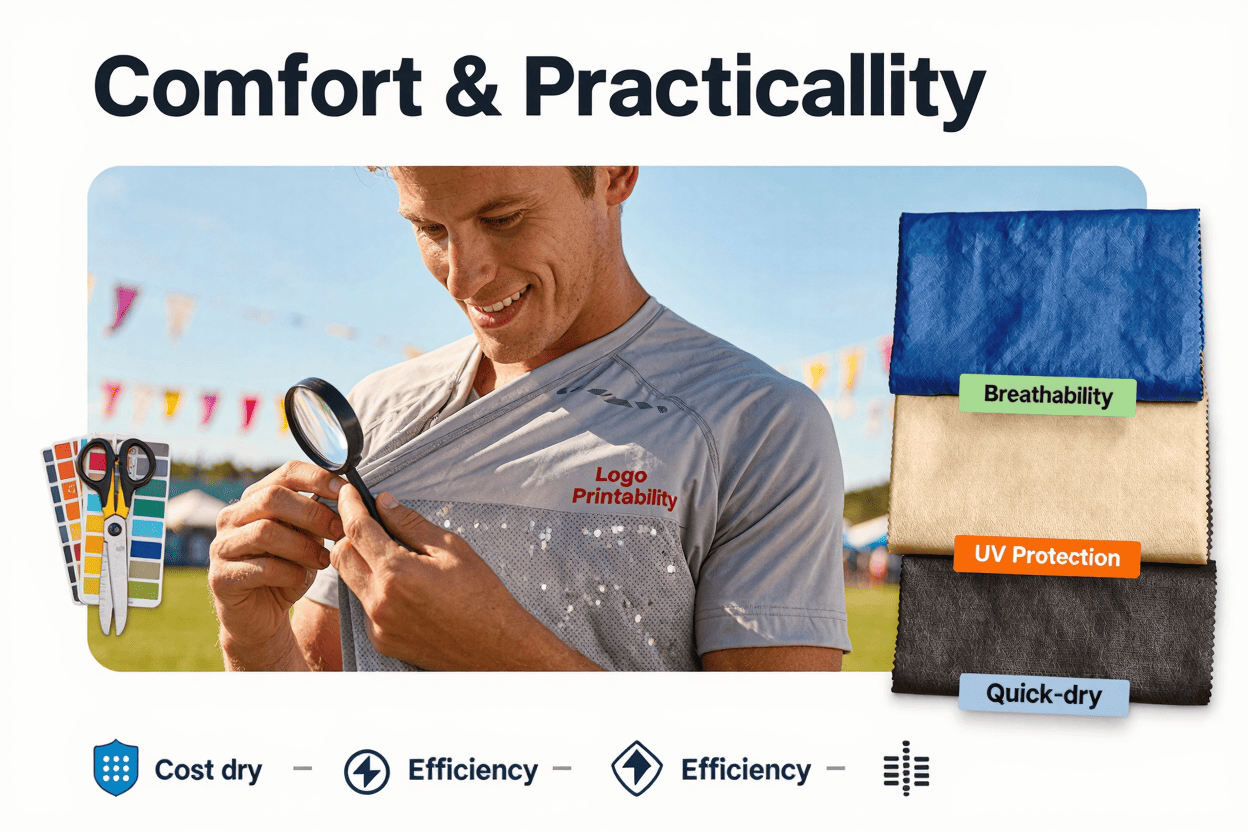
Outdoor events can challenge the comfort of every participant. If you choose the wrong fabric, it can lead to heat, discomfort, and a poor experience.
To select the best fabric for outdoor events, focus on breathability, light weight, quick-dry features, UV protection, abrasion resistance, and color fastness. Always weigh comfort, practicality, and cost efficiency.
Sometimes, the smallest details decide the success of an event. The wrong T-shirt fabric can ruin an entire day, while the right one can keep everyone cool and happy. Let me walk you through the must-know facts, so you never make the wrong choice.
What really matters most?
Sweat, sun, and long hours outdoors will test any T-shirt. Many organizers focus on price or color alone, but participants always remember how the shirt feels against their skin.
For outdoor events, comfort is key. Breathability and moisture-wicking matter most, but the best fabric also balances cost, durability, and printability for logos or slogans.
When I help clients plan for an outdoor campaign, they often ask, “What should I look for when choosing fabric?” Below is how I break down the essentials:
Breathability and Moisture Control
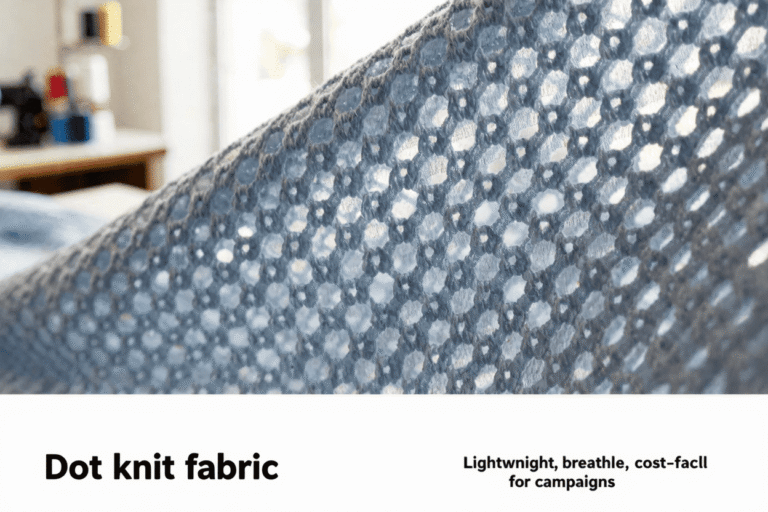
The last thing you want under the sun is a sticky, sweaty shirt. Breathable fabrics like polyester mesh or blended cotton-polys allow air to flow and sweat to evaporate. This keeps participants cool and dry. Moisture-wicking is different from simple breathability. Good moisture-wicking pulls sweat away from the skin and spreads it across the fabric surface to evaporate fast.
| Feature | Why It Matters | Good Examples |
|---|---|---|
| Breathability | Reduces overheating | Polyester mesh, blends |
| Moisture-wicking | Keeps skin dry | Poly, dry-fit fabrics |
I’ve seen events where organizers use heavy, non-breathable cotton. People end up feeling sticky, hot, and uncomfortable. This leads to poor engagement. I always suggest lightweight, moisture-managing options for outdoor events, especially in summer.
Lightweight and Quick-Dry
For events that last all day, shirt weight matters more than you think. Heavy shirts can make hours feel longer. Lightweight polyester or blends reduce fatigue and make movement easier. Quick-dry fabrics are another must-have, especially if there’s a chance of rain or heavy sweating. These fabrics dry much faster than cotton.
| Fabric Type | Weight | Dry Speed |
|---|---|---|
| 100% Cotton | Heavy | Slow |
| Poly/Cotton Blend | Medium-light | Medium-fast |
| 100% Polyester | Light | Fast |
I remember one marathon sponsor who ordered thick shirts. Runners complained, and many took off their shirts mid-race. I advised them to switch to quick-dry poly for the next event. The feedback was much better.
UV Protection and Abrasion Resistance
Sunburn and wear-and-tear are real problems. Some technical fabrics have built-in UV protection, which helps prevent sun damage through the clothes. This is especially important for events in open fields or during midday hours. Abrasion resistance means the fabric won’t easily tear or pill. This is crucial for activities involving movement or equipment.
| Feature | Benefit | Good Choices |
|---|---|---|
| UV Protection | Prevents sunburn | High-tech poly fabrics |
| Abrasion Resistance | Avoids tears/pilling | Blended knits, poly |
I often ask clients to consider their event's nature. Will participants be sitting, running, or carrying items? If yes, abrasion resistance is key. For daytime outdoor events, always check if the fabric has a UV rating.
Color Fastness and Shape Stability
Nothing looks worse than a faded campaign shirt after just one wash. Choose fabrics known for holding color, especially bright shades. Sun exposure can fade colors fast. Stability means the shirt keeps its shape after washing and wearing. Polyester and blends tend to perform best here.
| Concern | Solution | Best Fabric |
|---|---|---|
| Fading | Colorfast materials | Poly, poly/cotton blend |
| Deformation | Stable knit structures | Polyester blend knits |
I once had a client who insisted on all-cotton for a parade. After a day under the sun, the shirts looked dull and stretched. Since then, I always recommend checking both color fastness and knit stability as top factors.
Cost, Printability, and Timelines
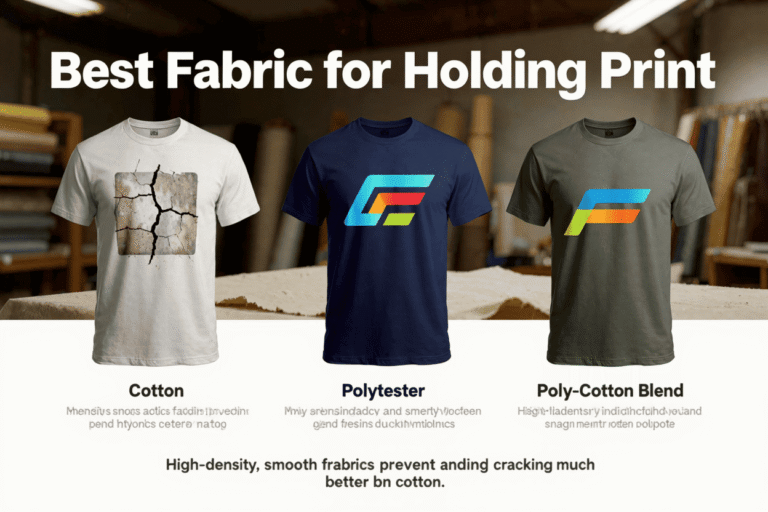
Your budget and deadlines matter. Some technical fabrics cost more but last longer. Bulk production can lower the unit price. If you need custom prints or logos, check how well the fabric holds ink. Some quick-dry fabrics need special printing methods to avoid cracking or fading. Finally, ask your supplier about sample timelines and shipping—this is critical for big events.
| Factor | Why Important | My Suggestion |
|---|---|---|
| Cost | Budget alignment | Balance quality and price |
| Printability | Logo clarity | Test prints on sample fabric |
| Lead Time | Meet event schedule | Confirm with your supplier |
I have worked with clients on tight schedules. Sometimes, choosing fabrics with long lead times can ruin the whole plan. I always double-check with production and logistics before finalizing.
Conclusion
Choosing outdoor event fabrics means balancing comfort, function, cost, and timing. Always test samples and prioritize participant experience first.