Many buyers struggle to choose the right material for large T-shirt orders, risking production delays or inconsistent quality.
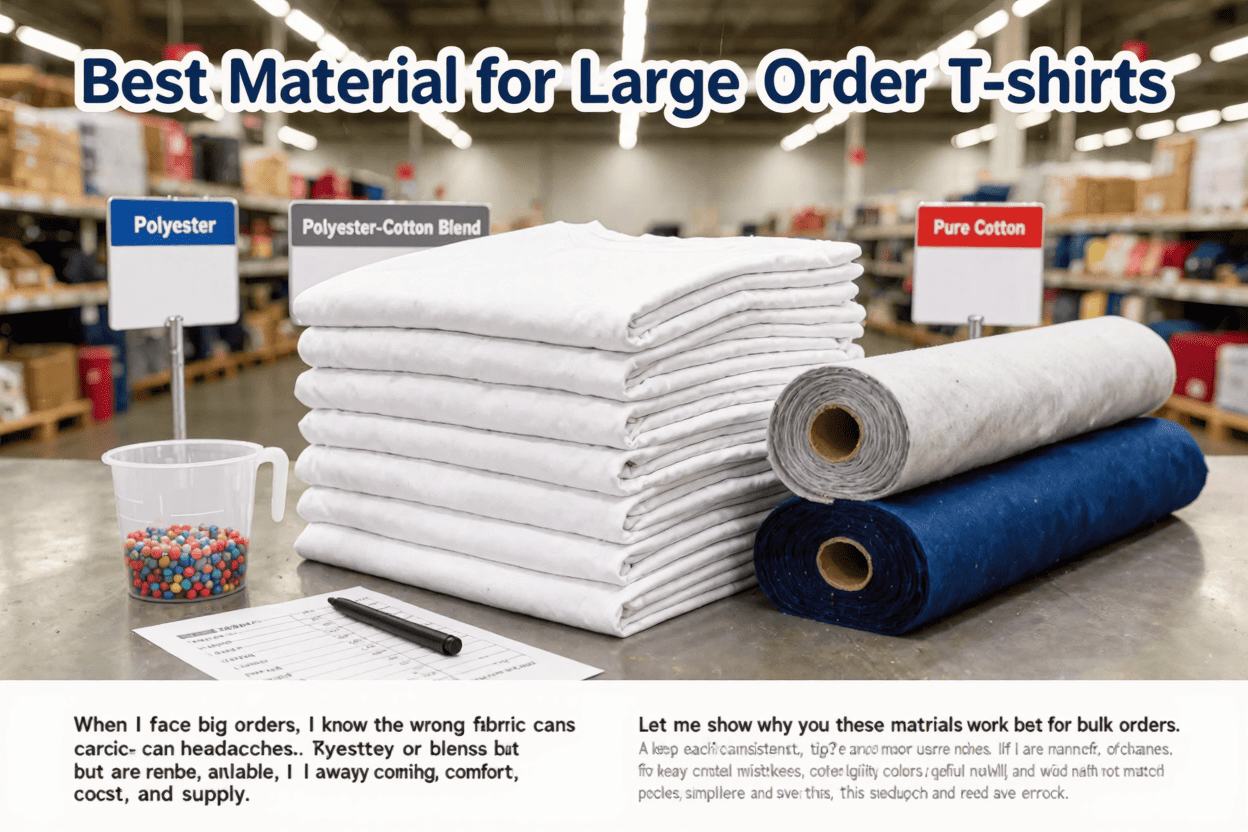
Polyester or polyester-cotton blends are the best choices for large T-shirt orders because they offer stable quality, cost control, and are easier to source in bulk compared to pure cotton.
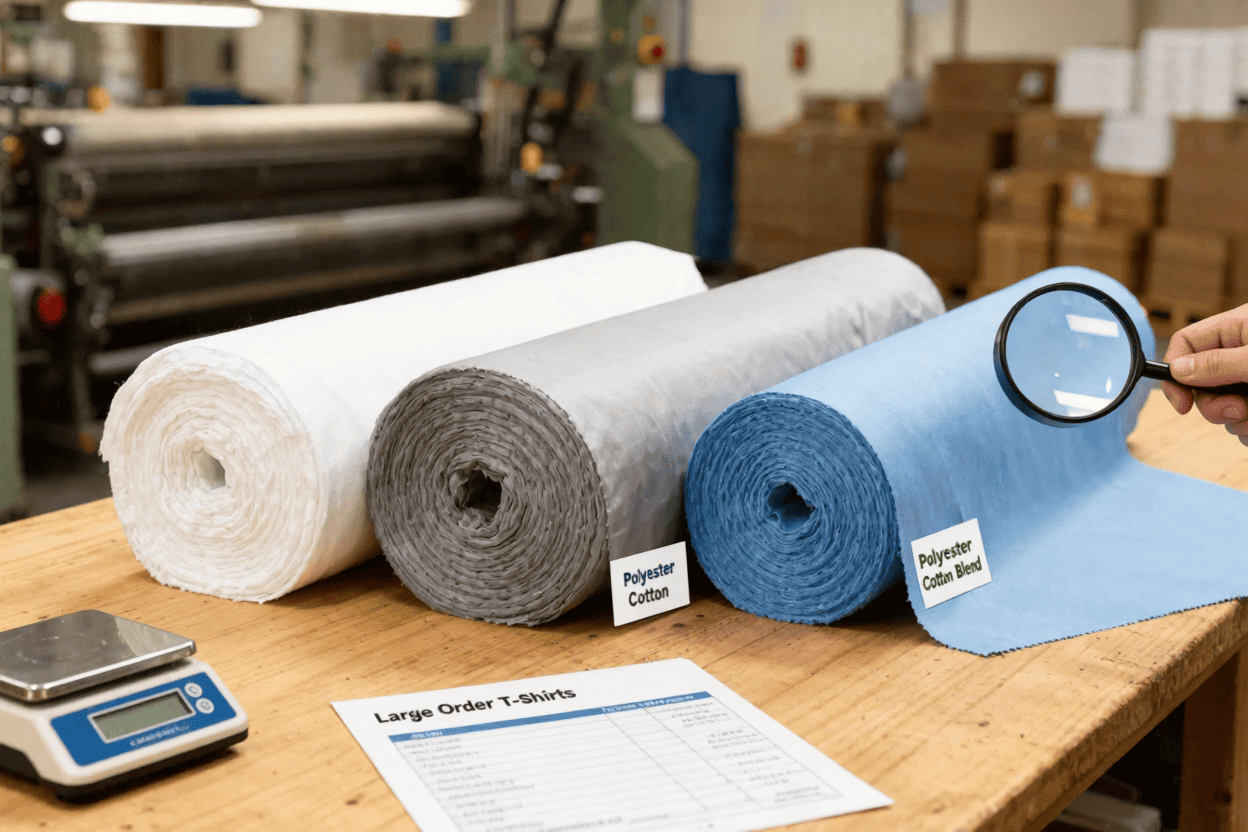
When I face big orders, I know the wrong fabric can cause headaches. Polyester or blends are reliable, but I always weigh comfort, cost, and supply. Let me show you why these materials work best for bulk orders.
Efficiency and consistency tips?
A big order means more chances for mistakes. If I am not careful, colors and quality will not match, and customers might not come back.
To keep each piece consistent, I always use regular materials from trusted suppliers, confirm fabric batches, and avoid complicated processes. This simple approach saves time and reduces errors.
Why Polyester and Blends Dominate Big Orders
From my experience, polyester and polyester-cotton blends solve most problems that come with bulk production. They are easier to buy in large amounts. The color and texture stay the same from the first shirt to the last. These fabrics are stable, meaning fewer surprises during printing or washing. If I use pure cotton, the cost jumps up, and the chance of shrinkage or defects grows. For clients who want comfort but need to watch their budget, blends give a good balance.
I always check if the fabric supply is steady before making promises. Low-weight polyester can cut costs for huge campaigns. When the material is standard, production speeds up, and delivery is more certain. Batch-to-batch consistency matters, especially when the shirts have to look the same at a big event. Here is how I compare the main options:
| Material | Stability | Comfort | Cost | Supply | Use Case |
|---|---|---|---|---|---|
| Polyester | High | Medium | Low | Easy | Budget, mass events |
| Poly-cotton Blend | High | High | Med | Easy | Promotions, uniforms |
| Pure Cotton | Med | High | High | Harder | Premium, small batches |
Choosing polyester or a blend also means less worry about delays or color differences. I have seen projects go wrong when people choose rare or custom fabrics. The whole line slows down, and last-minute changes cost more. When clients agree to standard materials, everyone wins.
How I Keep Production Smooth and Consistent
Efficiency and consistency go together. My best results come from standard processes and clear checks at each step. I start by choosing mature supply chains. This means suppliers who always have enough stock and deliver the same quality every time.
Next, I stick to a single fabric batch for each order to reduce color variation. Before I let production run, I always make a sample. This sample locks in the standard for color, feel, and fit. For very large jobs, I double-check fabric inventory in advance to avoid last-minute shortages.
I avoid fancy techniques that slow down the line. Simple screen printing or heat transfer works well on polyester and blends. Standard sizing is important too. If I use custom cuts, the chance of mistakes and rework goes up. With a routine process and experienced workers, I can keep everything under control. Every batch goes through quality checks before packing. This keeps the last shirt just as good as the first.
| Step | Why It Matters | Result |
|---|---|---|
| Use standard fabric | Less error, easy sourcing | Shorter lead time |
| Confirm single batch | Fewer color issues | Uniform appearance |
| Pre-check inventory | Avoid supply delays | On-time delivery |
| Sample before mass prod | Lock in quality | Fewer surprises |
| Stick to standard sizes | Faster sewing | Less rework |
| Simple decoration | Fewer defects | Smooth production |
| Experienced factory | Lower risk, better QC | Higher consistency |
| Strict inspection | Catch problems early | Happy customers |
I have learned that these practices not only speed up orders but also keep my clients happy. When buyers see a smooth and predictable process, they trust me more and come back for their next event.
Conclusion
Polyester and blends are my top picks for large orders, and using standard materials and processes keeps production efficient and consistent.