Campaign T-shirt buyers often struggle to balance quality, comfort, and budget. Picking the right GSM can make or break your event.
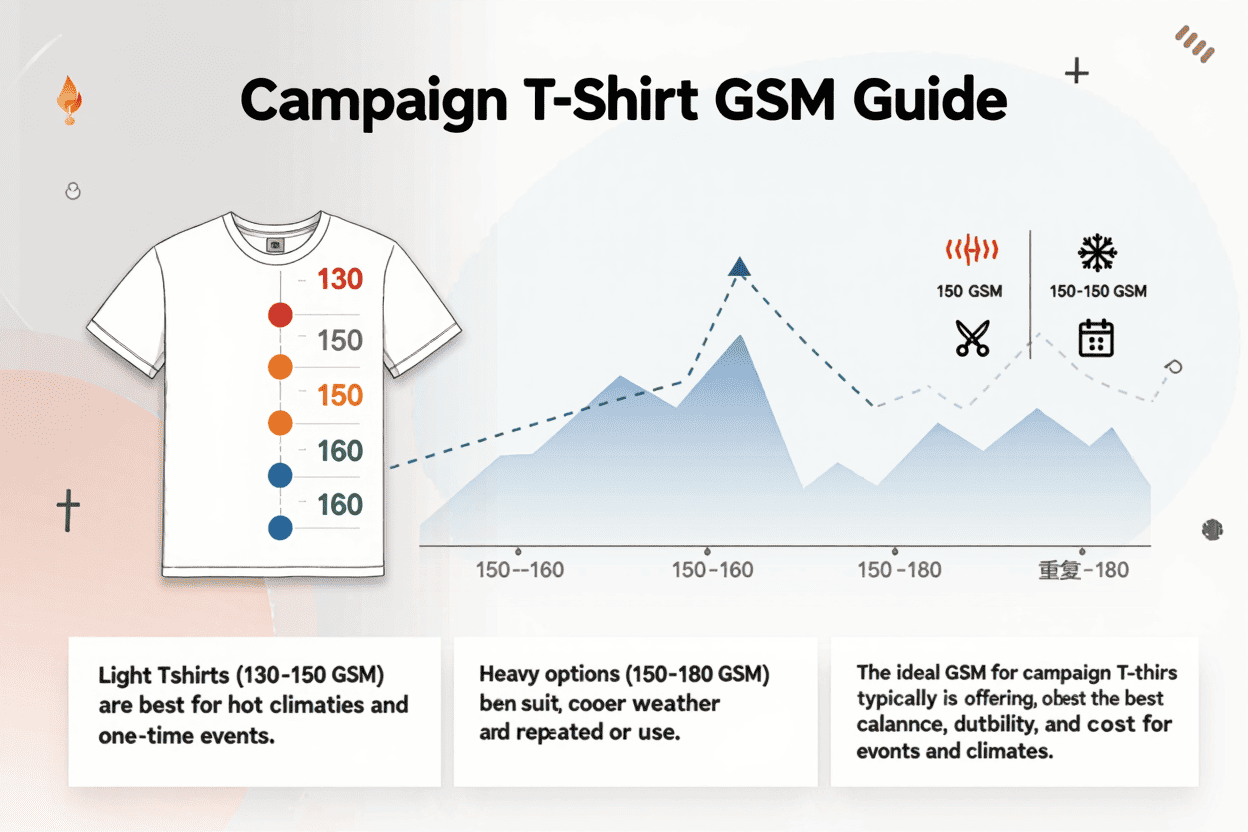
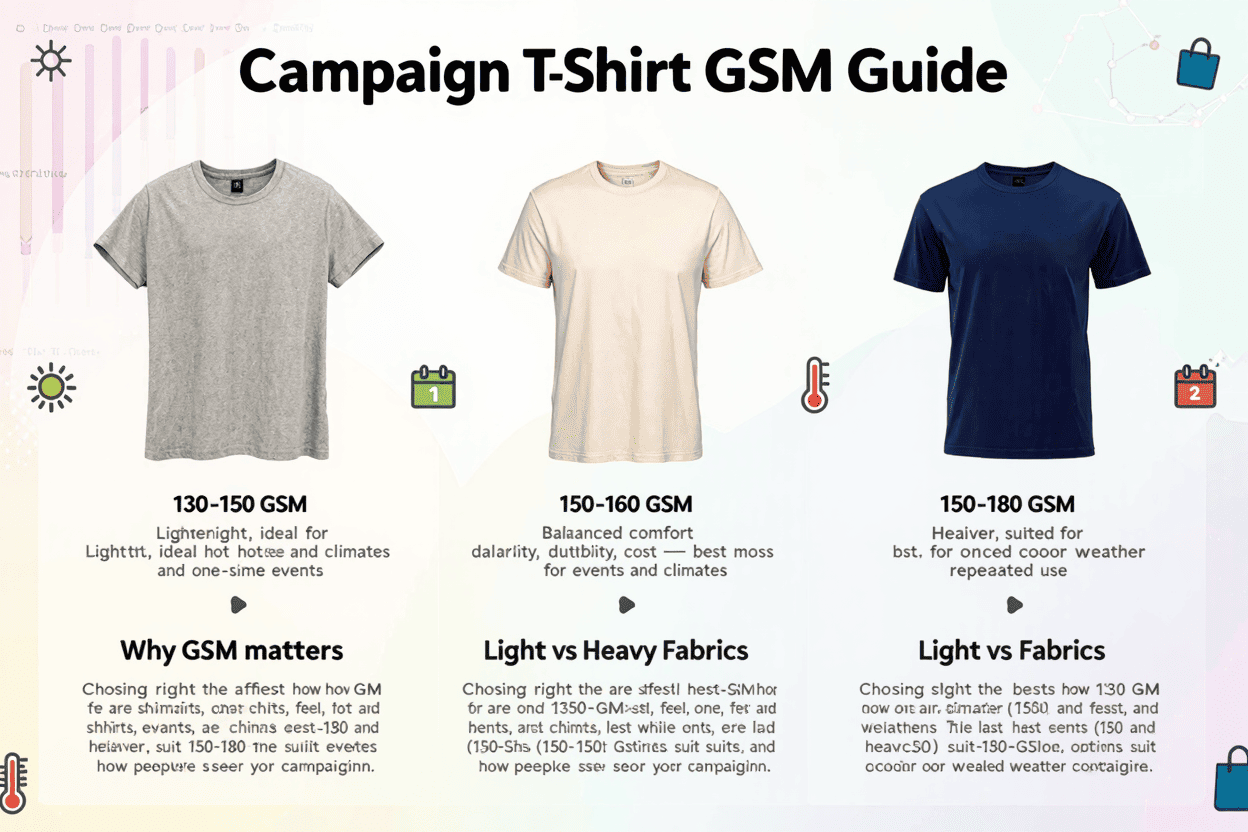
The ideal GSM for campaign T-shirts is typically between 150–160, offering the best balance of comfort, durability, and cost for most events and climates.
Choosing the right GSM is not just about price. It affects how your shirts feel, how long they last, and how people see your campaign. I have worked with many types of buyers. I noticed that those who pick their GSM carefully get better results. Let me break down what GSM is, why it matters, and how you can pick the best one for your needs.
Light or heavy—which works best?
Many buyers feel stuck between light and heavy fabrics. Each has strengths and weaknesses. Making the wrong choice leads to unhappy wearers and wasted money.
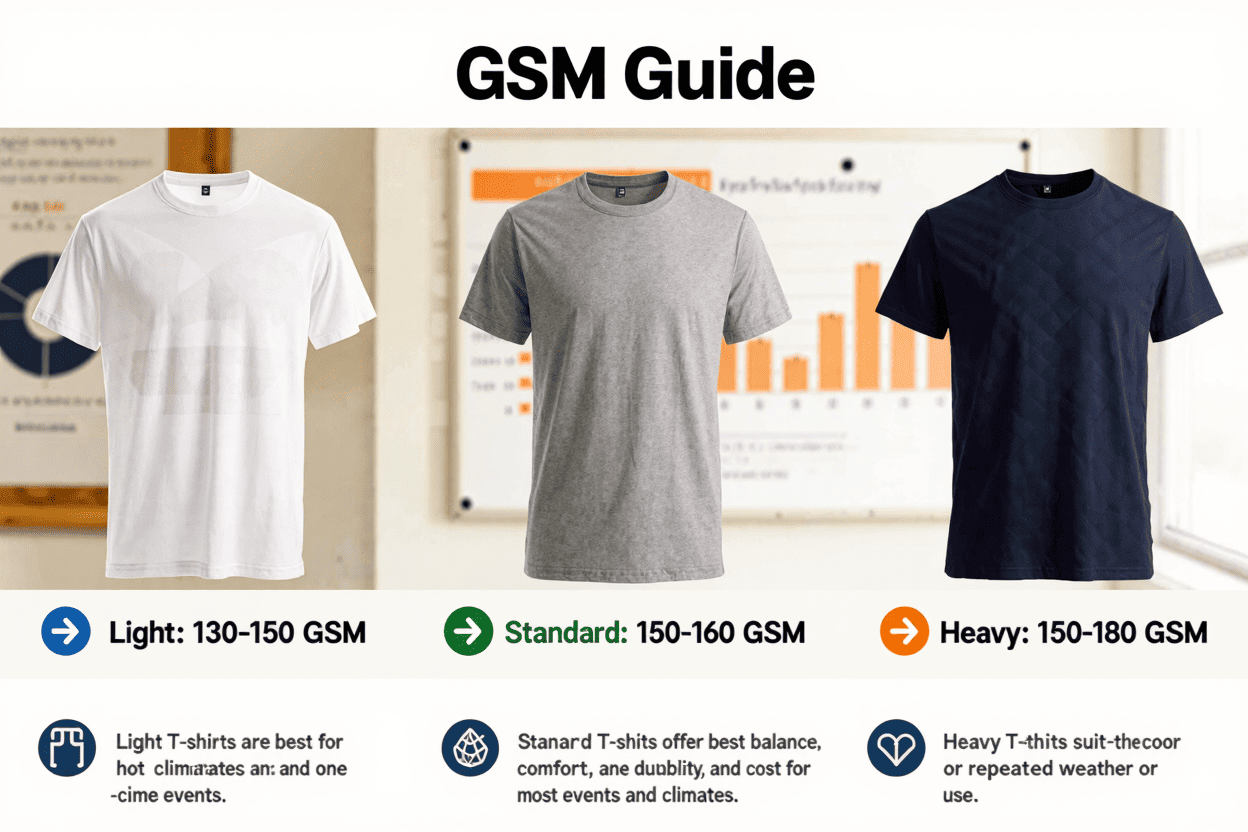
Light T-shirts (130–150 GSM) are best for hot climates and one-time events, while heavier options (150–180 GSM) suit cooler weather or repeated use.
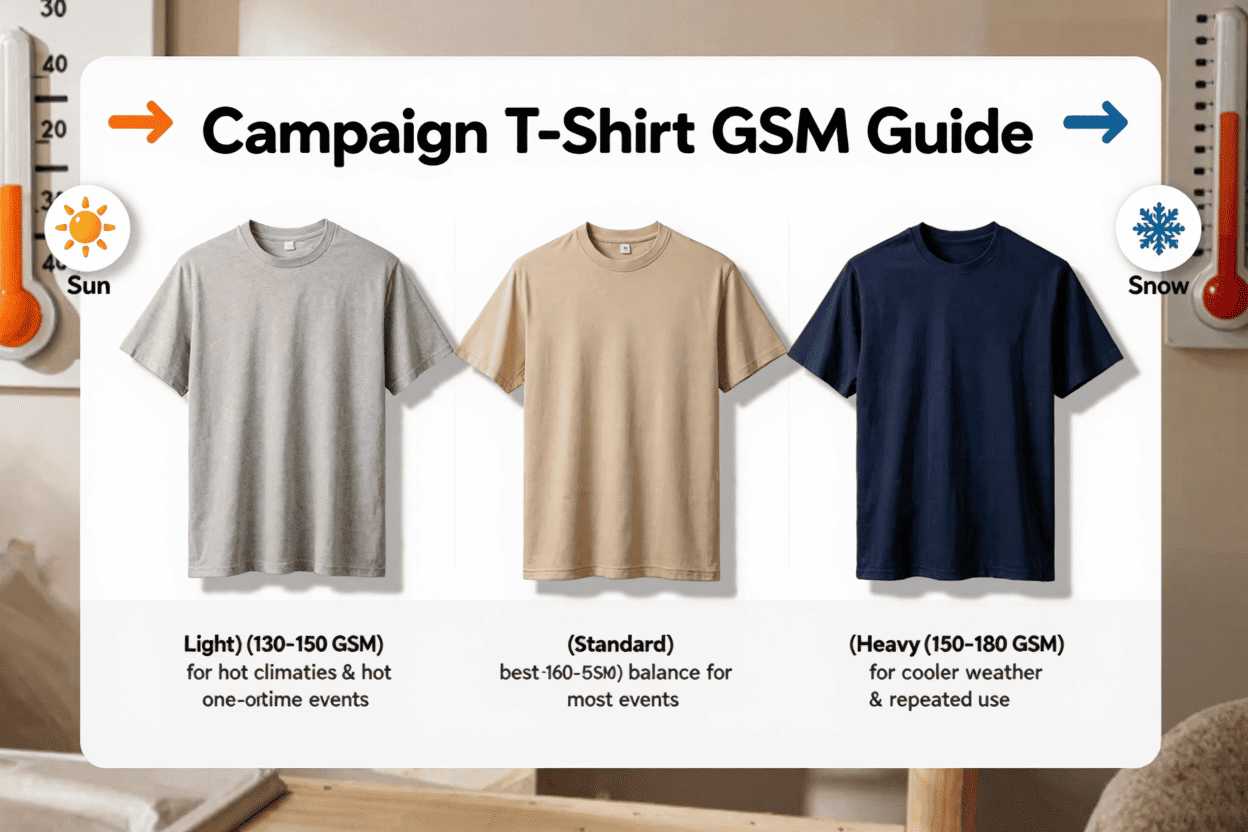
When I talk with campaign organizers, the first question is always about the weight, or GSM, of the fabric. GSM stands for grams per square meter. It tells you how thick and sturdy your T-shirt is. The lighter fabrics, between 130–150 GSM, are thin and easy to wear in hot weather. They are also cheaper to buy, pack, and ship. That makes them popular for big events where shirts are given out quickly. However, lightweight shirts can feel flimsy and may not last long. If you want your shirts to look good on TV or during media events, you need something thicker.
Heavier T-shirts, from 150–180 GSM, feel better. They look more professional. When I supply shirts for formal campaign launches or press conferences, I always recommend these. They give your brand a solid, trustworthy feel. But heavy shirts are more costly. If your event is in a hot climate, wearers may feel uncomfortable. For large-scale distributions, the extra cost and weight can add up. Here is a simple table comparing the two:
| GSM Range | Ideal Use | Pros | Cons |
|---|---|---|---|
| 130–150 GSM | Hot climate, single-use | Breathable, low cost, easy to transport | Feels thin, less durable |
| 150–180 GSM | Repeated wear, media events | Durable, premium feel, better look | Higher cost, less breathable |
I have handled orders from both government and private brands. Sometimes they ask for the cheapest option without thinking about the lasting impact. I always advise them to start with their goals. If they want shirts to last more than one day, move up to at least 160 GSM. If the shirts are just for a flash event, stay on the lighter side. Climate also matters. If your campaign happens in summer, lighter shirts help keep people comfortable. For winter or indoor events, heavier shirts make sense.
Let’s go a bit deeper. The difference between a 130 GSM and a 180 GSM shirt is easy to feel. The lighter one folds softly, almost like tissue. The heavy one holds its shape, giving a crisp look. Thicker shirts also carry prints and embroidery better. If you have a logo, it will look sharper and last longer. But if your budget is tight, and you need to give out thousands of shirts, lighter fabric keeps costs low. You need to balance all these factors for the best result.
How does GSM affect campaign shirt quality and cost?
Campaign buyers want shirts that look good and last, but they also need to keep costs low. GSM directly impacts both quality and spending.
Higher GSM gives thicker, sturdier shirts, but increases both unit price and shipping costs](https://www.reddit.com/r/Frugal/comments/1k7ji0c/a_balanced_quality_to_price_shirt/)s. Lower GSM cuts costs, but reduces durability and perceived value.
Let me share a story from an election campaign order I handled last year. The client had a strict budget. They wanted shirts for hundreds of volunteers. At first, they asked for the lowest price, which meant choosing 130 GSM. I sent them samples. The shirts were light and easy to wear. But when they saw them on their staff, they worried about the shirts looking too cheap. They asked if the fabric would hold up through several washes. I explained that the lighter shirts are fine for one-day use but will lose shape fast.
We ran a quick calculation. Moving up to 160 GSM would cost a bit more per shirt, but they would look better and last longer. The prints stayed sharp. The staff felt more comfortable. The client ended up happier, and the shirts survived the campaign. Here is a breakdown of cost versus quality in practical terms:
| GSM | Cost per shirt | Durability | Print Quality | Shipping Cost |
|---|---|---|---|---|
| 130 GSM | Lowest | One-day use | Basic | Lowest |
| 150 GSM | Low | Short-term | Good | Low |
| 160 GSM | Moderate | Multiple wears | Better | Moderate |
| 180 GSM | High | Long-term | Best | Highest |
Every buyer needs to decide what matters most. If you want shirts to make a strong impression, go for thicker fabric. If you need to stretch your budget, lighter options are okay, but make sure your event won’t suffer from shirts that tear or lose their shape. I always recommend testing samples before placing a big order. Feel the fabric. Wash it a few times. Check if the print stays bright. That way, you avoid surprises after the event.
What GSM strikes the best balance for most campaign needs?
Most buyers do not want to risk shirts that wear out too fast or pay for unnecessary thickness. Finding a sweet spot is key.
The 150–160 GSM range delivers the best trade-off between comfort, durability, cost, and appearance for most campaign T-shirts.
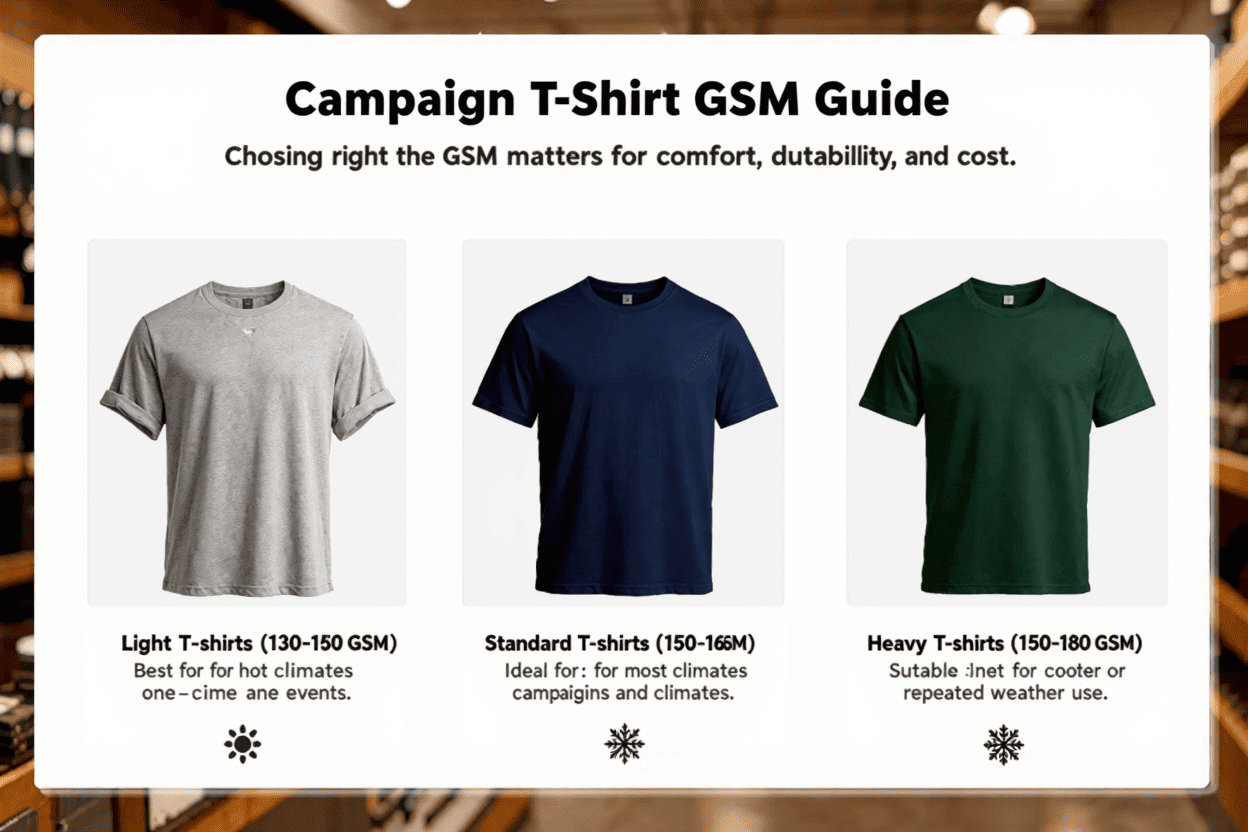
I have worked with clients from many fields—government, brands, event organizers. They often ask for advice on GSM. Over the years, I found that the 150–160 GSM range keeps everyone happy. It is thick enough to last through several wears. The shirts look good in photos and videos. They do not feel too hot. The cost stays reasonable, and shipping is manageable.
For private label brands, this range means you can add custom tags and packaging without worrying about shirts looking cheap. For elections, the shirts stay crisp during rallies and door-to-door canvassing. For supermarkets and wholesalers, you get a product that meets expectations without pushing up costs.
Here is why 150–160 GSM works:
- It is not too thin or too thick.
- It prints well, keeping logos and slogans clear.
- It feels soft but holds its shape.
- It suits both hot and mild weather.
- It does not break your budget.
If you need to order samples, try both 150 GSM and 160 GSM. Compare how they look, feel, and carry your branding. In my experience, most campaigns end up picking this range. You get shirts people want to wear, and your event looks polished.
Conclusion
150–160 GSM is the best choice for campaign T-shirts, balancing comfort, durability, and cost for most events and climates.