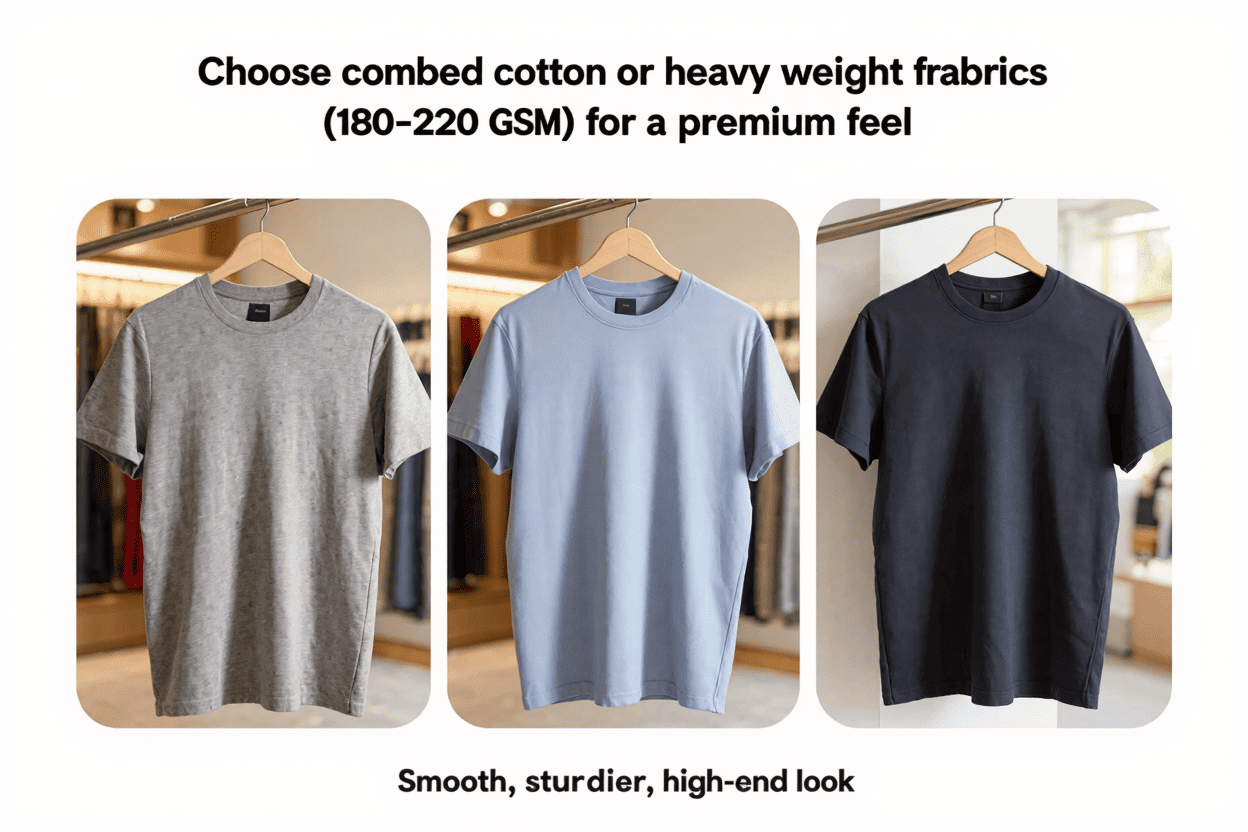
Many people struggle to make their campaign or promotional T-shirts look more professional and premium, because they are unsure which materials actually feel better and why.
If you want a T-shirt to feel premium, choose combed cotton or heavy-weight fabrics (180–220 GSM). These materials are smoother, sturdier, and look high-end, giving your campaign a polished first impression.
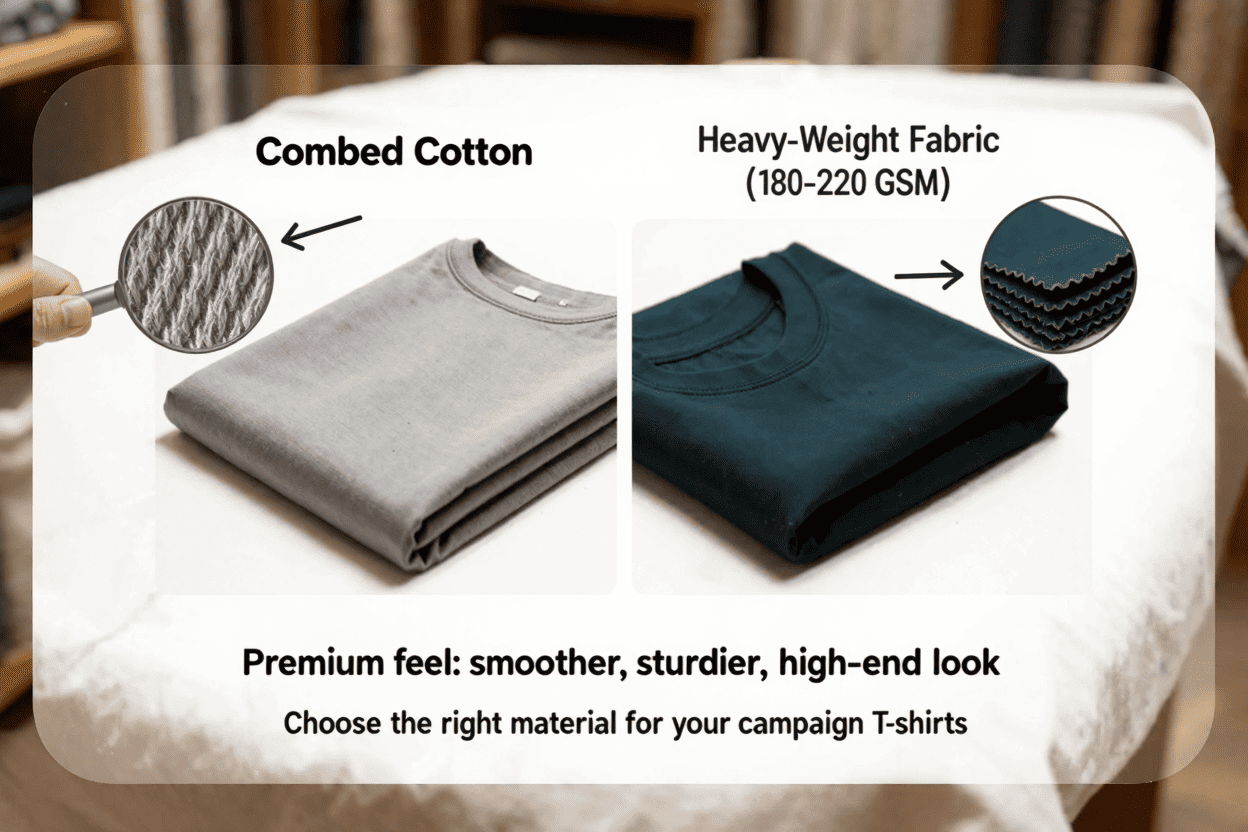
Everyone wants their promotional apparel to stand out, not just with a logo but with a real sense of quality. I have worked with clients who thought all cottons were the same until they touched the difference. Let me show you the details that matter.
How to upgrade your campaign look?
Every campaign or event wants the same thing: T-shirts that feel memorable, not just free. The secret is in the fabric—the foundation of any impression.
Upgrade your look by choosing combed cotton, higher GSM fabrics, and well-crafted blends. These choices immediately make T-shirts look and feel more premium, boosting your campaign’s professionalism.
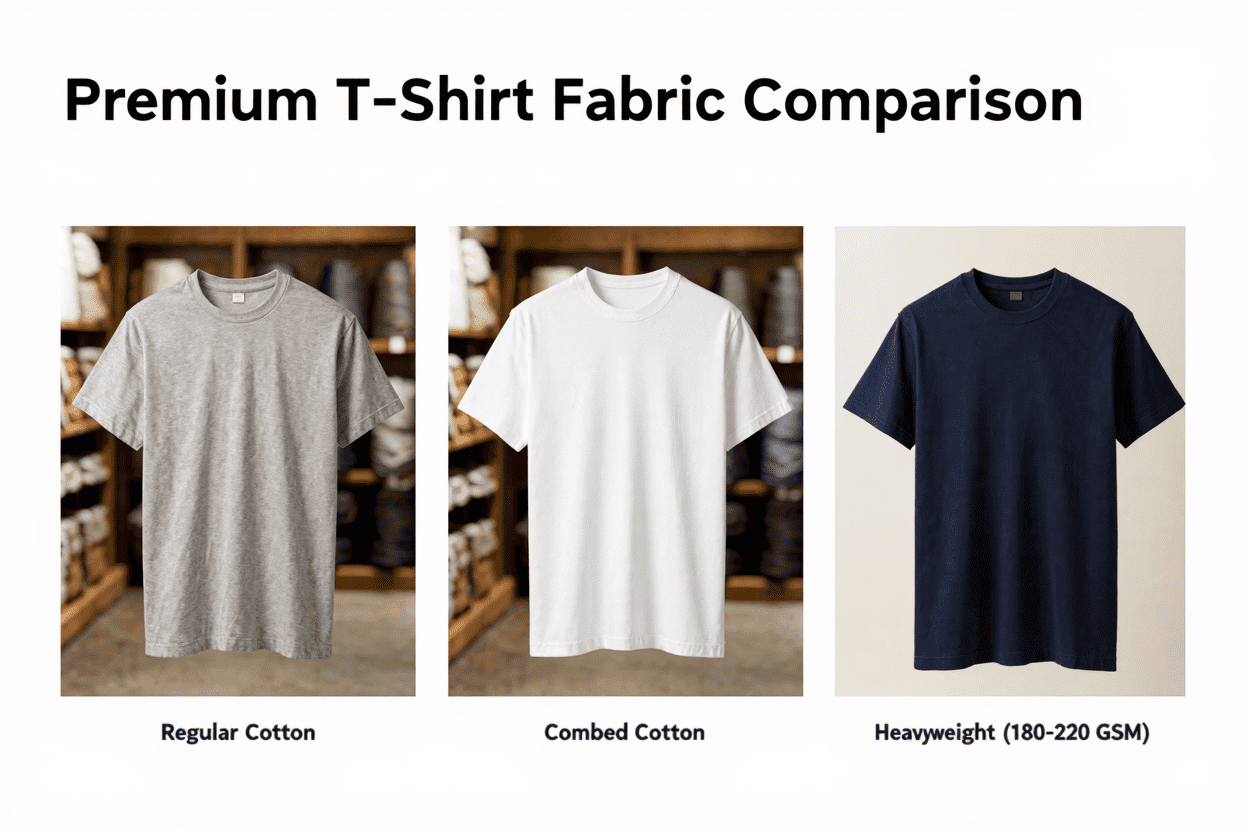
I have seen first-hand how fast the feel of a shirt changes when you choose different materials. Ordinary cotton may be affordable, but it rarely wins compliments. Here is how I break down the options for my clients:
What role does fabric weight (GSM) play?
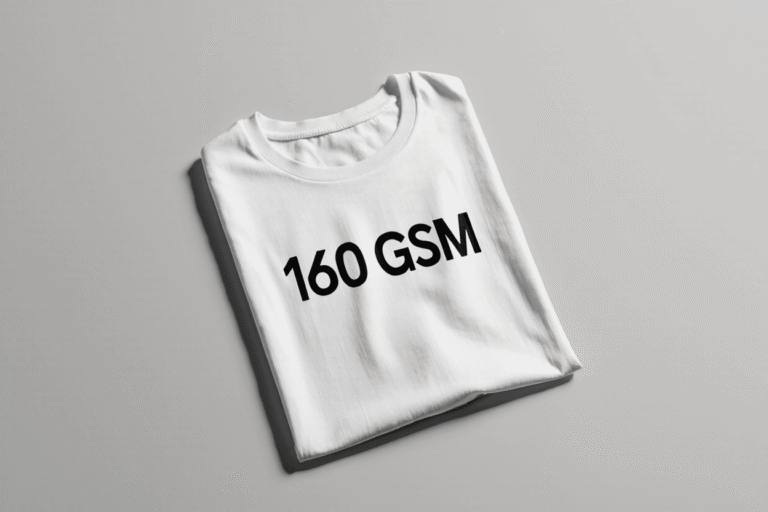
Fabric weight, measured in grams per square meter (GSM), directly impacts how a T-shirt holds its shape and feels on the skin. Most cheap promotional shirts sit at 120–160 GSM. They feel flimsy and show every crease. When I recommend 180–220 GSM, clients notice a firmer hand and a “dense” sensation that suggests quality. Heavyweight shirts drape better, resist stretching, and look more substantial, even after many washes.
| Fabric Weight | Typical Use | Feel | Look | Durability |
|---|---|---|---|---|
| 120-160 GSM | Basic promo tees | Light, thin | Can be sheer | Prone to warp |
| 180-220 GSM | Premium promo | Dense, crisp | Opaque, flat | Holds up better |
In my experience, just upgrading to a heavier weight is the fastest way to lift your T-shirt’s class. It signals value at first touch.
Why choose combed cotton or high-quality blends?
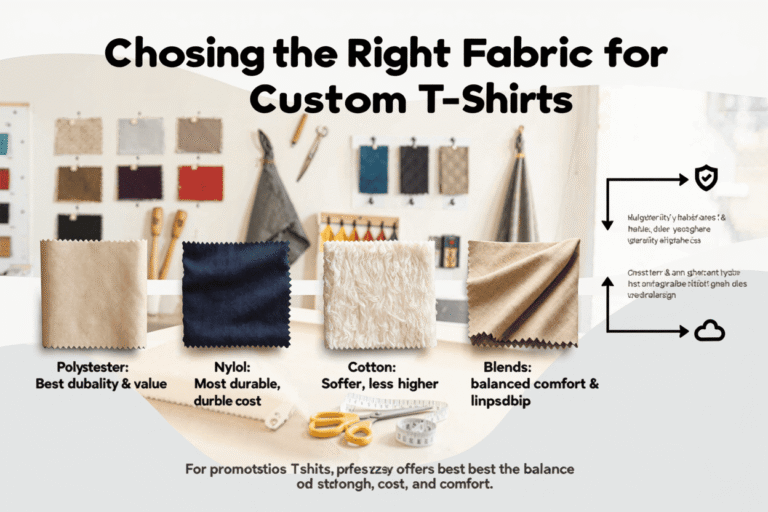
Not all cottons are equal. Regular cotton is soft, but combed cotton is made by removing short fibers and impurities, leaving a finer, smoother yarn. The result is a shirt that feels silky to the hand and looks cleaner on the surface. Blends like cotton and spandex give added stretch, which means the shirt hugs the body better and bounces back after washing.
| Material | Hand Feel | Surface Look | Benefits |
|---|---|---|---|
| Regular cotton | Soft, sometimes rough | Basic, uneven | Cheap, widely used |
| Combed cotton | Silky, smooth | Flat, refined | Premium, less pilling |
| Cotton+Spandex | Stretchy, snug | Sleek, clean | Comfortable, form-fit |
| Polyester blend | Cool, smooth | Matte or shiny | Durable, fast-dry |
My best campaigns use combed cotton or high-grade blends, never bargain-bin fabric. These feel like “real” T-shirts, not giveaways.
Does finishing and color matter?
A shirt’s finish, including tight spinning (double yarn, compact spinning), reduces fuzz and makes the fabric look neat. Dye consistency is another secret—rich, even colors (especially in deep or pure shades) look more expensive. I always steer clients to avoid streaky or faded dye jobs, which look cheap even on good fabrics.
| Detail Type | Impact on Quality | Customer Perception |
|---|---|---|
| Compact spinning | Less pilling, cleaner | "This feels smooth" |
| Even dyeing | Rich, solid color | "Looks valuable" |
| Deep/pure color | Premium, timeless | Matches brand image |
I have seen how a navy or pure black shirt with even color can command respect, while a faded red just gets ignored.
Does construction and print technique affect the premium feel?
Yes—fit and print make a big difference. A shirt that fits well (not too loose or tight) looks tailored. Reinforced necklines and double-stitching make the T-shirt last longer and look finished. On prints, thick or high-density methods sit boldly on the fabric, while cheap prints fade or crack easily.
| Construction Detail | Why It Matters |
|---|---|
| Fitted pattern | Looks modern, neat |
| Reinforced neckline | Prevents stretching |
| Double stitching | Stays in shape |
| High-density print | Bright, professional |
When I suggest double-stitched seams, clients are genuinely surprised by how much sturdier their shirts feel. It is a small detail that makes a big impact.
Can packaging really make a difference?
It can. Neat folding, individual polybags, or branded cartons all affect how recipients perceive value. Even the best shirt loses impact if it looks wrinkled or carelessly packed. I always recommend investing in basic packaging upgrades for high-profile campaigns.
| Packaging Option | Perceived Value |
|---|---|
| Loose in carton | Low, generic |
| Neatly folded | Clean, cared for |
| Individual polybag | Gift-like, premium |
| Branded box/bag | Custom, impressive |
I have stood at hand-outs where shirts in neat polybags were picked up first, simply because they looked special.
Conclusion
Choosing premium-feeling T-shirts comes down to good fabric, smart details, and thoughtful finishing—these choices turn simple promo shirts into products your audience will remember.