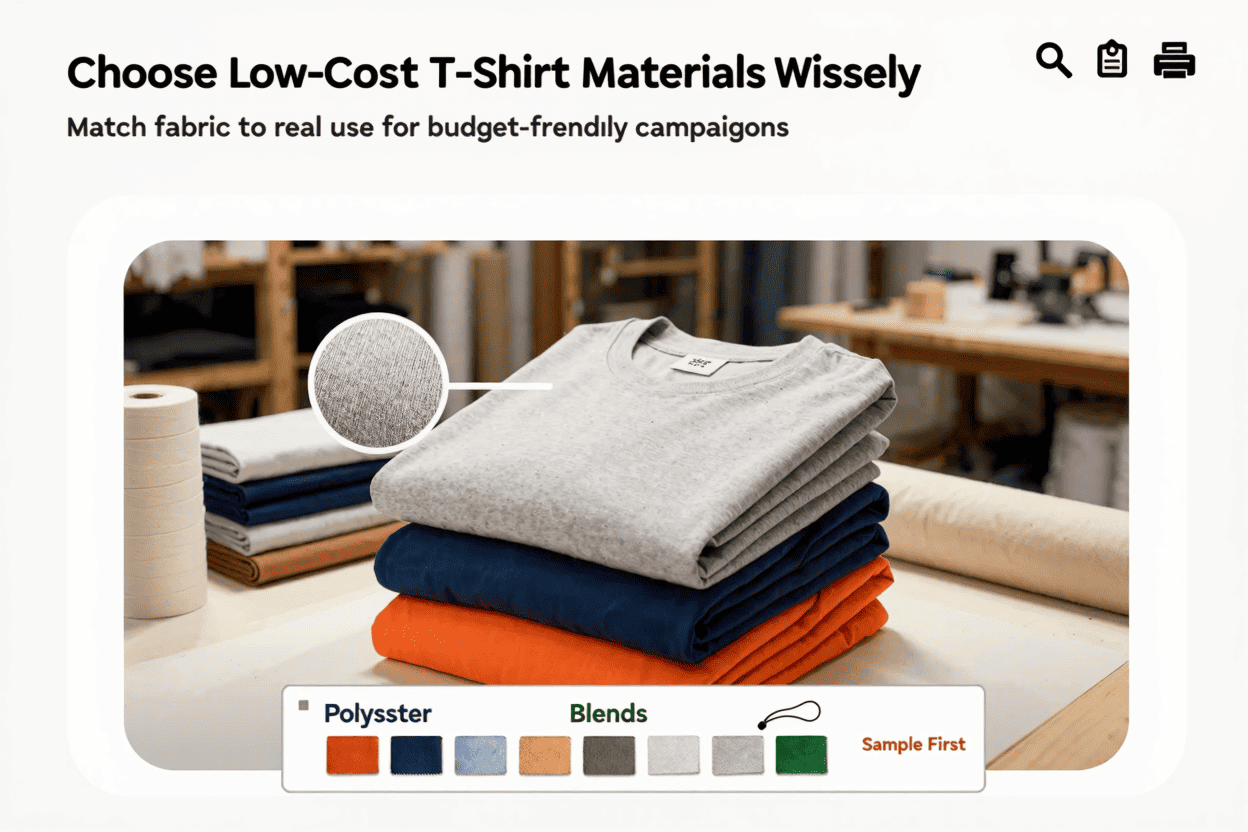
The price of T-shirt materials can decide the fate of your campaign budget. Choose wrong, and you may pay too much or disappoint your clients.
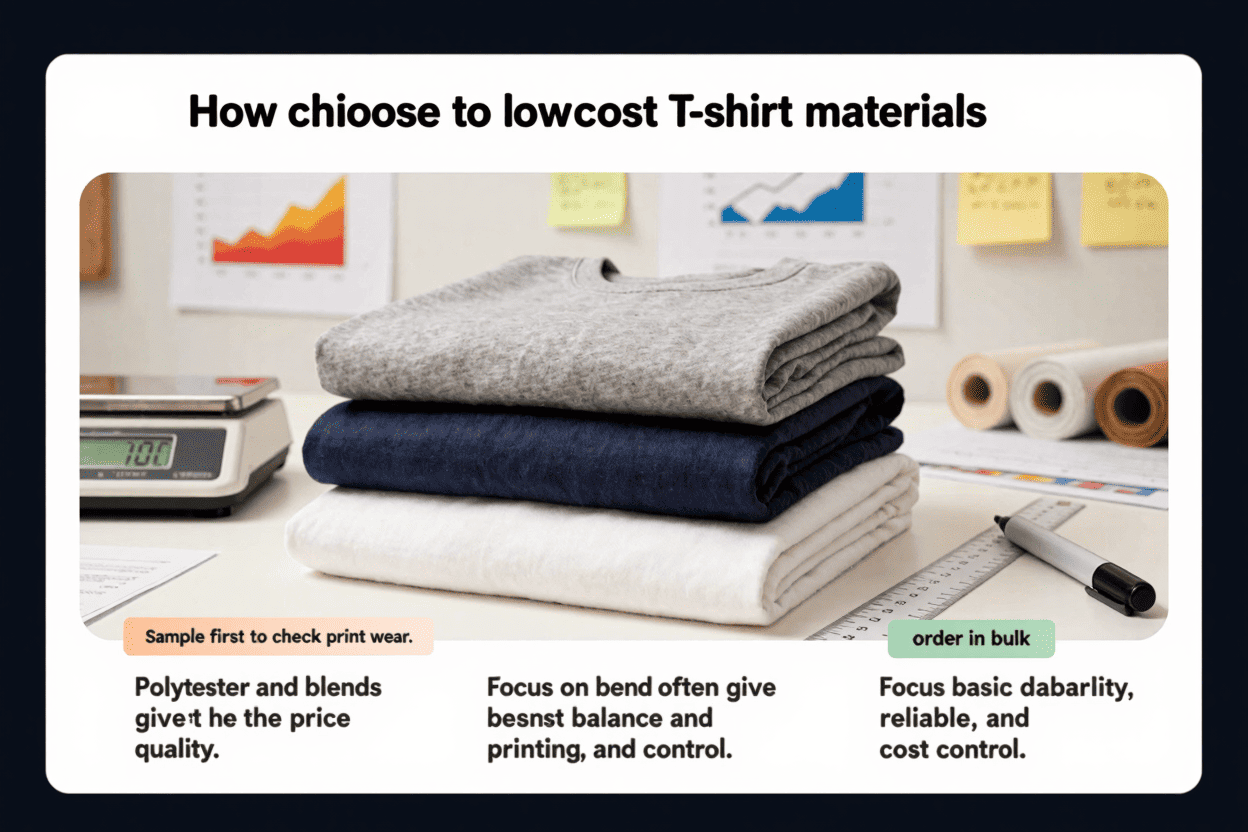
If you want to choose low-cost materials for campaign T-shirts, start by matching fabric to the real use. Polyester and blends often give the best balance of price and quality. Focus on basic durability, reliable printing, and cost control.
The way you pick materials can change everything. In my experience, if you match the right fabric with the event's needs, you save money and avoid many headaches. Let's see how to make smart choices that do not sacrifice the results you want.
Save money without losing quality?
People worry that saving money means cutting corners. That fear is real. Cheap material can ruin the whole project.
To save money without losing quality, focus on cost-effective fabrics like polyester or blends. Pick mature, stable materials. Avoid extra processes. Order in bulk. Always sample first to check print and wear.
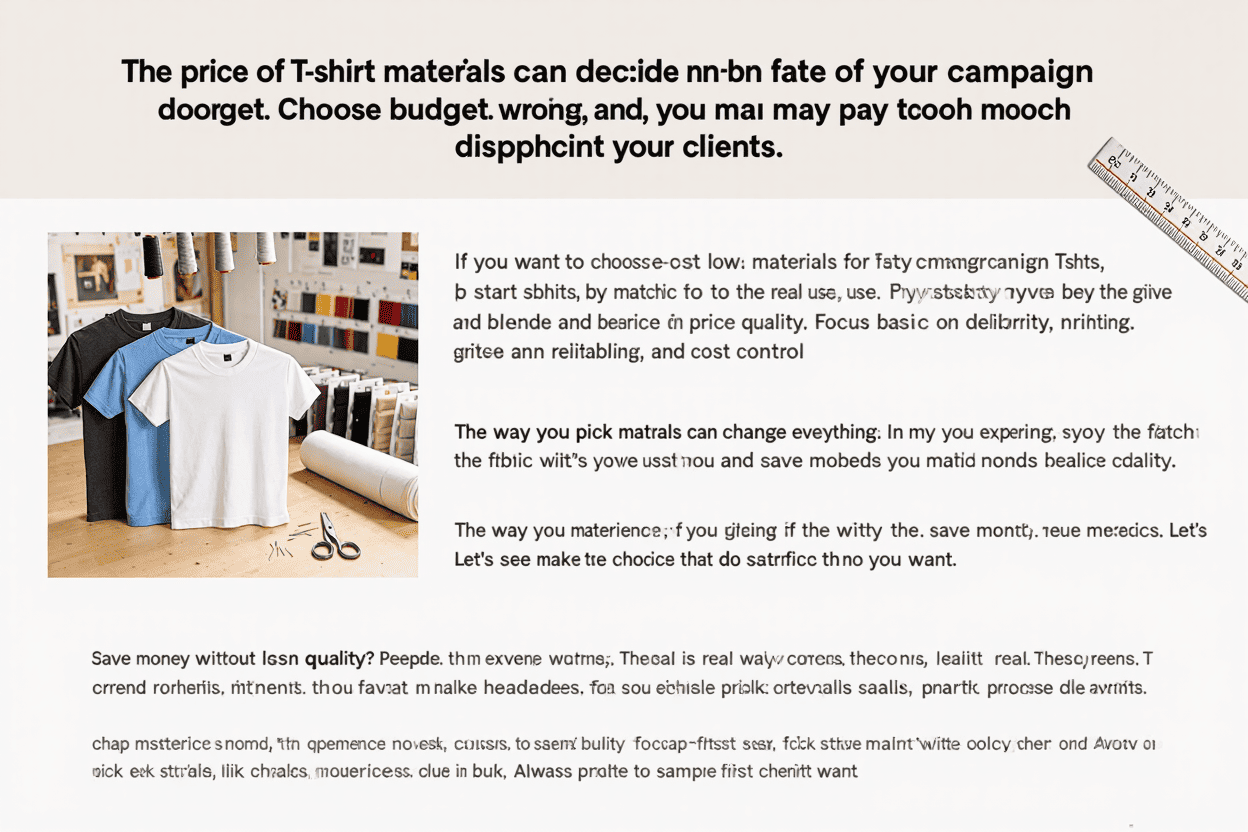
When I started making campaign T-shirts for big orders, I often struggled with this choice. Should I go for the lowest price? Or pay more for peace of mind? I learned that understanding the real use case is everything. If a T-shirt is for a one-day event, nobody needs expensive cotton. But the shirt must not fall apart or fade after one wash. Here is how I break it down:
What is the right fabric for low-cost campaign T-shirts?
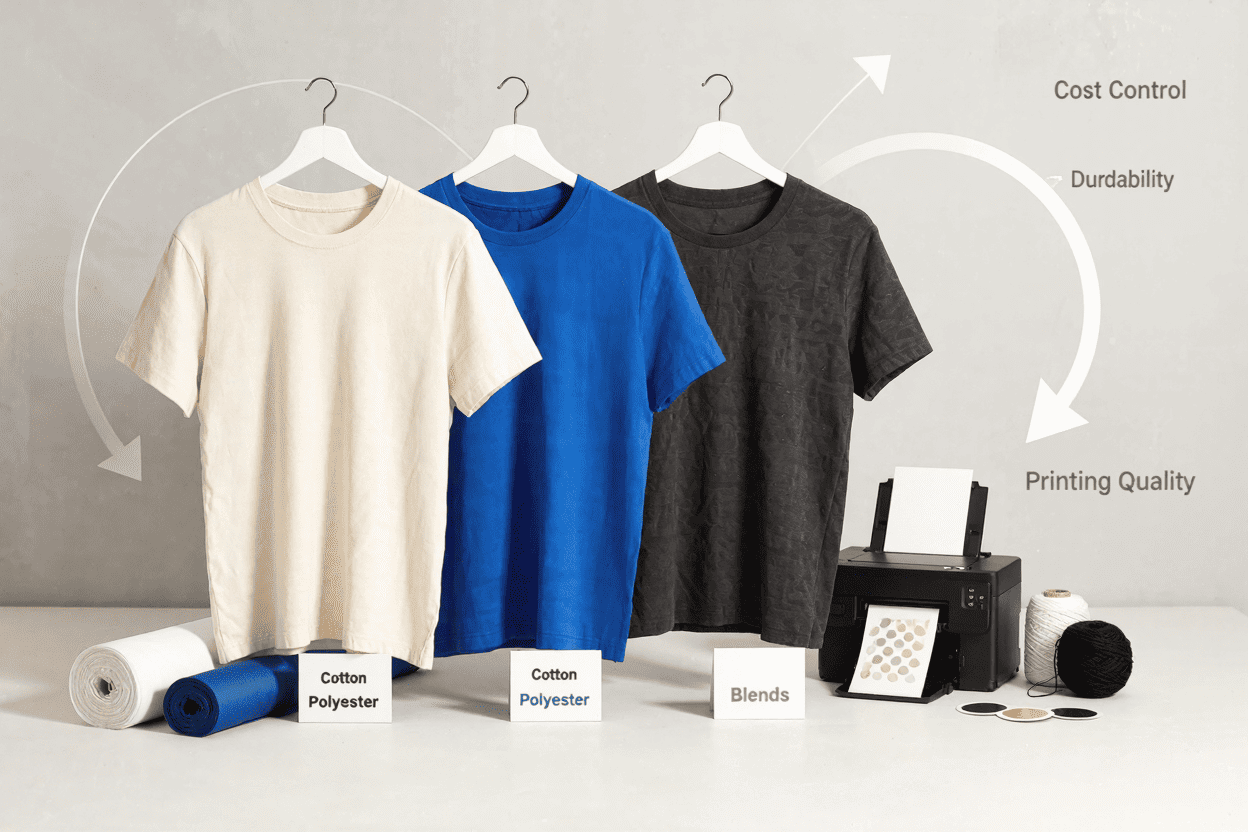
For most campaign or promotional shirts, polyester or poly-cotton blends are my first choice. These fabrics offer several benefits:
| Fabric Type | Cost | Durability | Print Quality | Touch | Typical Use |
|---|---|---|---|---|---|
| 100% Polyester | Low | Medium | Very Good | Smooth, Cool | Campaign, Events |
| Polyester-Cotton | Low | Medium | Good | Softer | Promotions, Uniform |
| 100% Cotton | High | High | Excellent | Soft, Thick | Premium, Retail |
A polyester T-shirt is cheap to make, dries quickly, and prints well. A cotton-poly blend feels a bit softer and can look better for giveaways. I always consider customer expectations and how long the shirt must last.
How do you control costs without killing quality?
The key is to manage fabric weight (grams per square meter, GSM). Light fabrics are cheaper. But too light, and they look see-through or tear. For campaign shirts, 120–140gsm polyester works well. You also want regular, stable fabric types—not new or rare ones that can vary in supply or quality.
Ordering in bulk helps too. Most factories, like mine, give better prices for big orders. And if you avoid embroidery or special treatments, production costs drop fast.
What process steps keep quality stable?
The biggest mistake is to skip sampling. I always send a pre-production sample for the client to check print clarity, color, and fit. If they approve, I lock in materials for the whole batch. This means what you see in the sample is what you get for all shirts. This single step dodges most quality disasters.
How do you balance price with quality for big events?
Choosing the wrong balance between price and quality can ruin your brand at a public event. The pressure is huge.
I balance price and quality by sticking to proven fabrics, avoiding over-design, and working with reliable suppliers who can repeat the same result every time.
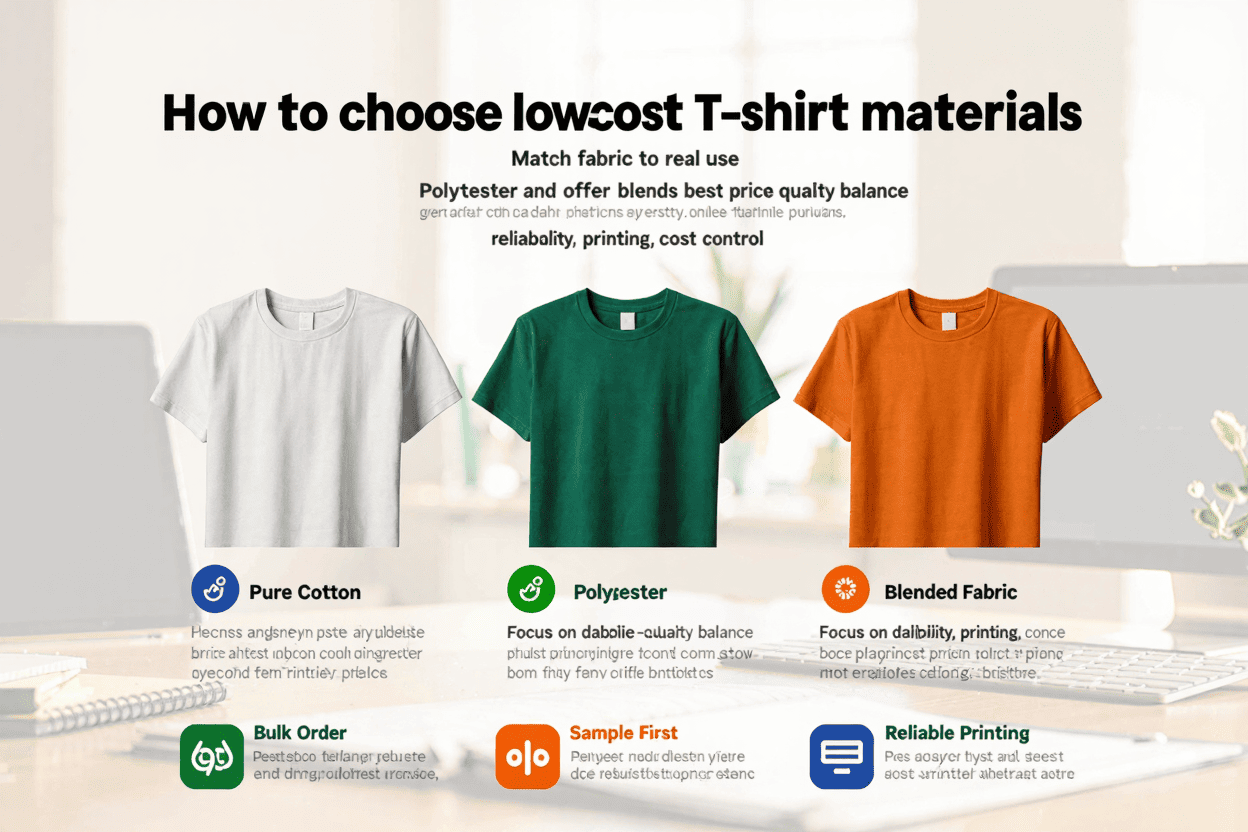
I remember one election season when a client wanted the cheapest shirt possible. They insisted on a super-thin fabric from another supplier. The shirts ripped when people waved flags. The client called me in a panic. We switched to a regular dot-mesh polyester. It cost a few cents more, but the campaign went smoothly. Now, they trust me to make these calls.
What is the safest low-cost fabric for mass shirts?
Dot-mesh polyester is my go-to for big, budget campaigns. It is light, strong enough for events, and takes prints well. Here is how it compares:
| Fabric Name | GSM | Print Quality | Durability | Price per pc (est.) | Comments |
|---|---|---|---|---|---|
| Dot-mesh Polyester | 130 | Good | Good | Very Low | Best for single-use, bulk |
| Ring Spun Cotton | 150 | Very Good | High | High | Premium giveaways only |
| Poly Cotton Blend | 140 | Good | Medium | Medium | Softer, but pricier |
I always test print and wear before mass production. If the shirt must survive 3-5 washes and look good for one event, dot-mesh is safe. If the client wants more, I recommend moving up to a cotton blend.
How does design affect overall cost?
Simple design is your best friend for cost control. Each color you add, each extra logo, or any embroidery will raise the price. For example, a single-color front print is cheap and fast. Adding full-color prints or back-neck labels bumps up the cost.
If you want to save, keep artwork simple and avoid special effects like puff prints. For private label jobs, stick to basic neck tags and skip fancy packaging unless the client demands it.
How do you make sure the supply is stable and quality does not drop?
Changing suppliers or fabrics can create big risks. Unstable supply means last-minute changes or inconsistent quality.
To keep supply steady and quality even, I use mature, off-the-shelf materials with trusted mills. I avoid unproven sources. I keep close relationships with all fabric suppliers and monitor every batch.
One time, a new supplier offered me fabric at a rock-bottom price. I tried a small batch. The material quality went up and down. Delivery dates slipped. I learned to stick with mills where I have long-term contracts, even if the price is a bit higher. Clients care more about steady quality than the very lowest cost.
What tests should I run before placing bulk orders?
Testing matters. I always check for:
- Color fastness (does it fade?)
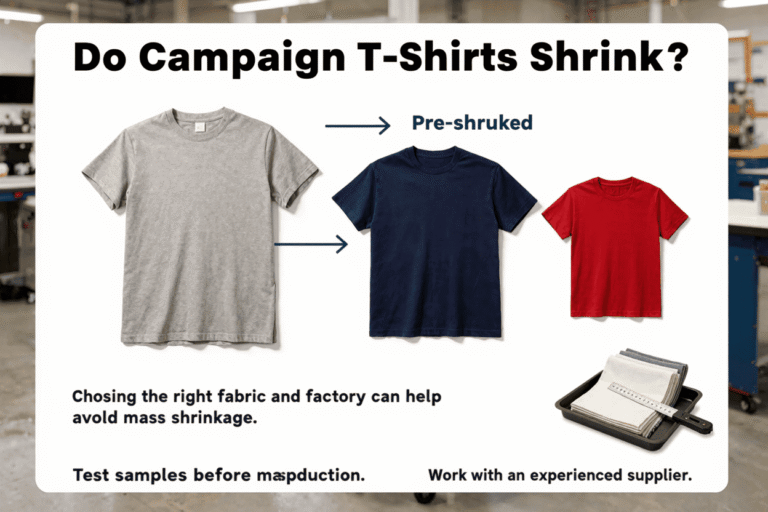
- Shrinkage (wash once, does it change size?)
- Print quality (is the logo sharp, does ink stick?)
- Stretch and tear (pull the shirt, does it hold?)
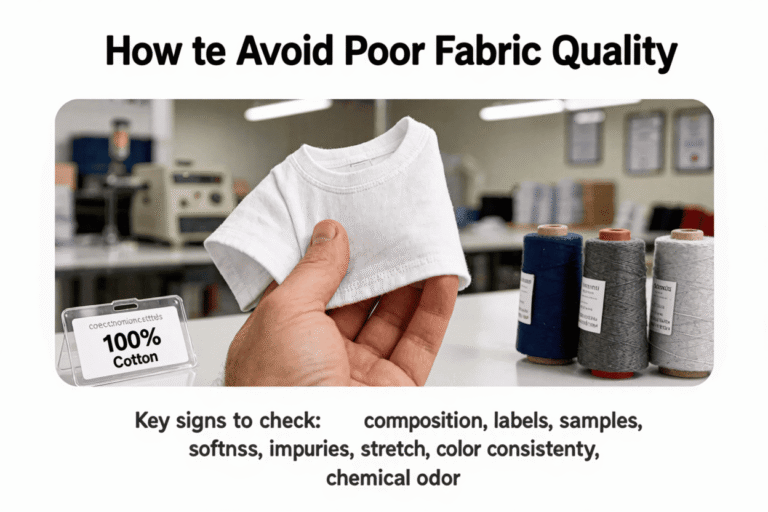
I run these tests on every new batch. If it passes, I move to bulk production. If not, I change suppliers or fabric.
Here is a checklist:
| Test Item | Pass/Fail Criteria | How to Check |
|---|---|---|
| Print Quality | No smudge, clear edges | Inspect after printing |
| Color Fastness | No visible fade after wash | Machine wash, air dry, compare |
| Durability | No holes, keeps shape | Pull seams, inspect after wear |
| Fit | Consistent size per spec | Measure and compare to pattern |
The more stable your supply chain, the less chance you have of sudden problems. When possible, I advise clients to lock in suppliers for at least one season.
Why is it dangerous to always chase the lowest price?
Going for the lowest bid can backfire. The material may be poor, or the factory cuts corners. In the end, the brand image suffers.
It is risky to always pick the lowest price. You may get bad materials, late delivery, or shirts that fall apart. Long-term, this costs more than what you save.
I once had a client who switched to a cheaper factory for a huge supermarket order. Their shirts arrived misshaped, with uneven sleeves. The client lost the contract. That was a tough lesson for both of us.
How do you get the best value, not just the lowest cost?
Value means a fair price for good quality. I get value by knowing my materials, checking every batch, and building trust with suppliers. I explain to clients that paying a little more for reliable quality beats saving a few cents and risking a failed event.
Here are value tips:
- Use mature, stable materials (like dot-mesh polyester)
- Work with suppliers who give samples and guarantee repeat quality
- Order in bulk for better rates
- Avoid extra design costs
- Make approvals before mass production
Conclusion
Choosing low-cost materials means knowing your event needs and balancing price with stable quality. Reliable suppliers and simple design are the safest path.