Many campaign organizers struggle to keep volunteers comfortable in hot weather, often leading to low morale and poor participation.
The best materials for hot weather are lightweight and breathable fabrics, such as cotton or functional polyester, that wick sweat and allow air to flow. These help reduce heat and discomfort.
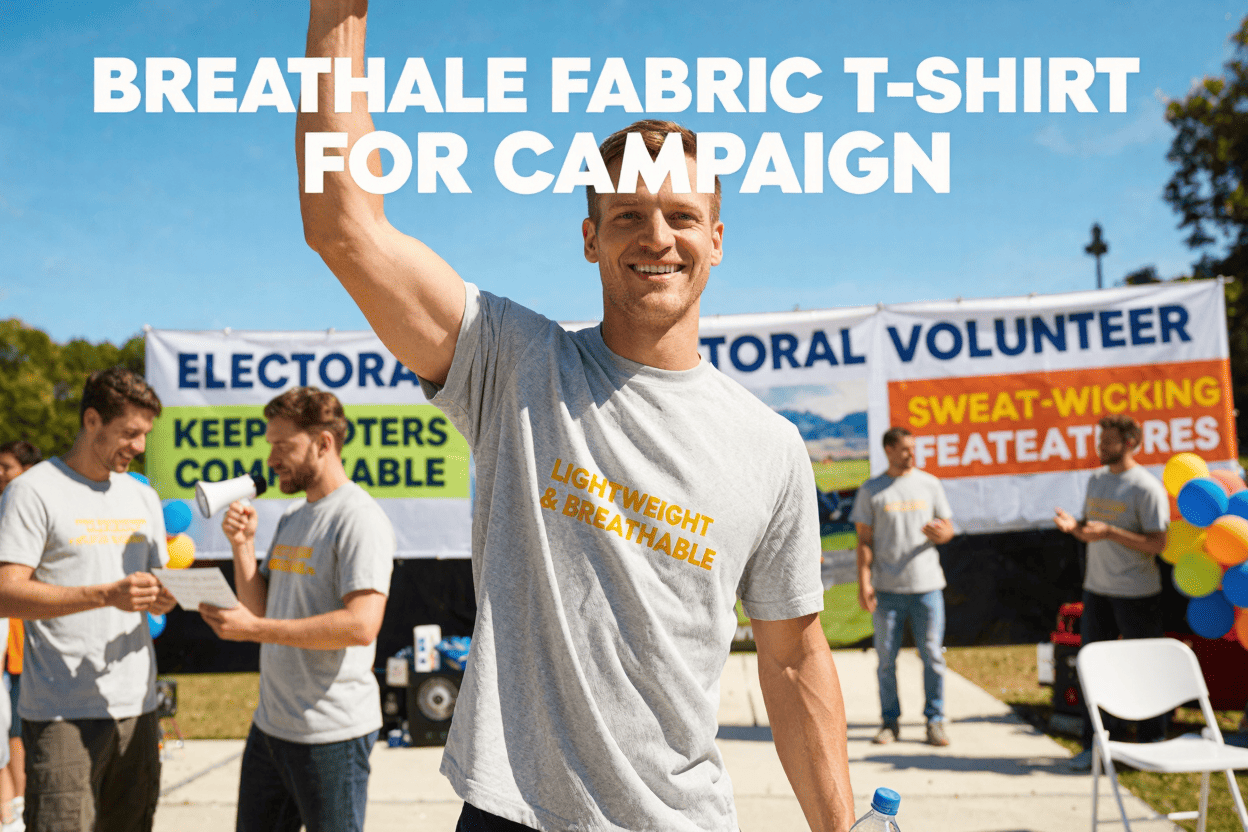
Choosing the right material not only improves comfort but also boosts participation and visibility at events. When people feel good in what they wear, they are more likely to join and stay active. Let me share my experience and what I have learned about selecting the best materials for campaign and promotional T-shirts.
Keep voters comfortable?
Many election teams forget that comfort is the key to keeping volunteers visible and active, especially in hot climates.
For hot weather, breathable fabrics and sweat-wicking features keep campaigners comfortable, reduce heat buildup, and prevent discomfort. Lightweight, loose-fitting T-shirts are ideal to keep volunteers engaged and out in the crowd.
Why breathable fabric matters
When the sun beats down, fabric breathability decides whether your team stays cool or struggles. I have seen many teams wear thick, non-breathable shirts, which led to volunteers refusing to wear them after just a few hours. Breathable fabrics allow air to flow and sweat to evaporate, reducing the sticky feeling and skin irritation that comes with heat.
Let’s break down the most common materials:
| Material | Breathability | Sweat Wicking | Comfort | Durability |
|---|---|---|---|---|
| Cotton | High | Medium | High | Medium |
| Polyester | Medium | High | Medium | High |
| Mesh/Net | Very High | High | High | Medium |
| Blends | High | High | High | High |
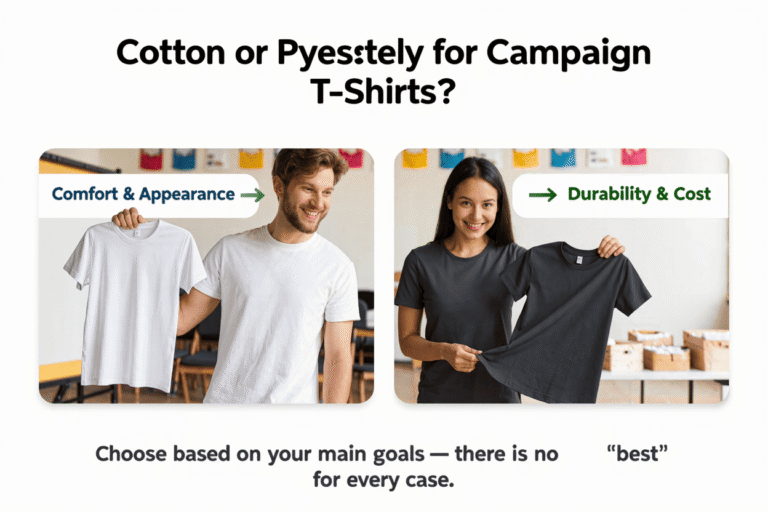
Cotton is naturally absorbent. It feels soft and comfortable, especially when made with a lower GSM (130-160). Polyester dries fast and pulls sweat away, which is helpful for outdoor rallies. Mesh fabrics, with their open structure, are incredibly breathable and light, making them perfect for extreme heat. Blended fabrics combine the best parts of each, balancing comfort, breathability, and durability.
Loose-fitting T-shirts help air circulate. People can move easily and stay cool. I always recommend avoiding heavy or thick fabrics, which trap heat and make volunteers uncomfortable. When shirts are comfortable, volunteers wear them longer, and your campaign gets more exposure.
How sweat-wicking and quick-drying fabrics help
When volunteers work under the sun, sweat builds up fast. Sweat-wicking fabrics make a big difference. I have seen teams switch from thick cotton to quick-dry polyester and their volunteers became much more active and happy.
Sweat-wicking fabrics pull moisture away from the skin. Quick-drying materials evaporate sweat quickly, keeping everyone dry. This stops shirts from becoming heavy and sticky. It also prevents skin problems like rashes.
| Feature | Benefit |
|---|---|
| Sweat-wicking | Keeps skin dry |
| Quick-drying | Prevents heavy feeling |
| Lightweight | Reduces burden |
| Softness | Improves comfort |
Polyester is great for this. It dries fast and keeps volunteers comfortable, even during long hours. Mesh fabrics do even better, especially in extreme heat. Cotton absorbs sweat, but dries slower. Blends like cotton-poly offer a good balance.
I always remind clients: Comfort affects willingness to participate. If people feel good, they stay. If shirts are wet and sticky, they leave.
Why GSM and fit matter for long-term wear
GSM (Grams per Square Meter) is how thick the fabric is. Lower GSM means lighter, thinner shirts. These are best for hot weather. I have worked with teams who used 180 GSM shirts, and volunteers complained about heaviness. When we switched to 130 GSM, complaints stopped and people wore shirts all day.
Loose fits keep air moving and stop shirts from sticking to skin. Tight shirts trap heat and restrict movement. Softness adds to comfort and stops irritation.
| GSM Range | Best Use |
|---|---|
| 130-160 | Hot weather, outdoor |
| 170-180 | Mild weather, indoor |
| >180 | Cool weather, winter |
Lightweight shirts are easier to wear for hours. They lower fatigue and encourage longer participation. Softness can make shirts feel cooler and stop chafing.
When we focus on comfort, volunteers are more likely to wear shirts every day, giving campaigns more exposure and making the event look lively.
The importance of durability in campaign T-shirts
Campaigns often need shirts to last through multiple events. Durability is important, but not at the cost of comfort. Some clients ask for thick shirts because they last longer. I always explain that balance is key.
Blended fabrics like cotton-poly are both durable and comfortable. Polyester is tough, but can feel less soft. Mesh fabrics are light, but may wear out faster. I recommend blends for campaigns that need both long wear and comfort.
| Material | Durability | Comfort | Use Cases |
|---|---|---|---|
| Cotton | Medium | High | Short-term wear |
| Polyester | High | Medium | Outdoor events |
| Mesh/Net | Medium | High | Extreme heat |
| Blends | High | High | Multiple events |
When shirts last and feel good, volunteers are happy. They wear shirts for more days, spreading your message wider.
Conclusion
Choosing lightweight, breathable fabrics like cotton, mesh, or functional polyester keeps campaign volunteers comfortable and active, boosting event success and visibility.