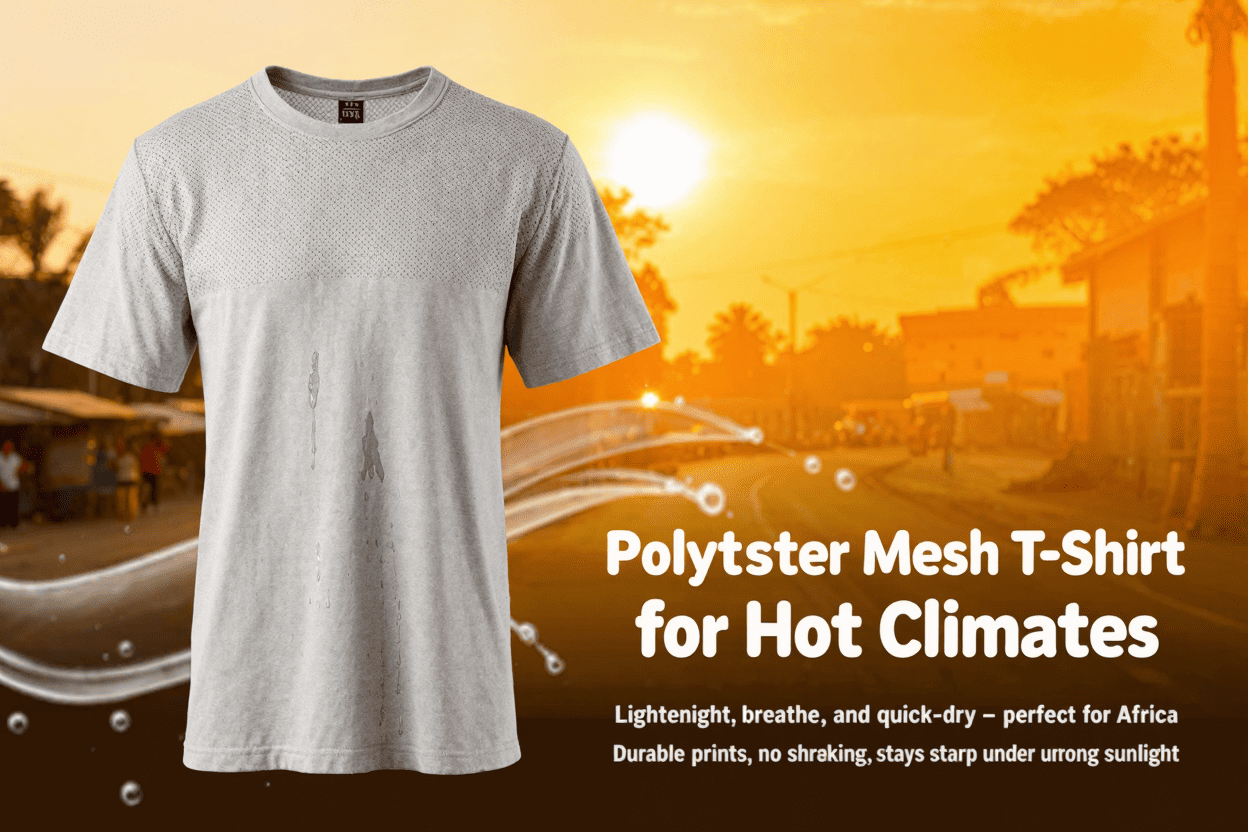
Heat, humidity, and intense sun can turn wearing the wrong T-shirt into a daily struggle. Many people in hot countries deal with sticky, uncomfortable clothes that do not breathe.
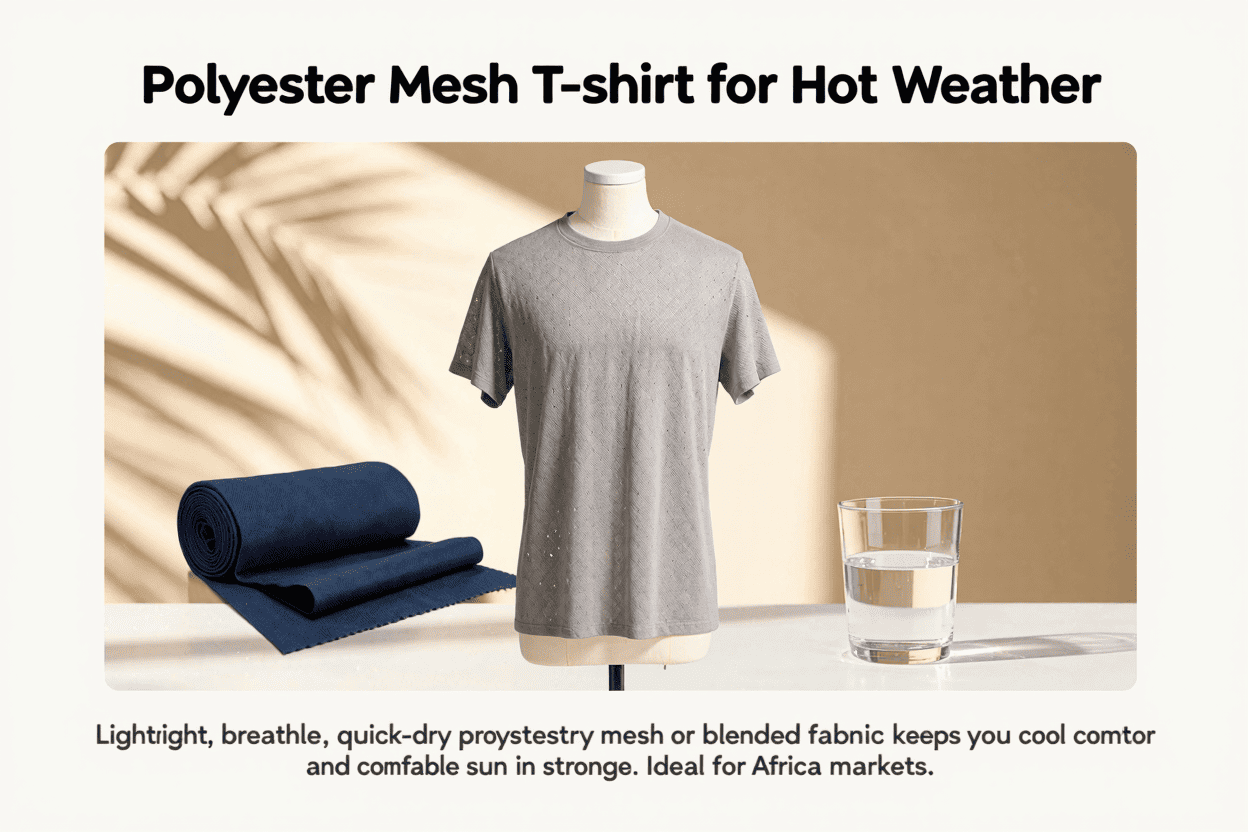
The best materials for hot countries are lightweight polyester or polyester blends with good breathability, sweat-wicking, and quick-dry properties. These keep you cool, comfortable, and dry even in strong sun.
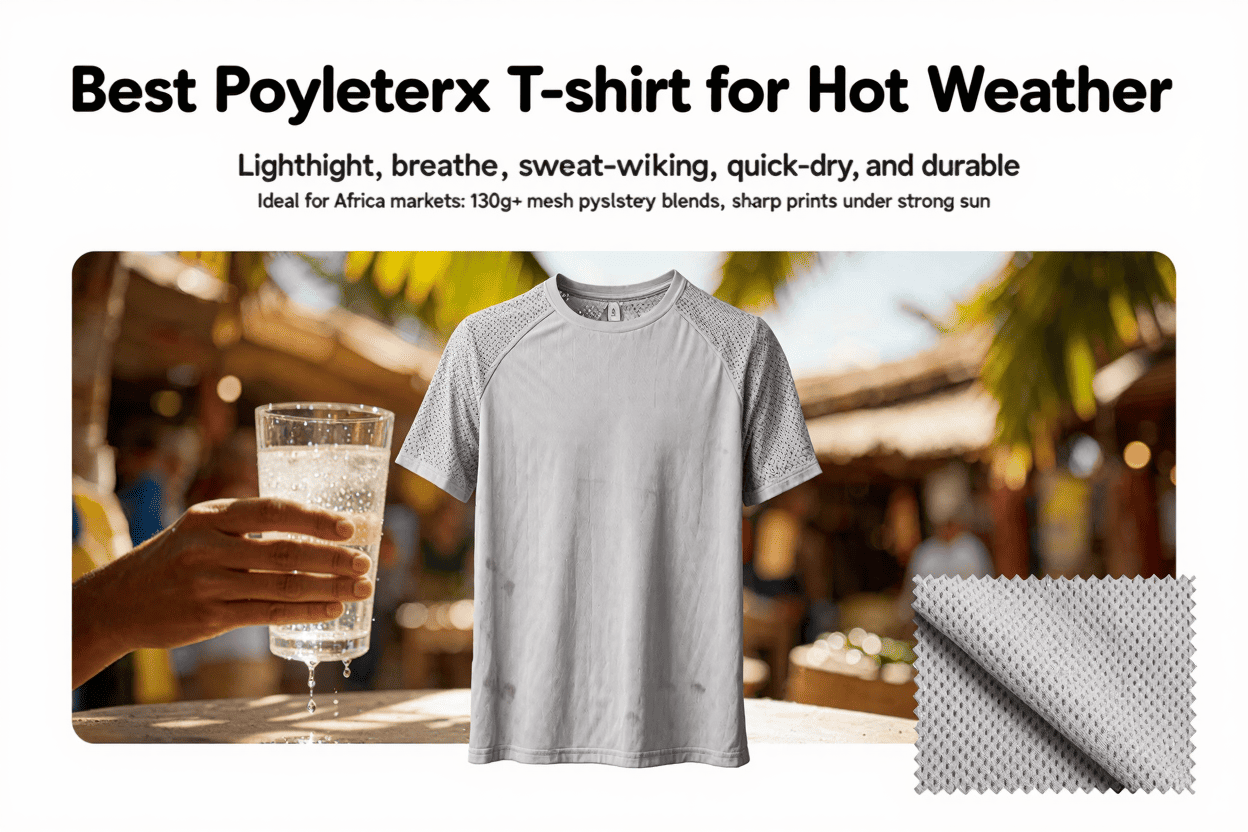
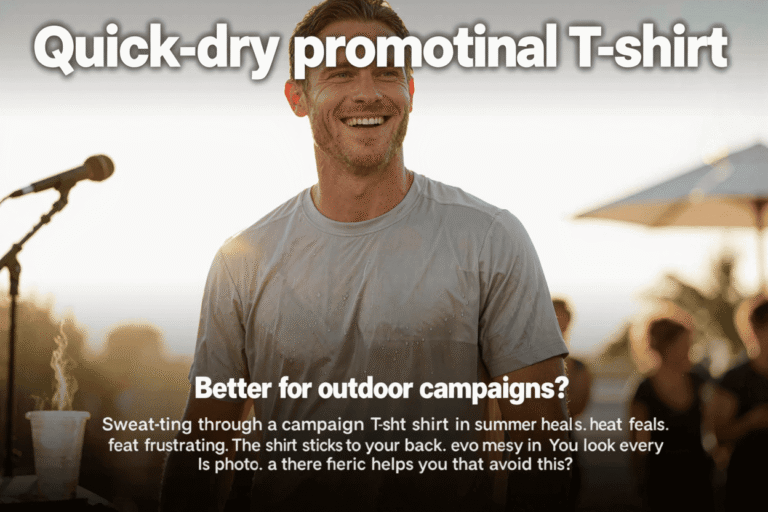
Sweaty backs and sticky sleeves make life harder. I have learned that not every fabric is the same. Some fabrics trap heat. Some soak up sweat and never dry. Some fall apart under the sun. The right choice of T-shirt material can solve many of these problems and make every day a little better.
Best choice for Africa markets?
People want T-shirts that look good, last long, and do not cost too much. African markets demand materials that balance price and durability.
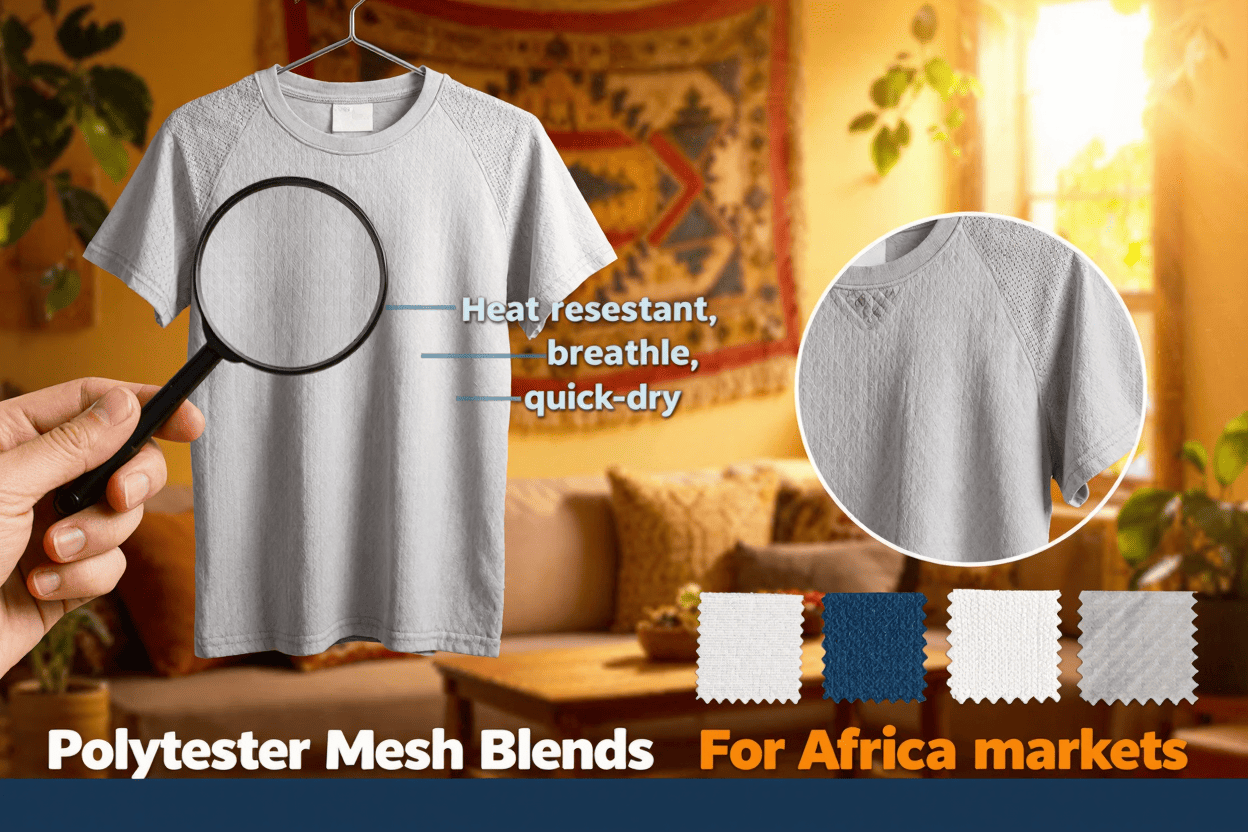
For Africa, the best T-shirt material is 130g or heavier polyester mesh or blended fabric. These fabrics breathe, dry fast, resist shrinking, and keep prints looking sharp under strong sunlight.
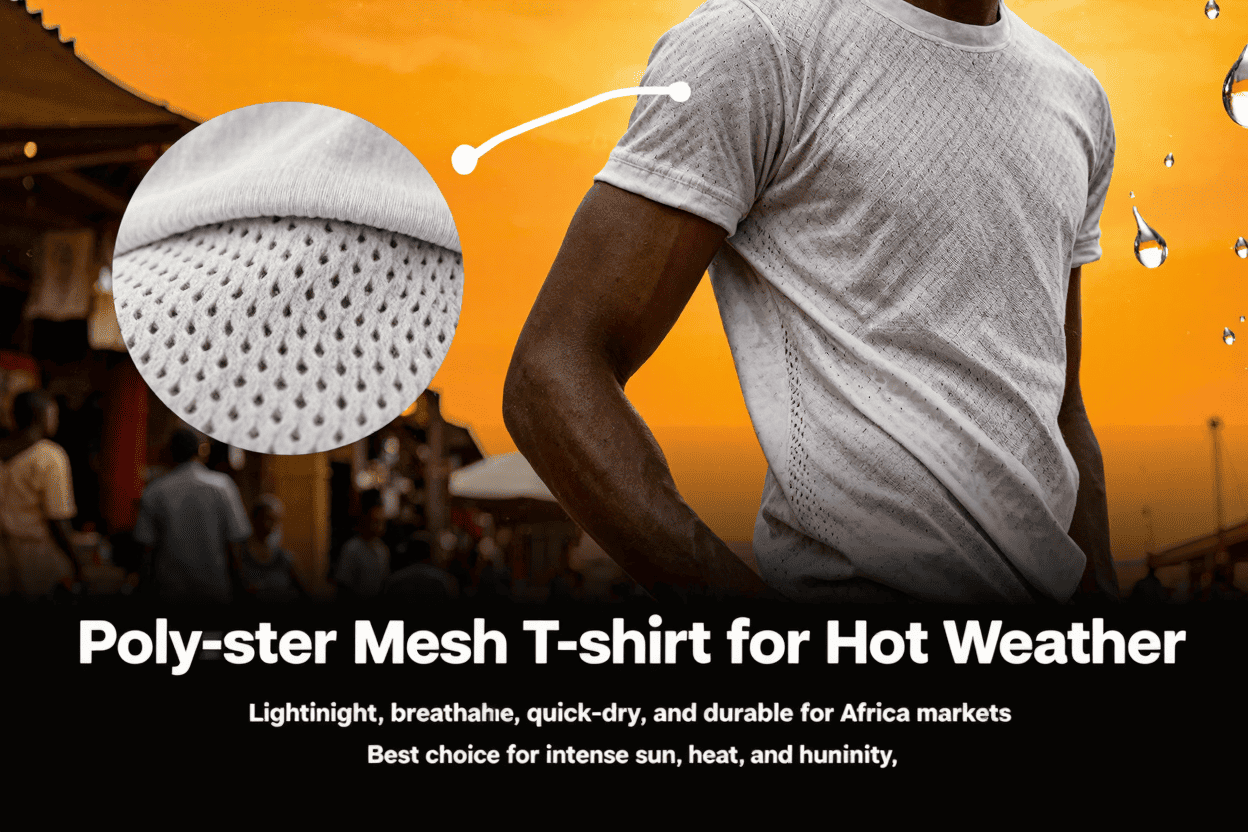
Africa is a vast and diverse market. Temperatures often rise above 30°C, and the sun can be harsh. People wear T-shirts for work, daily life, and special events. What do buyers look for? First, price matters. A big campaign or event may need thousands of shirts. If the price per piece is too high, it will not work. But if the T-shirt falls apart after one wash, that is a waste too.
I have seen buyers choose medium-weight polyesterr mesh](https://www.mmitextiles.com/jason-mills/blog/polyester-mesh-a-complete-fabric-guide/) for a reason. The fabric feels light but does not rip easily. It lets sweat out and air in. When you wash it, it dries quickly and keeps its shape. Strong sunlight does not fade the color much, and the print stays clear and uncracked. For elections or big promotions, people need shirts that can go through rough use and still look good. Table 1 below shows how polyester compares to cotton and blends for these needs.
| Feature | 100% Cotton | 100% Polyester | Polyester Blend |
|---|---|---|---|
| Price | Medium | Low | Low |
| Breathability | Medium | High | High |
| Sweat Wicking | Low | High | High |
| Quick Dry | Low | Very High | High |
| Sun Resistance | Medium | High | High |
| Print Compatibility | Good | Excellent | Excellent |
| Durability | Medium | High | High |
| Shrink Resistance | Low | High | High |
From my experience, a 130g polyester mesh checks almost all the boxes for African buyers. It performs well under the sun, keeps cool, and stretches budgets further than 100% cotton.
What makes a material good for hot, sunny places?
Sweat, heat, and sun wear clothes down fast. Not every material can take the stress and still look good day after day.
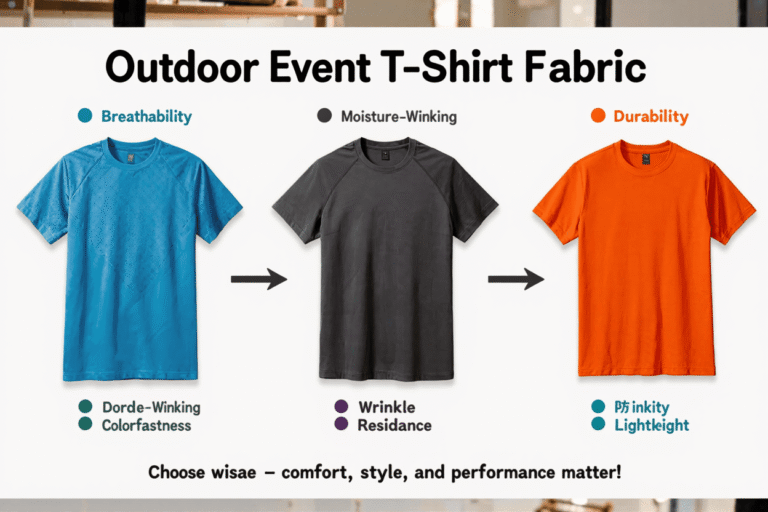
A good hot-weather fabric must be lightweight, wick moisture, dry fast, breathe well, resist the sun, and keep its shape after many washes.
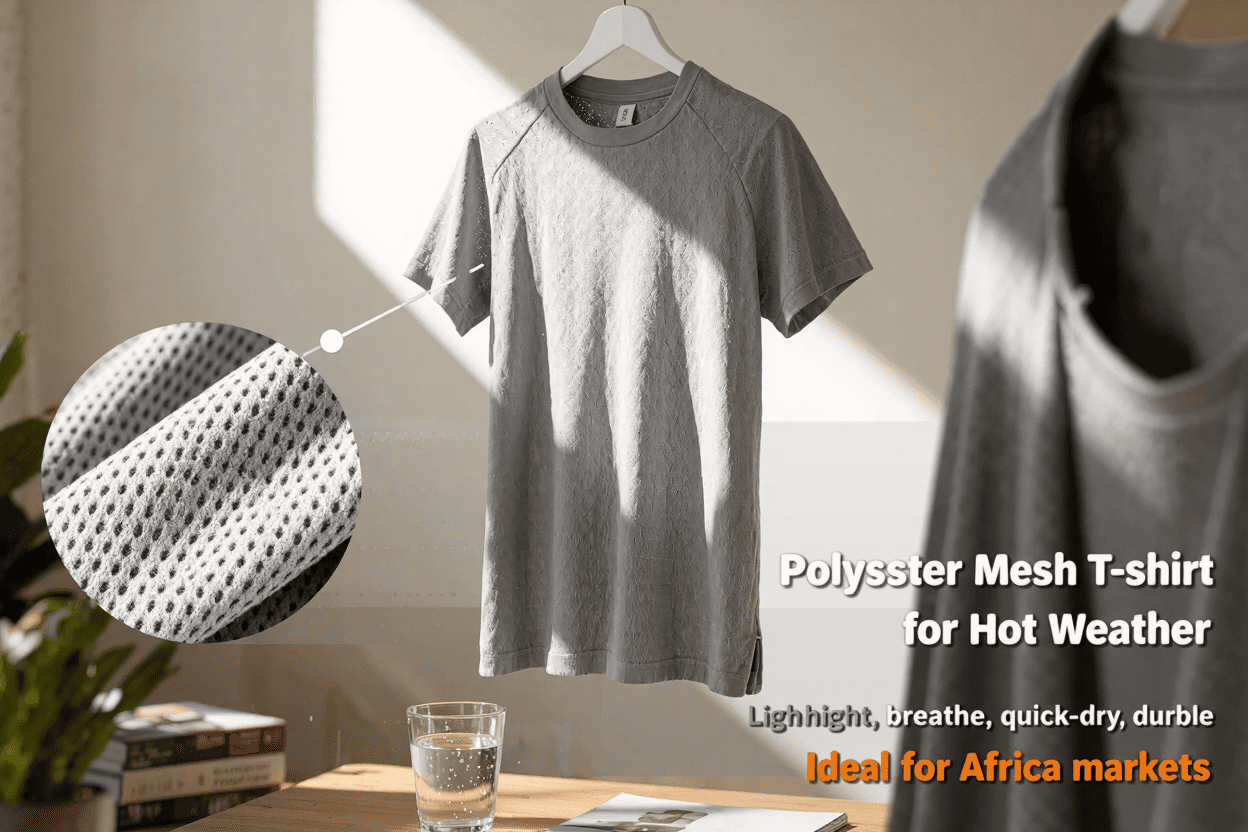
I have seen how some fabrics solve heat problems better than others. The first thing I look for is breathability. Mesh polyester lets air flow in and out. This keeps skin cooler and sweat evaporates faster.
Second, sweat-wicking is key. Cotton gets wet and stays wet. Polyester pulls sweat off the skin and spreads it out, so it dries fast and feels dry again quickly. In a hot country, this means less discomfort and no heavy, sticky clothes.
Next is weight. Heavy fabrics trap heat. A shirt between 130g and 150g is light enough to stay cool, but still strong enough for daily wear.
Sun resistance matters too. Dark cotton fades fast in the sun, but polyester holds color. This is important for branded T-shirts, campaigns, and events, where a clear logo or message is needed.
No one wants a shirt that shrinks or twists after washing. Polyester does not shrink or lose shape, so the fit stays the same. It also resists tearing, which saves money for buyers who order in bulk.
Below, Table 2 gives a simple checklist for hot-weather T-shirt material selection.
| Requirement | Good Material Property | Benefit |
|---|---|---|
| Breathability | Mesh structure | Better airflow |
| Sweat Wicking | Polyester fibers | Stays dry |
| Quick Dry | Low water retention | Comfort after sweating |
| Sun Resistance | UV-stable color | Less fading, longer wear |
| Durability | Strong synthetic blend | Resists tearing, lasts long |
| Shrink Resistance | Stable fiber | Maintains fit |
I always recommend a test run. Order samples, wear them in the heat, wash them, and see how they perform. This real-life check saves money and trouble later.
How does print quality affect the best material choice?
Printing is a big part of campaign shirts. Faded or cracked logos make a shirt look cheap and unprofessional.
Polyester and blends accept screen printing, heat transfer, and other methods well, keeping prints sharp and crack-free even after many washes.
I have seen event organizers and campaign teams get frustrated when their shirts start to look tired after just a few days. The ink cracks, colors fade, and logos lose their edge. The choice of fabric affects this a lot. Cotton may feel soft, but prints often fade fast, especially under strong sun. It is also harder to get very bright, clear graphics on cotton with some printing methods.
Polyester, especially in a mesh or interlock knit, holds onto prints better. Screen printing bonds well to the synthetic fibers. Heat transfer graphics look bright and clear, and they do not peel easily. Even after several washes, the print stays intact. I have run these tests many times and found that polyester wins in both durability and clarity.
Below, Table 3 explains why print compatibility matters for campaign and promotional shirts.
| Printing Method | Cotton | Polyester | Blend |
|---|---|---|---|
| Screen Printing | Good | Excellent | Excellent |
| Heat Transfer | Fair | Excellent | Excellent |
| Embroidery | Good | Good | Good |
| Print Durability | Medium | High | High |
When a client orders 10,000 shirts for an event, I always ask about print quality. A slightly higher material cost for polyester often means the logo or message will look great for the whole campaign, not just the first day.
What are the key tips for buying in bulk for hot countries?
Large orders need reliable quality and simple logistics. Mistakes in material choice can cost a lot.
Choose stable, lightweight fabrics like 130g+ polyester mesh for large orders. Test samples for comfort, print quality, and durability before full production.
I have worked with many buyers organizing elections, sports events, or big promotions in hot countries. They care about price, but they also want shirts that do not fall apart after one wear. The key is to balance cost, quality, and logistics.
First, always ask for a sample. Wear it, wash it, and print on it. See if it holds up. Second, make sure the fabric is consistent across the batch. Polyester blends are stable and more resistant to batch differences than many other materials.
Big orders also need smooth logistics. Polyester is light, so shipping costs stay lower than with heavier cotton. It packs well, does not wrinkle much, and is easy to sort and deliver.
Finally, make sure your supplier offers stable supply and phased delivery if needed. Campaigns often need shirts in waves. A reliable partner can keep your event running smoothly, without last-minute surprises.
Conclusion
For hot countries and Africa markets, 130g+ polyester mesh or blends give the best mix of breathability, durability, price, and print quality for large T-shirt orders.