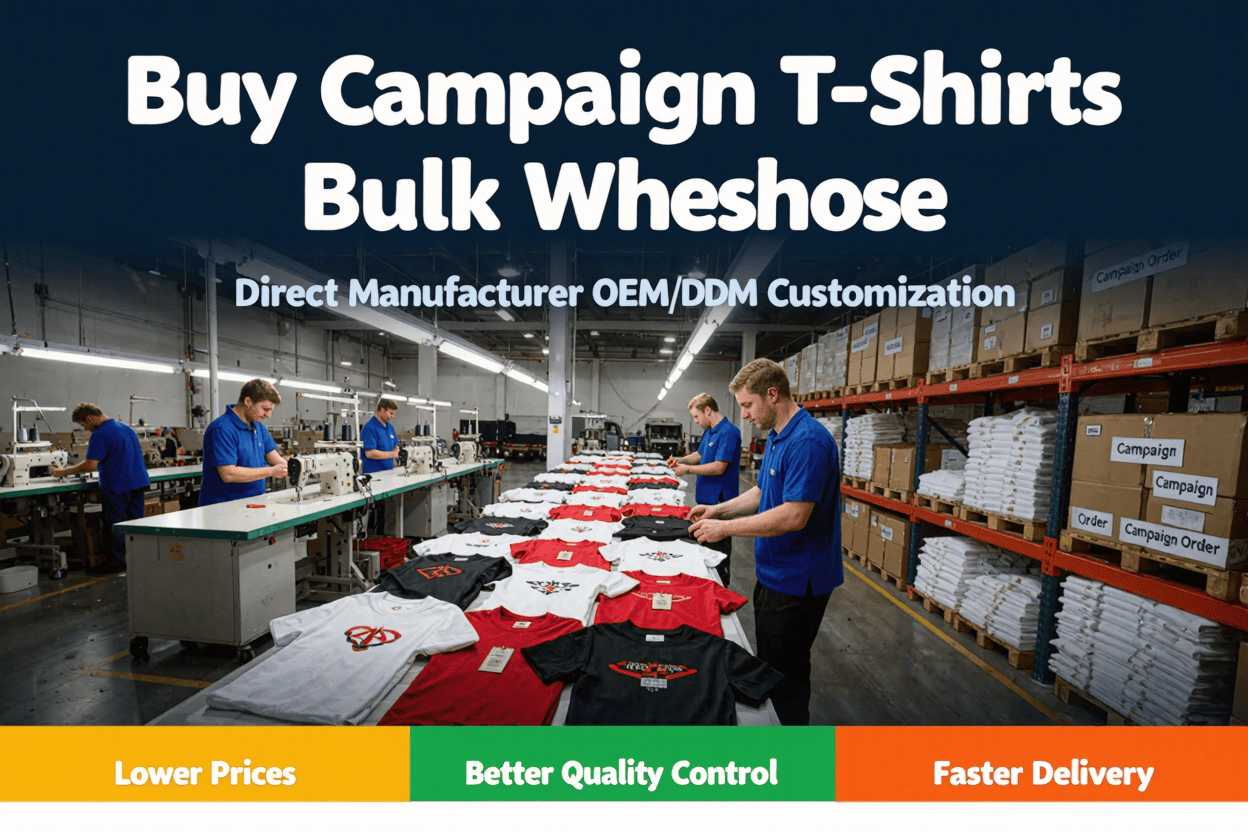
Struggling to find reliable suppliers for bulk campaign T-shirts? You’re not alone. Many buyers waste time and money on middlemen, slow deliveries, and disappointing quality.
The best way to buy campaign T-shirts in bulk is to work directly with a manufacturer that owns its production lines, offers OEM/ODM customization, and has campaign order experience. This guarantees lower prices, better quality control, and faster delivery.
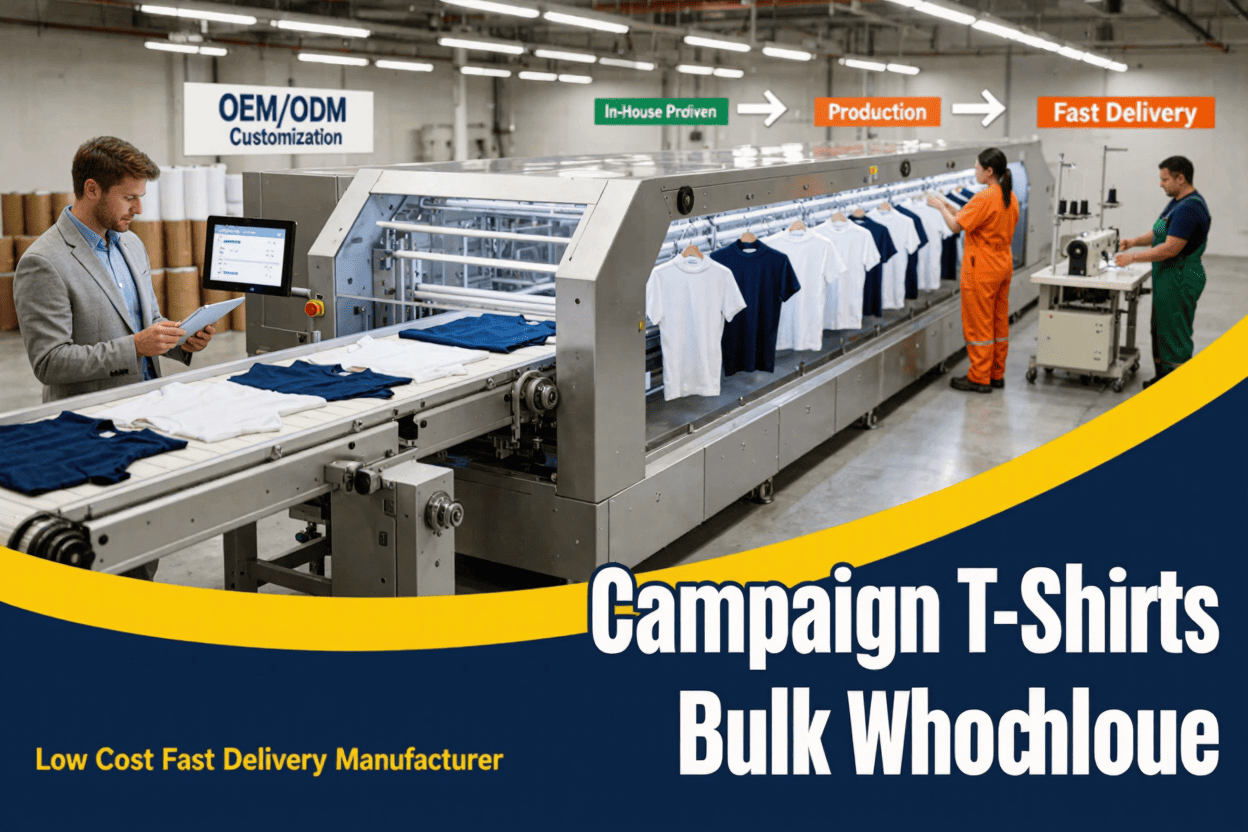
Choosing the right supplier can make or break your campaign. Let me show you how to avoid common pitfalls and get exactly what you need—on time and on budget.
How do you get low cost and fast delivery?
Tight budgets and short deadlines can turn campaign T-shirt procurement into a nightmare. If you’ve ever paid too much or waited too long for delivery, you know how stressful this process can be.
To get both low cost and fast delivery, work directly with factories that have in-house production lines, check their experience with large campaign orders, simplify your design, and confirm all details before production.
Let’s break down the steps I use—and recommend—to achieve the best results for both price and speed when buying campaign T-shirts in bulk.
Why avoid middlemen and choose factories with in-house production?
If you order through a trading company or middleman, you pay a markup without controlling production. I learned this the hard way when my first bulk order went through three separate hands before reaching me. Communication lagged, quality dropped, and I ended up over budget.
When you deal with a manufacturer directly, you cut costs. There is no extra margin for the middleman. You also get real-time updates on your order. Factories with their own production lines can guarantee better quality and faster responses to changes or issues. They are also more likely to support OEM/ODM custom services, which is crucial for campaign orders.
Here’s a comparison:
| Factor | Middleman/Trading Co | Direct Factory |
|---|---|---|
| Price | Higher, due to markup | Lower, factory-direct |
| Quality Control | Indirect, slower feedback | Direct, faster solutions |
| Customization | Limited options | Full OEM/ODM |
| Delivery Speed | Slower, more links | Faster, fewer links |
When you work with a factory, always ask if they have experience with campaign and large orders, request samples, and confirm their ability to support custom packaging and labeling. Platforms like www.polltee.com or attending industry trade shows are the best ways to connect with real manufacturers.
How do you reduce costs without sacrificing quality?
Every campaign has a budget. I’ve seen buyers cut corners and end up with shirts that look and feel cheap—which can backfire. The trick is to optimize, not compromise.
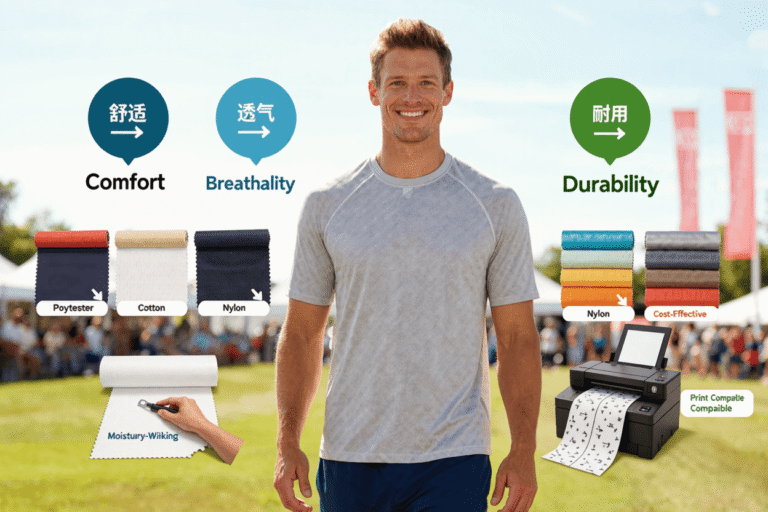
Start by selecting the right fabric. For most campaign T-shirts, 130–180g polyester or polyester blends offer the best price-quality ratio. Simplify your design: fewer colors, smaller print areas, and single-sided printing can all reduce costs. Avoid last-minute changes—plan ahead, confirm details, and lock in your order early to get better rates and avoid peak season surcharges.
Here’s how I prioritize choices:
- Fabric selection: Choose lighter polyester blends for lower cost.
- Printing: Limit colors and keep logos simple.
- Order volume: Larger orders unlock better per-piece prices.
- Packaging: Use simple packaging unless custom branding is essential.
| Tip | Cost Impact | Risk |
|---|---|---|
| Lighter fabric | Lower | Too thin if <130g |
| Fewer print colors | Lower | May affect branding |
| Confirm details early | Lower | None |
| Reuse designs in future | Lower (repeat setup) | None |
I always request samples before confirming bulk orders, to check print quality and fabric hand-feel. This small step saves headaches later.
How do you ensure fast and reliable delivery?
Tight timelines are the norm for campaigns. My clients often ask, “Can you deliver 10,000 shirts in two weeks?” My answer depends on preparation, production, and logistics.
Factories with full production lines can start orders right away, without outsourcing. Before production, confirm every detail—design, sizing, tags, and packaging. This avoids delays caused by last-minute changes. For shipping, sea freight is the cheapest for large quantities, but it’s slower. If you’re in a rush, consider splitting the shipment: send a portion by air to cover immediate needs, and the rest by sea to save money.
Key steps I follow:
- Confirm all details before mass production.
- Monitor production progress—ask for updates at each stage.
- Schedule phased shipments if possible.
- Use express air for urgent needs; balance with sea freight for cost.
| Shipping Mode | Speed | Cost |
|---|---|---|
| Sea Freight | Slow | Lowest |
| Air Freight | Fast | Highest |
| Partial Air + Sea | Flexible | Balanced |
By building a long-term relationship with the same factory, I often get priority scheduling during busy seasons—another reason to work direct, not through agents.
Conclusion
Work directly with experienced factories, simplify your specs, and plan ahead—this is how I source campaign T-shirts in bulk, on time, and within budget.