Finding the right T-shirt supplier can be stressful and uncertain, especially if you must deliver big orders on time.
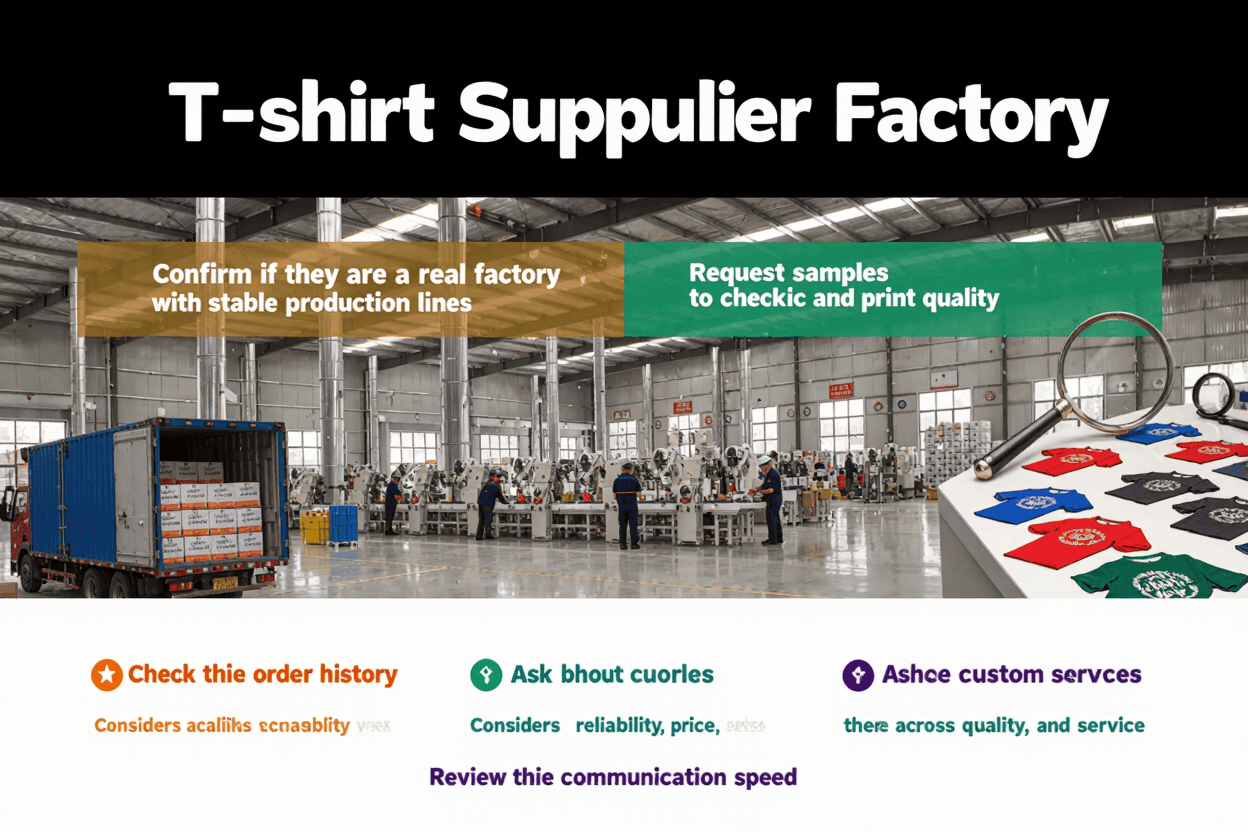
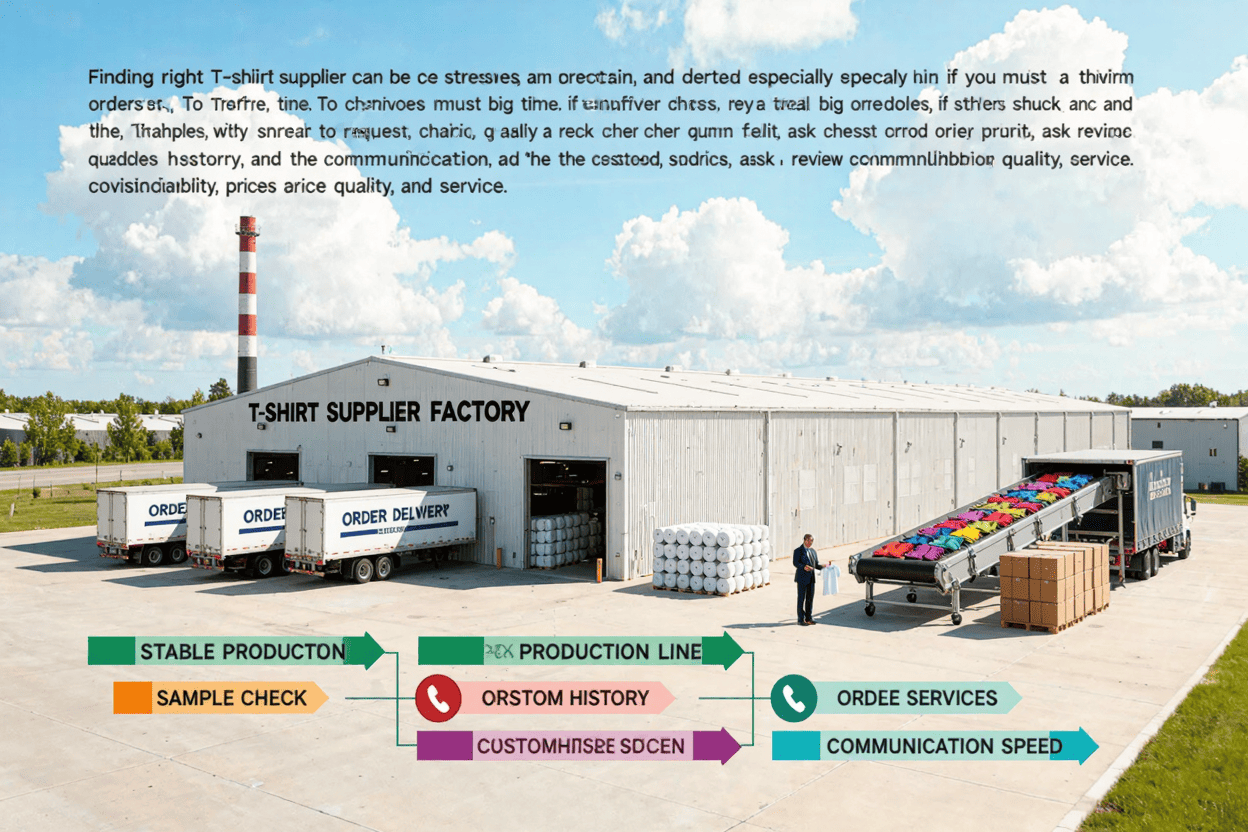
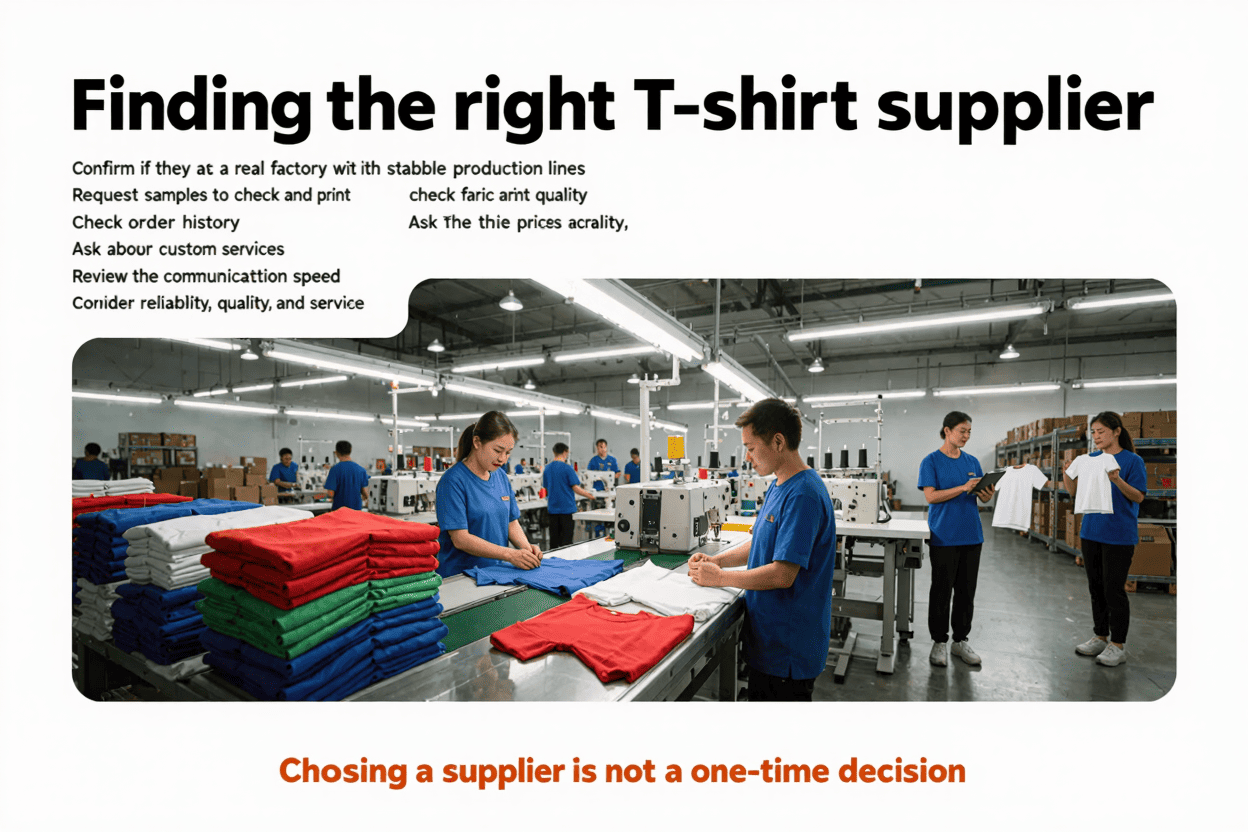
To choose a T-shirt supplier, confirm if they are a real factory with stable production lines, request samples to check fabric and print quality, check their order history, ask about custom services, review their communication speed, and consider their reliability across price, quality, and service.
Choosing a supplier is not a one-time decision. If you pick the wrong one, you risk delays and poor quality, which can hurt your reputation. I have seen many buyers regret not checking these points early. Knowing what to check can save you from costly mistakes, so let’s look at what really matters.
What makes a factory reliable for big orders?
Big orders can bring higher profits but also bigger risks if your supplier cannot deliver what they promise.
A reliable factory for big orders has enough production capacity, strict quality control processes, experience with large-scale projects, and honest, on-time delivery. They keep you updated with clear schedules and adapt to your needs, even in peak seasons.
Every time a buyer asks me about reliability, I think about how many factories promise everything but fail during busy seasons. Here, I’ll break down what you need to check to avoid surprises:
1. Confirm they are a genuine factory, not a trader
When you first contact a supplier, always ask about their production capabilities. Many companies act as middlemen, which can add costs and risks. You want to work with those who own their workshop and equipment, not just an office and a phone.
| Factory Checks | Why It Matters |
|---|---|
| Visit or video call for a tour | Proves physical production lines |
| Ask about staff and machines | Shows capacity and scale |
| Check business license | Confirms legal factory registration |
I remember visiting a “factory” that was just a small office. They had nice marketing, but no real machines. Only after asking for a video tour did the truth come out. If you cannot visit, ask for live video or production photos with your name written on a whiteboard. This simple trick alone filters out fake suppliers.
2. Review past big order cases
Factories that handle big orders usually show their experience through real customer stories. Ask for references or case studies, especially for orders like yours. Check what brands or events they have supplied before.
| What to Ask | What it Shows |
|---|---|
| Sample invoices or PO records | They’ve delivered big volumes |
| Customer feedback or reviews | Reliability and trust |
| Photos of bulk production | Actual experience |
At my company, we always show production records and feedback from past clients. Some buyers even talk directly to our old customers for reassurance. If a supplier hesitates to share, they may have little real experience.
3. Assess sample quality and production process
Samples are not just for checking color or size. They show if a supplier understands your requirements and can deliver the fabric, stitching, and printing quality you expect.
| Sample Checks | Why It Matters |
|---|---|
| Fabric feel and weight | Matches your quality standard |
| Print clarity and wash durability | Tests their technique and materials |
| Consistency with your design | Can follow your instructions |
You should also ask about their steps—from design to packing. Reliable factories have clear processes for material sourcing, printing, sewing, and final inspection.
4. Evaluate communication and service response
How fast and clearly a supplier answers your messages tells you a lot about their service. If it takes days to reply before the order, imagine how long it’ll take when problems arise.
| What to Check | Why It’s Important |
|---|---|
| Email or chat response speed | Shows professionalism |
| Detail in answers | Understands your needs |
| Clear contact person | Easy to solve issues |
One buyer told me their old supplier would disappear for days after payment. They learned the hard way that good service starts before you send money.
5. Ensure OEM/ODM and branding support
If you need your own brand label, custom tags, or unique designs, make this clear from the start. Not all factories can support private branding or product development.
| Service Needed | Factory Support Means |
|---|---|
| OEM (your logo) | Can print, label, pack as you want |
| ODM (new design) | Can help create custom samples |
| Custom packaging | Adds value for your business |
We often redesign samples many times for international clients. Factories used to only mass production might not have flexible designers or support staff.
6. Check delivery times and logistics ability
Delivery delays can destroy a campaign, event, or launch. Always ask for a clear schedule—how long from deposit to sample, then to mass production, then to shipping? Ask about their logistics partners and options for your country.
| What to Ask | Why It Matters |
|---|---|
| Production and delivery plan | Keeps project on track |
| History of on-time delivery | Builds trust |
| Freight and shipping options | Avoids surprise costs |
I always show clients our standard lead times and share tracking from past shipments. If a supplier hides or avoids the topic, be cautious.
7. Balance price, quality, and service
The cheapest supplier is not always the best. Low price often comes with low quality or hidden fees. Compare all aspects—sample quality, service, production process, and price.
| What to Compare | Why It Matters |
|---|---|
| Price per unit | Fits your budget |
| Quality from samples | Meets your standard |
| After-sale support | Solves problems later |
I have seen clients switch from cheaper suppliers after hidden costs or mistakes ruined their order. Long-term partners value consistency and trust, not just saving a few cents.
Conclusion
Choosing a T-shirt supplier is about trust, proven capacity, and clear communication, not just price or promises.