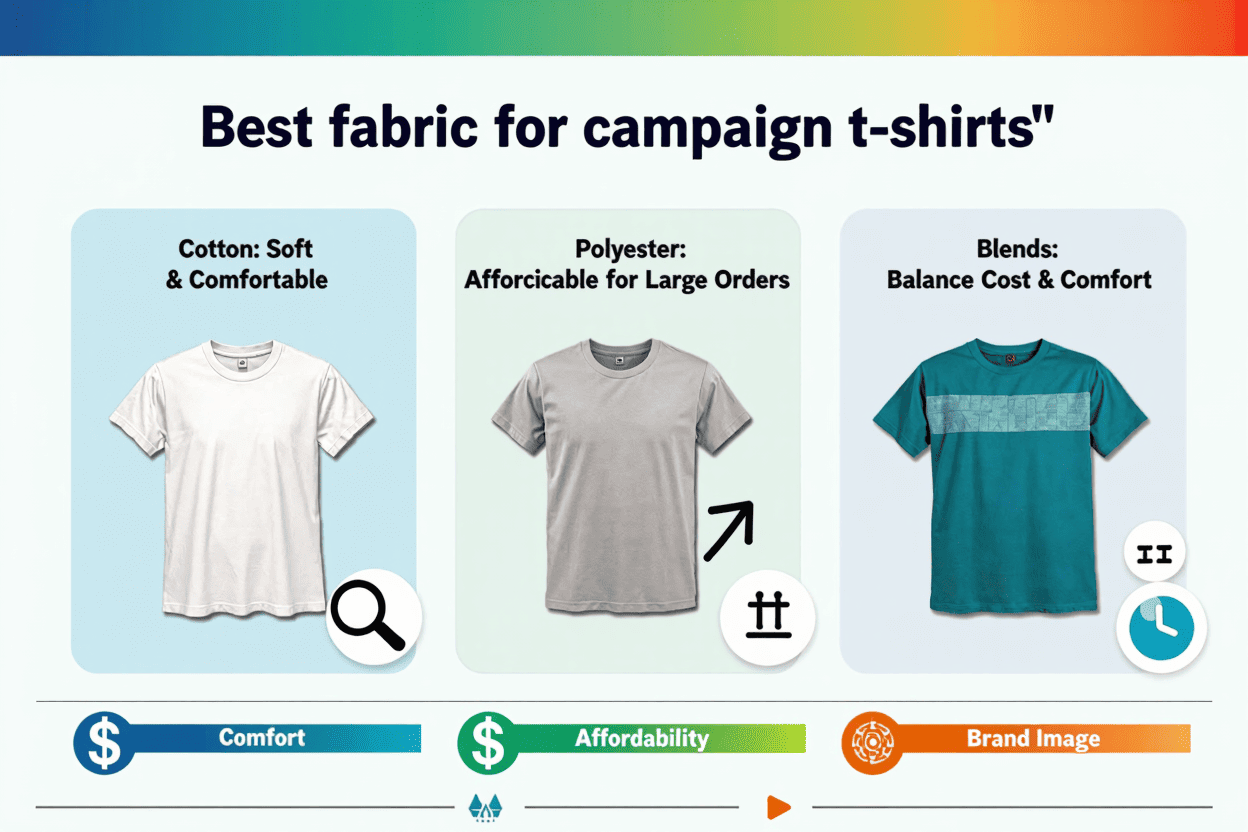
Many buyers struggle to pick the right campaign T-shirt fabric, feeling stuck between price and comfort. They ask: Is there a perfect material for every need?
Cotton is soft and comfortable, polyester is affordable for large orders, and blends balance both. The ideal fabric depends on your budget, event length, and brand image.
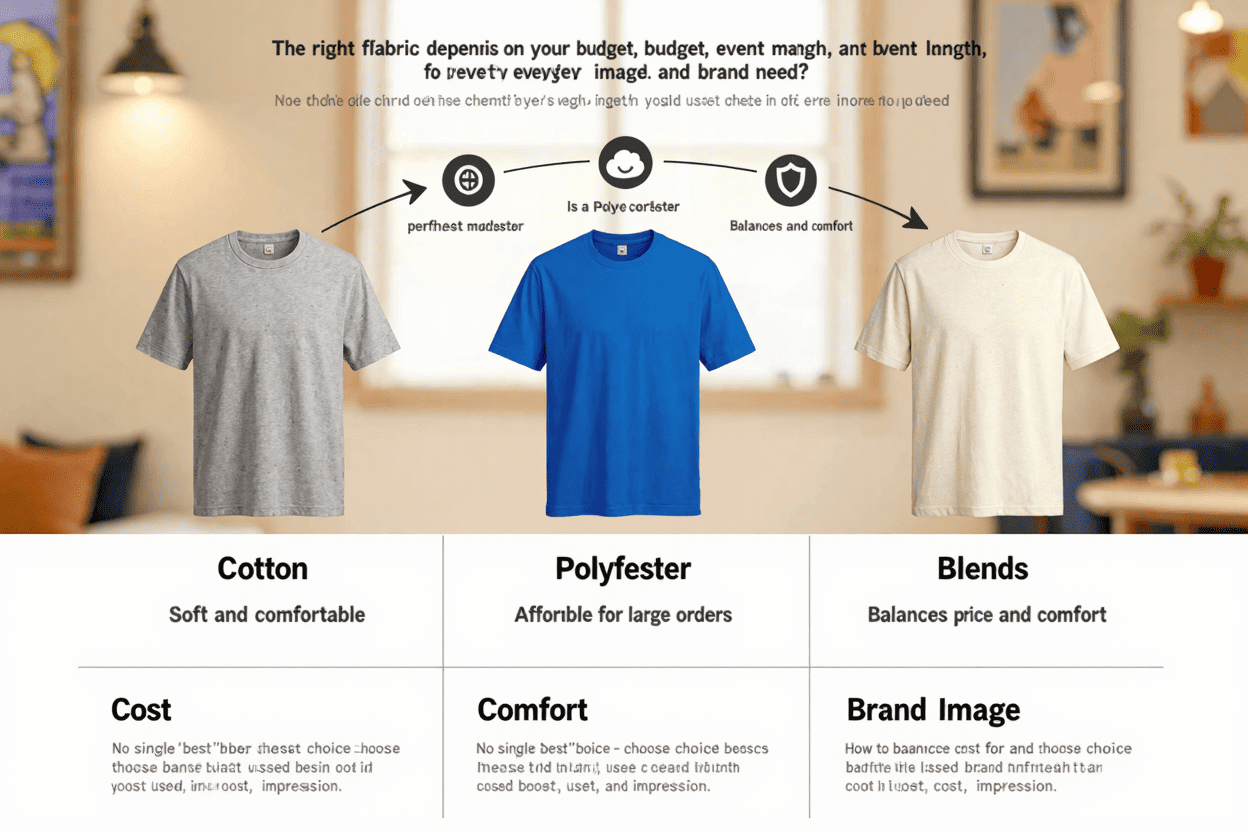
When people come to me asking about campaign T-shirt fabrics, I know they want a quick answer. But there is no single “best” choice. The right fabric depends on many factors—how much you want to spend, where and how long the shirt will be worn, and what impression you want to make. Let me walk you through the options so you can decide what will work best for your project.
How to balance cost and comfort?
Many clients worry that saving money means sacrificing comfort, or that choosing comfort will blow their budget. They don’t want their T-shirts to feel cheap, but they also need to keep costs under control.
Choose polyester for the lowest price, cotton for the best experience, or blends for a middle ground. Your decision should depend on budget and how you expect the shirts to be used.
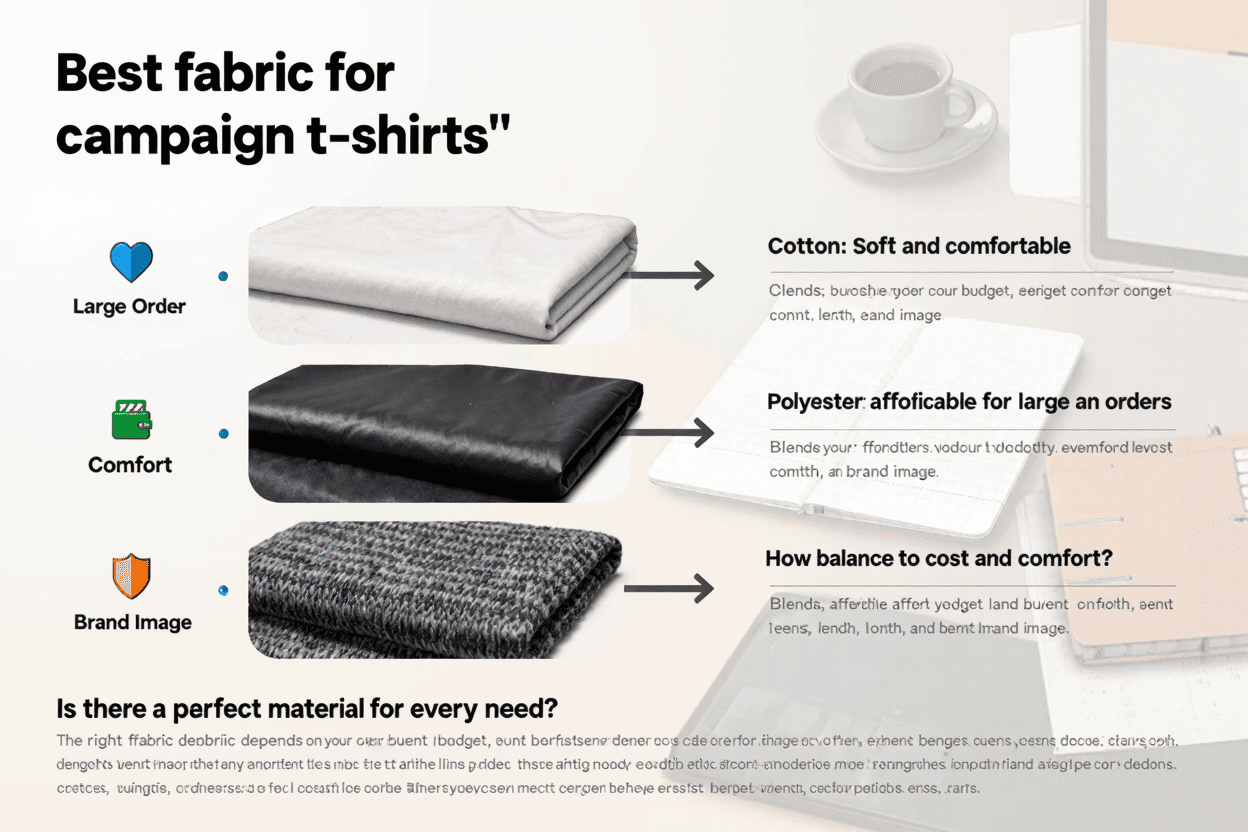
I have seen clients order thousands of campaign shirts for a one-day event. In those cases, basic polyester shirts make perfect sense. They are cost-effective, easy to print, and the wearer only needs them to look good for a few hours. But I have also helped brands launch special promotions where the T-shirts become keepsakes. In that case, cotton makes more sense. People remember how a shirt feels, especially if you want them to wear it again and again.
Let’s break down the most common choices:
Common Fabrics for Campaign T-Shirts
| Fabric Type | Cost | Comfort | Best For | Drawbacks |
|---|---|---|---|---|
| 100% Cotton | $$ | Soft, natural | Short or long-term use, brand promotions | Higher price, absorbs sweat |
| Polyester | $ | Smooth, less breathable | Large events, short-term campaigns | Less comfortable, less eco |
| Cotton-Poly Blend | $$ | Mixed soft/smooth | Balance between price/comfort, daily wear | Slightly higher cost |
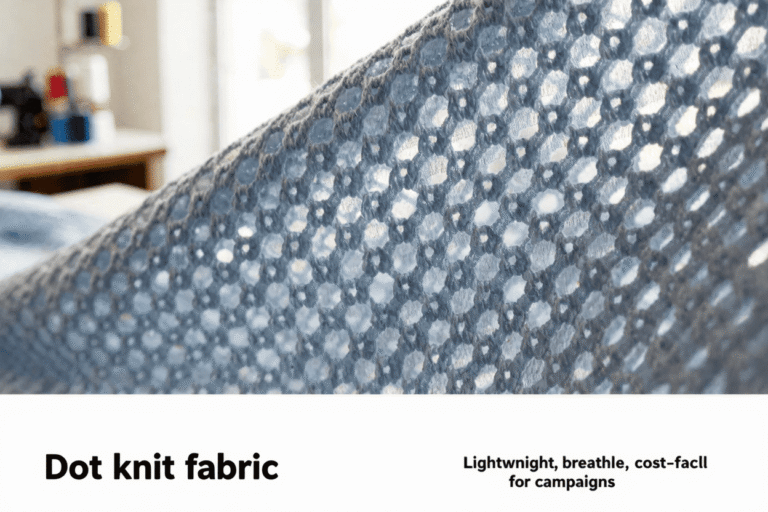
| Mesh (Pinhole) | $-$$ | Extra breathable | Hot climates, outdoor events | Not as soft as cotton |
You can see there is no perfect one-size-fits-all answer. Cotton feels the best and gives a more premium look, but it costs more. Polyester works for big batches and saves money, but may feel less comfortable. Blends are often the safest bet, offering decent comfort at a lower price. Mesh fabrics are popular for outdoor campaigns, especially in hot areas, due to their breathability, but they might not suit formal events.
How I Advise My Clients
I always ask about the event details first. Is it a one-day rally? Is it a national campaign with repeated use? Will the T-shirt be worn in hot weather? I also ask about the budget. If price is the top concern, I suggest a lower-weight polyester or a cotton-poly blend. If comfort and image matter more, I recommend high-cotton blends or even 100% cotton. Often, we fine-tune the choice by adjusting the fabric weight (grammage), choosing lighter options to save money without sacrificing basic comfort.
Here’s another tip: stick with mature, commonly used fabrics. Unusual or high-end choices sometimes lead to supply risks or extra costs. Keeping it simple helps avoid surprises.
Cost Control and Fabric Weight
Sometimes, buyers worry that only top-quality cotton will impress their audience. But I have learned that controlling the “weight” of the fabric (measured in grams per square meter, or GSM) gives you more flexibility. Lower GSM means thinner shirts, which cost less—even for cotton. This makes it possible to offer a more comfortable fabric within budget.
| GSM (Gram/Sq.Meter) | Typical Use Case | Comfort Level | Price |
|---|---|---|---|
| 120-140 | Short-term, giveaways | Light | Lowest |
| 150-160 | Standard campaign shirts | Regular | Medium |
| 180+ | Premium, keepsakes, branding | Thicker | High |
This table shows that you don’t have to pick the most expensive material to get a good shirt. Adjusting the weight lets you find a middle ground.
Fabric Choice Based on Event Type
I always remind my clients: focus on where and how the T-shirt will be worn. For a summer event outdoors, mesh might be more appreciated than you think. For a TV appearance, cotton looks best under bright lights. For handing out thousands of shirts on the street, polyester gets the job done with less worry about cost.
Don’t Over-Engineer Your T-Shirt
A common mistake is to over-specify. Wanting “the best” can mean picking a high-end fabric that adds cost but not value for your audience. Instead, define your needs—how long the shirt will be worn, the image you want to project, and your maximum price. Then, pick the simplest fabric that meets those needs.
Conclusion
There’s no single best campaign T-shirt fabric. Match your budget, event needs, and comfort level to get the right balance.