Heat transfer printing can be tricky because not every fabric gives you the crisp, smooth results you want. If you pick the wrong material, your design might look blurry or faded.
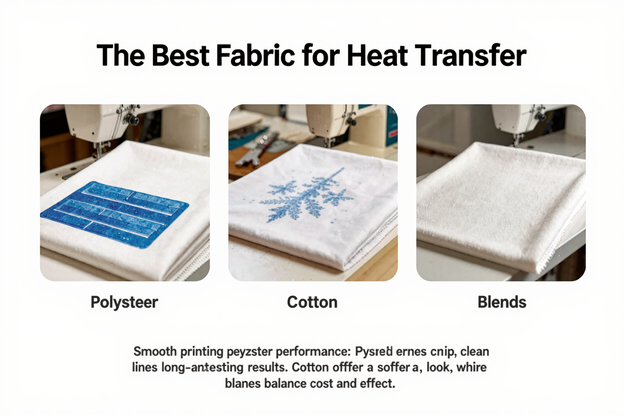
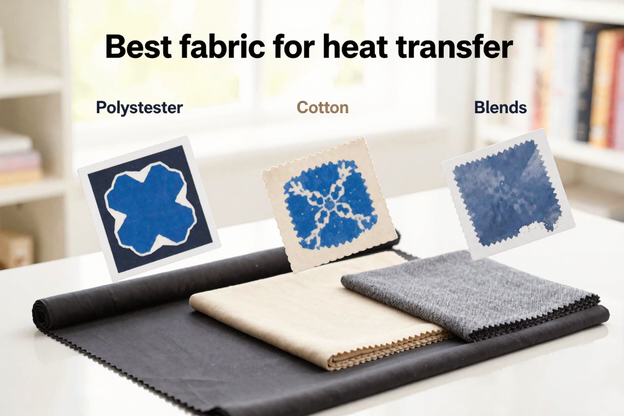
The best material for heat transfer is polyester because its smooth surface allows patterns to stick cleanly and last longer. Cotton also works but gives a softer look, while blends balance cost and effect.
If you want your designs to look sharp and stay put, you need to know how different fabrics react to heat transfer. The choice of fabric has a huge effect on the print's final look and feel. In my years making promotional T-shirts, I learned that understanding fabric structure can save you time, money, and headaches. Keep reading, and I’ll break down exactly what works best and why.
Smooth printing performance?
Heat transfer printing often disappoints when the fabric is not right. Designs may peel or look rough if the surface is uneven or not heat-stable.
Polyester works best for heat transfer because its smooth texture ensures even prints. Cotton and blends work too, but polyester delivers the cleanest lines and least risk of defects.
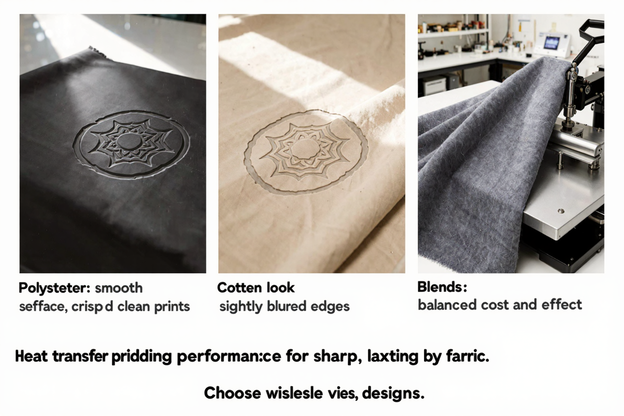
The structure of the fabric underpins how smooth your print will look. If you have ever tried transferring a design onto a T-shirt and ended up with fuzzy edges or gaps, it usually comes down to the fabric’s surface structure. Polyester is the gold standard because it is manufactured to have a very consistent, smooth finish. When I run heat transfers on polyester, the print almost never has problems like roughness or “halo” effects around the edges. That is because the ink or film bonds tightly and evenly, and the material holds its shape during pressing.
Cotton can also be used, especially for a softer, vintage effect. But it is not as smooth as polyester. The natural fibers create a slightly grainy texture. Sometimes, when I use cotton, the design looks just a bit less crisp. There can be tiny gaps or a soft outline, which is fine for some looks but not if you want perfect precision.
Blended fabrics—like those mixing polyester and cotton—give you some benefits of both. They cost less than pure polyester, and the print result is usually smoother than pure cotton. However, the more polyester in the blend, the better the print result. If you want to compare fabrics, here is a simple table based on my production experience:
| Fabric Type | Smoothness | Print Clarity | Cost | Durability |
|---|---|---|---|---|
| 100% Polyester | High | High | Medium | High |
| Polyester-Cotton | Medium | Medium-High | Low | Medium |
| 100% Cotton | Low | Medium | Low | Low |
Besides fabric type, heat, and pressure during pressing are important. If the pressing temperature is too low or uneven, the print might not stick properly. If the pressure is uneven, you could see bubbles or spots where the design lifts. High-quality fabric and careful pressing give you the smoothest result.
Why does polyester beat other fabrics for heat transfer?
Problems like bleeding colors or peeling often start with poor fabric choice. If the surface is rough, the design will not set evenly, and defects appear.
Polyester outperforms other materials because its dense, flat surface makes heat transfer prints sharp, vibrant, and durable, with almost no issues like peeling or bubbling.
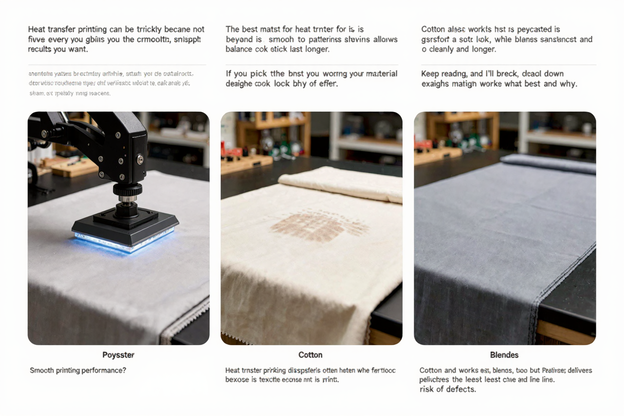
I have seen how polyester T-shirts make a print “pop” with color and sharpness. The tight weave of polyester keeps the heat transfer film or ink on the surface, so colors stay bright and edges are clean. There is almost no risk of the print bleeding or fading quickly with good quality polyester.
Polyester’s surface is stable under high heat, which is key for heat transfer. The fibers do not warp, shrink, or soak up too much ink. When my customers want their logos or slogans to look sharp for an event or promotion, I always steer them toward polyester. It is also more resistant to washing and handling, so the print lasts longer. That means fewer complaints and returns, which is huge for event organizers and brands.
Cotton, on the other hand, is more absorbent. Heat transfer still works, but the ink can sink into the fibers, making the print look softer or slightly muted. If you want a classic, vintage vibe, cotton can be a good choice. But if you want bold, clear designs, polyester is the winner.
Can cotton and blends work for heat transfer?
People often think that only polyester works for heat transfer, but demand for cotton and blends is high for a reason—they offer a different feel and price.
Cotton and blended fabrics can be used for heat transfer printing, but the results are softer and less precise compared to polyester. Higher polyester content improves smoothness.
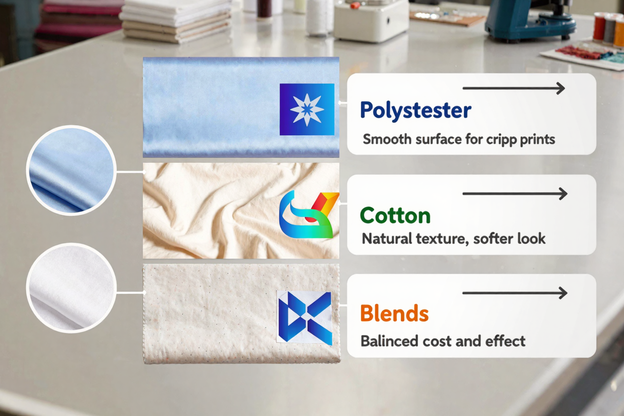
Pure cotton has a natural, soft touch that many people love. When I get orders for private label T-shirts, many clients choose cotton for the comfort. The downside is that cotton’s surface is not as flat as polyester. You might see a bit of grain or “texture” in the print. For logos or simple graphics, this is fine. For detailed, high-resolution prints, you may notice the difference.
Blended fabrics offer a middle ground. Poly-cotton blends (such as 65% polyester, 35% cotton) print better than pure cotton, especially if the polyester content is high. The print is clearer, and the fabric is more affordable. When working with tight budgets, especially for big events, I often suggest a poly-cotton blend. This saves money and gets a good result.
Table for reference:
| Fabric Blend | Print Clarity | Cost | Comfort |
|---|---|---|---|
| 100% Cotton | Medium | Low | High |
| 65/35 Poly-Cotton | Medium-High | Low | High |
| 50/50 Poly-Cotton | Medium | Low | Medium |
When I test prints on different blends, I always look at the fabric weight. Heavier weight fabrics (measured in gsm) hold shape better during pressing, so there is less risk of wrinkling or bubbling. This makes the print last longer, even after washing.
What about fabric weight and quality?
Low-quality or thin fabrics are cheap, but they can ruin a heat transfer print. The design may wrinkle, bubble, or start to peel after the first wash.
High fabric weight (gsm) and stable structure keep heat transfer prints smooth and durable, reducing the risk of defects like wrinkling or peeling.
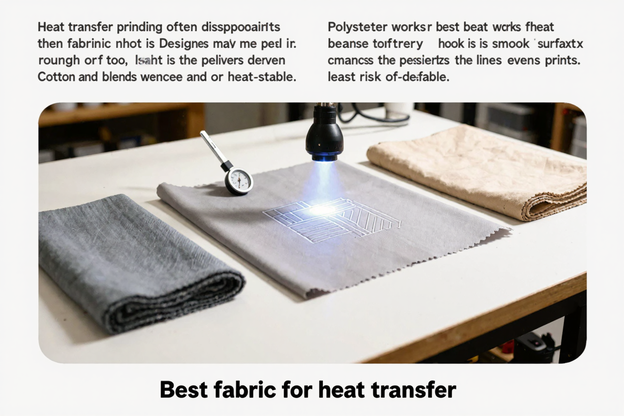
From my production line, I know that GSM (grams per square meter) tells you how thick and stable a fabric is. High GSM means the material is less likely to move or stretch during pressing. This gives a better, more lasting print.
For promotional T-shirts, I recommend at least 150 gsm for polyester and 180 gsm for blends or cotton. Anything less, and you risk the shirt deforming under heat. I have seen designs on cheap, thin shirts bubble up or peel off after just a few wears. That’s bad for your brand and budget.
If you choose a higher-quality base fabric, you not only get a better print but also a more durable product. This matters for events, campaigns, or brand promotions where shirts need to look good and last.
Conclusion
Polyester and high-polyester blends give the best results for heat transfer prints. Cotton and blends can work but are less sharp and durable.