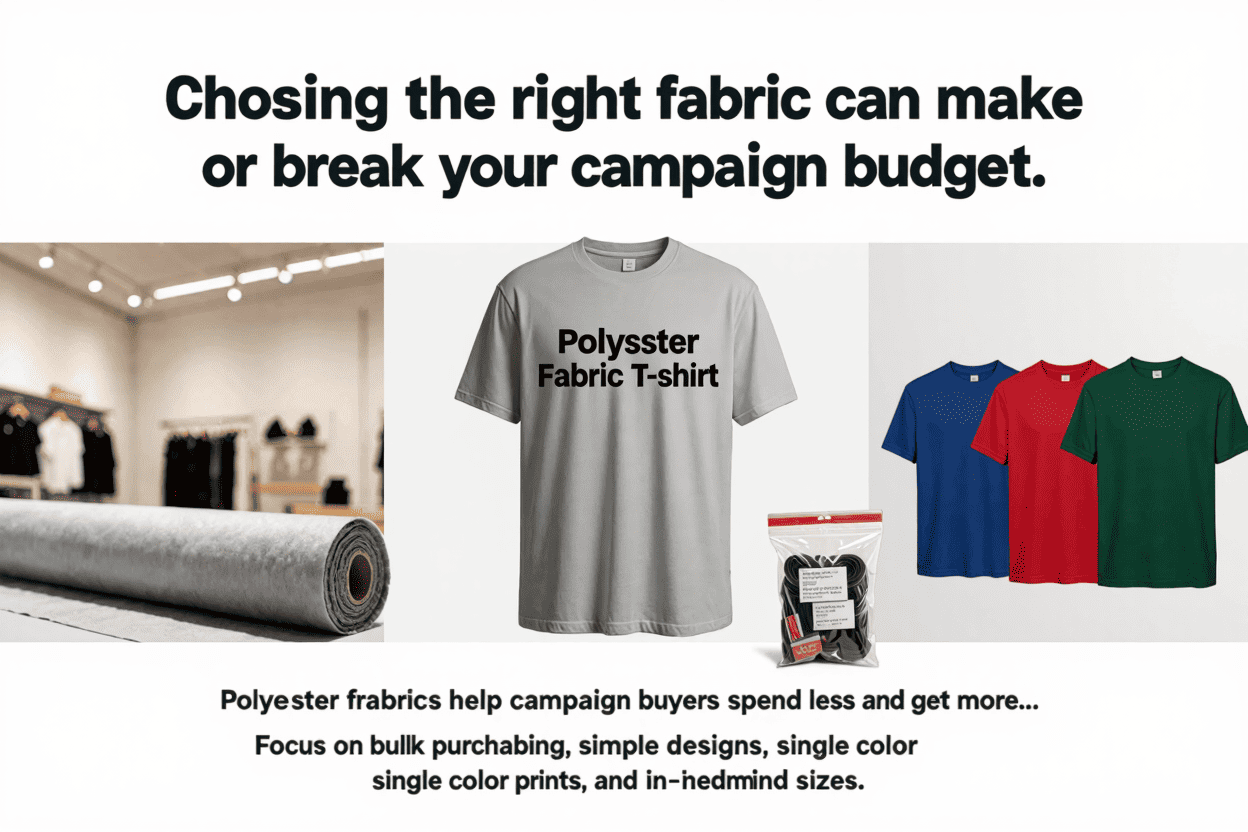
Polyester is often considered the most cost-effective fabric, but buyers frequently overlook how much money it can save on both production and long-term use.
Polyester is the most cost-effective fabric because it combines low production costs, durability, and colorfastness, making it ideal for budget-conscious campaigns and events that require reliable, attractive apparel.
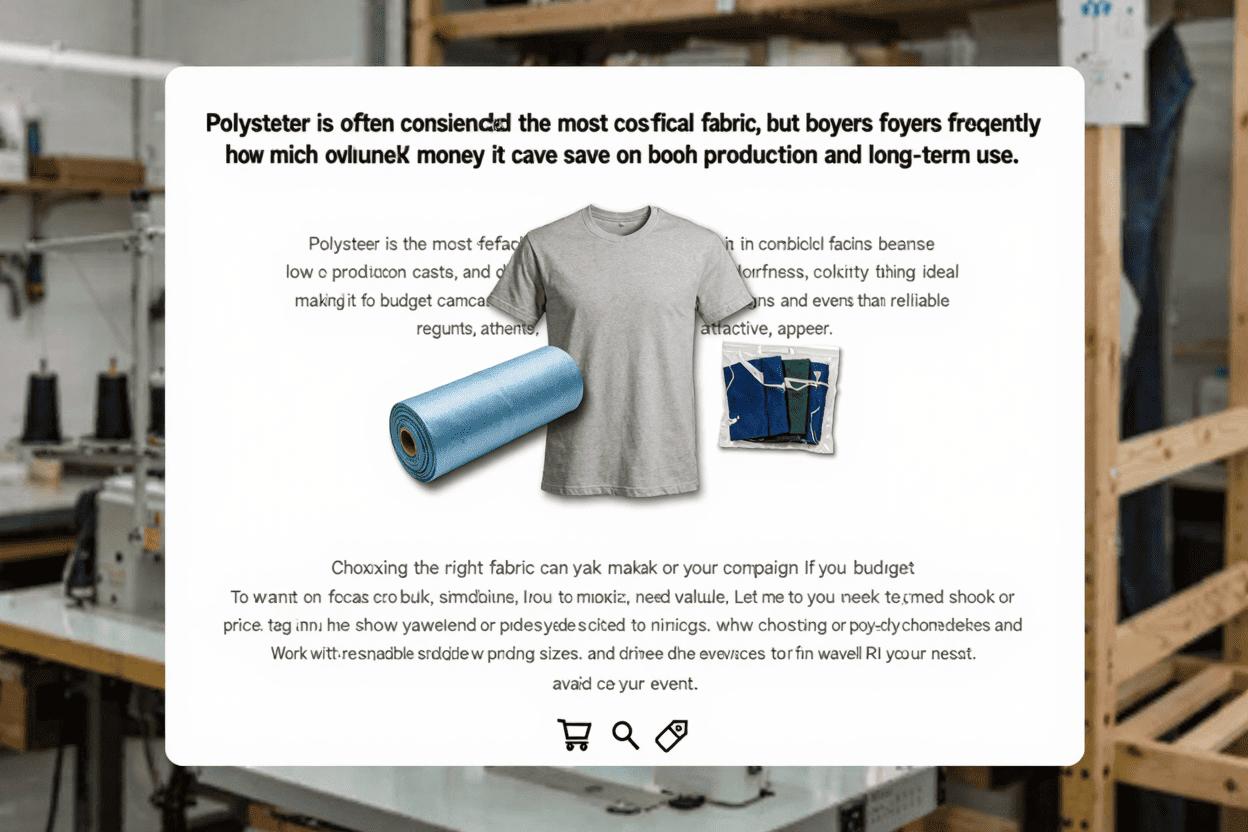
Choosing the right fabric can make or break your campaign budget. If you want to maximize value, you need to look beyond the initial price tag. Let me show you why I always recommend polyester or poly-cotton blends to my clients and how these choices can drive ROI for your next event.
Maximize your campaign budget?
Polyester fabrics help campaign buyers spend less and get more, but many people don’t realize how the right decisions on materials and sourcing can keep costs down from start to finish.
To maximize your campaign budget, focus on bulk purchasing, simple designs, single-color prints, and in-demand sizes. Work with reliable suppliers who provide end-to-end services and plan well in advance to avoid rush fees.
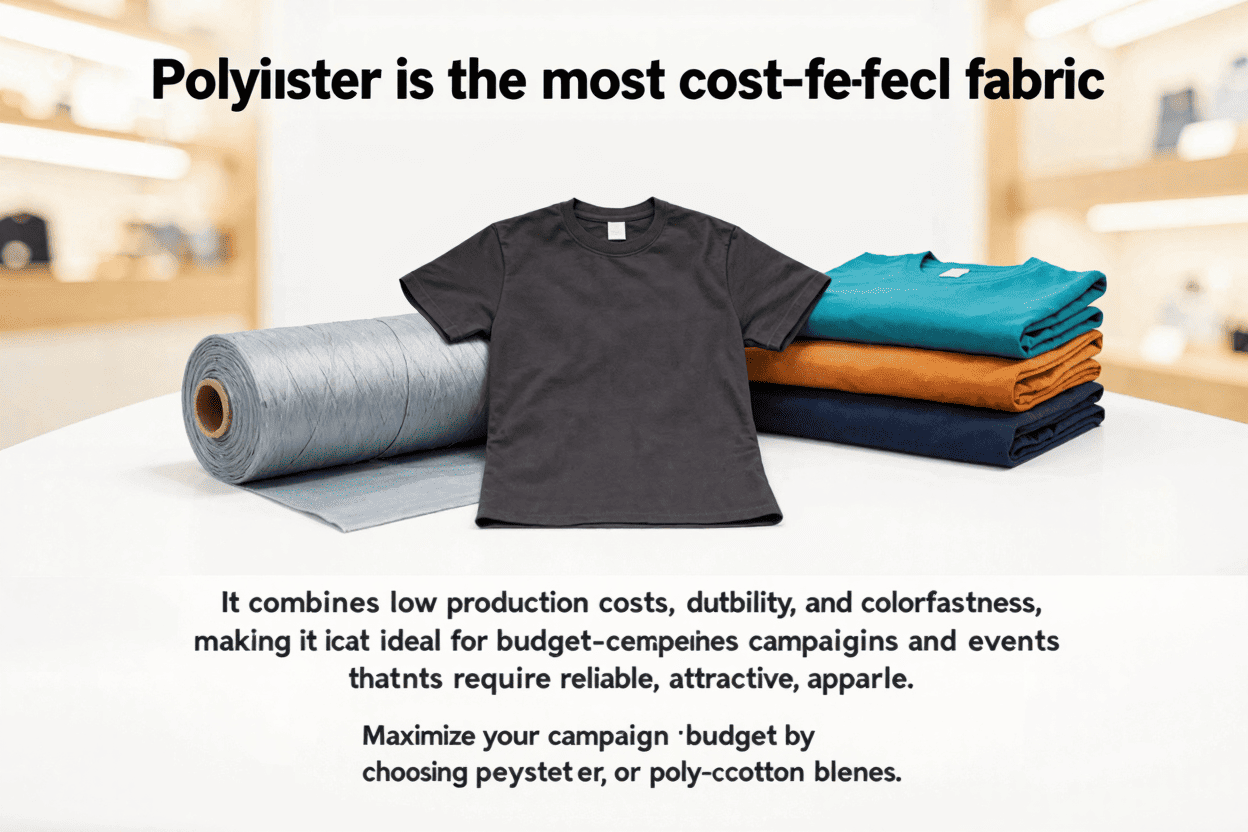
Understanding Fabric Choice: Why Polyester and Poly-Cotton Blends Win
When I help clients select fabrics for their campaign or promotional T-shirts, I always ask about their goals and audience. Polyester stands out for many reasons. First, the production cost for polyester is significantly lower than most natural fibers. This means your per-shirt price drops as your order volume goes up. Second, polyester’s durability is unmatched. Shirts made from this fabric can be washed and worn many times without losing shape or color. That’s critical for events or campaigns where volunteers, staff, or supporters will be wearing these T-shirts for days or even weeks.
Polyester is also easy to print on. Screen printing and heat transfer work well, keeping your logo or message bright and crisp. Unlike cotton, polyester doesn’t wrinkle easily, which means less time ironing and less risk of people looking unprofessional. If comfort is a big concern, poly-cotton blends are an excellent compromise. They feel soft and breathable but keep the price and maintenance advantages of polyester.
Here’s a quick comparison table:
| Feature | Polyester | Cotton | Poly-Cotton Blend |
|---|---|---|---|
| Cost | Low | Medium/High | Low/Medium |
| Durability | Very High | Medium | High |
| Color Retention | Excellent | Good | Good |
| Comfort | Good | Excellent | Very Good |
| Care & Maintenance | Easy | Needs More Care | Easy |
| Ideal For | Campaigns, Events | Premium Promotions | Events, Everyday Use |
No matter your budget or project scale, choosing polyester or a poly-cotton blend helps you control costs, deliver a strong visual impact, and reduce waste.
Simple Strategies for Cost Control in Campaign Apparel
Many campaign and promotional buyers focus only on the unit price of a T-shirt. Over the years, I have seen that the real savings come from smart planning and design choices. Here’s how I guide my clients:
- Bulk Purchasing: Ordering large quantities in one go reduces the cost per shirt. I help clients forecast their needs based on event size and audience, so they don’t over- or under-order.
- Single Color Printing: A bold logo in a single color pops on a well-chosen shirt and avoids the extra costs of multi-color screen setups.
- Simple Designs: Complex graphics or embroidery drive up costs and may not stand out in a crowd. I recommend bold, clear messages.
- Standard Sizes and Styles: Choosing popular sizes and classic styles means fewer leftovers and easier distribution.
- Reliable Suppliers: Working with suppliers like us who handle everything from design to delivery saves time and avoids errors from too many middlemen.
- Advance Planning: Rush orders almost always cost more. Early planning allows for better prices and more shipping options, which is especially important for overseas deliveries.
Here’s a table to illustrate how making different choices affects your cost:
| Decision Point | Cost Impact | Example Savings |
|---|---|---|
| Bulk orders | Lowers unit price | Save $0.10–$0.50/shirt |
| Single-color print | Cuts print costs | Save $0.20/shirt |
| Simple design | No extra fee | Save setup costs |
| Standard sizes/styles | Reduces waste | Save on unused stock |
| End-to-end supplier | Avoids hidden fees | Save on logistics |
| Early order | No rush fees | Save $0.30–$1.00/shirt |
By following these steps, I’ve helped campaign managers, event planners, and brand buyers stretch their budgets while still providing high-quality, eye-catching shirts.
Poly-Cotton Blends: The Sweet Spot for Comfort and Value
Sometimes, clients want the comfort of cotton but need to keep costs low. That’s where poly-cotton blends come in. These blends usually have around 65% polyester and 35% cotton. They feel softer than pure polyester but last longer and need less care than pure cotton. I often recommend blends when the shirts will be worn for longer periods or for events held in warm climates, where comfort can be as important as price.
Blends also look good after multiple washes. The polyester helps the shirts keep their shape, and the cotton adds breathability. From a printing standpoint, the colors stay bright, and logos don’t fade easily. The cost is slightly higher than pure polyester, but far less than 100% cotton.
Here’s a quick breakdown:
| Attribute | Pure Cotton | Poly-Cotton Blend | Pure Polyester |
|---|---|---|---|
| Touch & Feel | Very soft | Soft, smooth | Smooth, less soft |
| Durability | Good | Very Good | Excellent |
| Price | High | Medium | Low |
| Print Quality | Good | Very Good | Excellent |
| Maintenance | Needs ironing | Easy | Very easy |
In short, poly-cotton blends offer a balance for buyers who don’t want to compromise on comfort or price. I find that when clients try these shirts for their first event, they rarely switch back to other fabrics.
Conclusion
Polyester and poly-cotton blends are the smartest choices for campaign T-shirts, balancing cost, durability, and appearance to maximize value for every marketing dollar.