
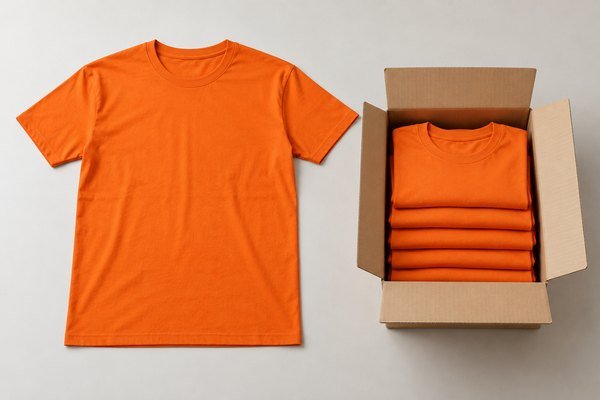
For warehouse and logistics teams.
The shirts arrive, but the warehouse spends two days opening cartons to find the correct sizes. Nothing is wrong with the print; the packing brief simply did not match the distribution process. Campaign T-shirt carton packing should be designed around receiving and handout tasks as well as transport. For wholesalers and event teams, that can determine how quickly usable stock reaches the right people.
Specify garment folding, individual or bundle packing, carton composition, markings and the packing list before bulk packing starts. Review a packed sample and make receiving staff part of the decision. Confirm carton weight and dimensions with the logistics provider.
Check one: choose the handling unit
Decide whether staff will handle individual shirts, size bundles or complete event kits. Individual bags can support identification and protection, while bundles can simplify large handouts. The right arrangement depends on the workflow; additional packaging is not automatically more useful.
Write the exact quantity per bundle and any required band, bag or sticker. Confirm how staff recognize size and design without unfolding the product. Where several shirt versions look similar, use distinct references that remain visible after normal handling.
Check two: define carton composition
A single-size carton is simple to count and replenish. A mixed-size carton can work when it matches a repeated distribution kit. Choose deliberately, then record the contents in a packing matrix. “Assorted sizes” does not tell a receiver how many of each size should be present.
For multiple destinations, connect every carton group to the correct regional allocation. Agree how partial cartons are identified. Keep the remainder visible in the packing list so receiving staff do not mistake a smaller final carton for a shortage.
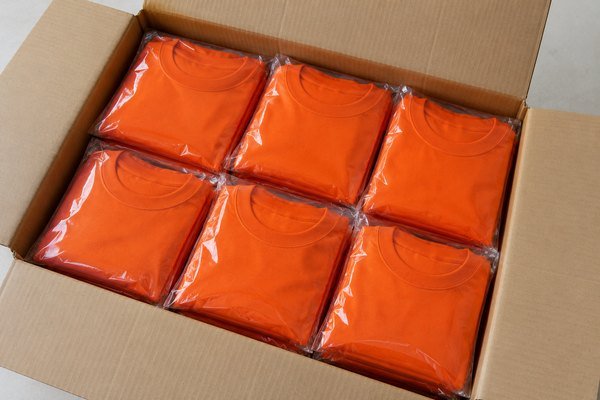
Check three: make markings operational
State the information your warehouse needs: order reference, garment version, size composition, quantity, destination and carton sequence. Align external marks with the packing list. Ask the receiving team about label location and readability before approving the artwork for carton labels.
If scanning is required, discuss identifiers through GS1 barcode guidance. Test the actual label with the intended system. A clearly printed code is not enough when it points to the wrong item or carton record.
Check four: review weight and protection
Ask for the proposed carton dimensions, gross weight and packing materials. Consider lifting practices, storage space and the planned freight service. Dense apparel packing can be efficient, but excessively heavy cartons may be awkward for a distribution team working without warehouse equipment.
Discuss protection against the expected handling and storage conditions. Ensure garments and packing materials are suitable for sealing. For sea shipments, review loading and moisture concerns with the forwarder using the IMO/ILO/UNECE CTU Code as a planning reference, not a guarantee that cartons cannot be damaged.
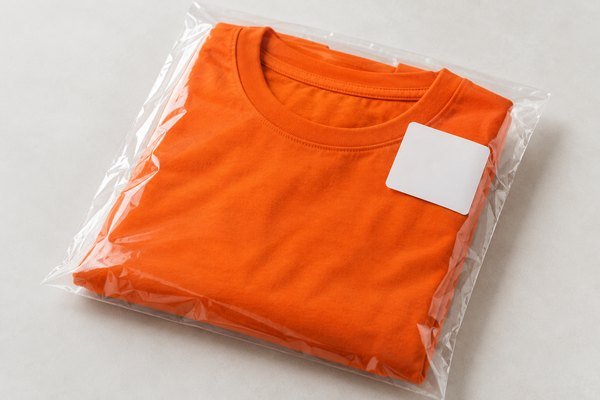
Check five: approve the packed configuration
Request a packing sample or a documented trial showing folding, bundle count and carton fill. Check that the bag protects the finished print and that labels remain visible. Any required retail presentation should be reviewed alongside the transport arrangement.
Connect packing approval to your garment and private label specification. If a later artwork or label change affects folding or identification, reopen the relevant packing decision. Treat the approved packing arrangement as a versioned instruction.
Check six: prepare receiving before dispatch
Give the receiver the final packing list and a clear discrepancy procedure. Specify which counts are checked, what photographs are retained and whom staff should contact when a carton is wet, damaged or incorrectly marked. Preserve lot and shipment references during investigation.
My warehouse view is that packing should save work at the destination. Ask someone who will actually open and distribute the cartons to review the trial. Their practical comments can reveal a problem that a purchasing spreadsheet misses completely.
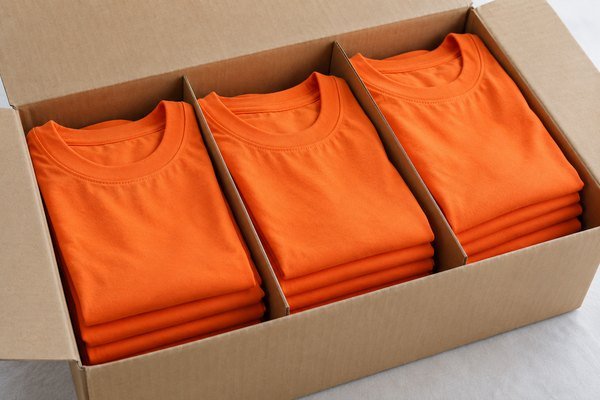
The carton trial question
Ask a warehouse colleague to identify the shirt version and size allocation from a closed sample carton, then open it and confirm the contents. Time is less important than clarity: can the person find the needed information using normal receiving documents? Revise confusing marks or packing instructions before full packing, when corrections require a document change rather than reopening hundreds of cartons.
Frequently Asked Questions
Are single-size cartons always better?
No. They suit some replenishment workflows, while controlled mixed assortments can suit kits. Choose around the receiving task.
Can packing be decided after production?
It can be finalized later only if materials and time remain available. Agree important requirements before quoting and sample approval.
Related purchasing guides
Campaign T-Shirt Size Breakdown: Plan Quantities Before Production · Campaign T-Shirt Quality Inspection: A Buyer’s Pre-Shipment Guide
Prepare your B2B order brief
Send your receiving workflow, bundle quantities, destination matrix and carton mark requirements. Ask Polltee to review the packing plan alongside the garment order.