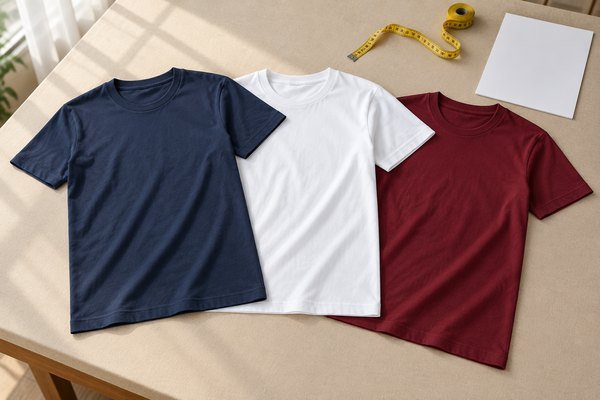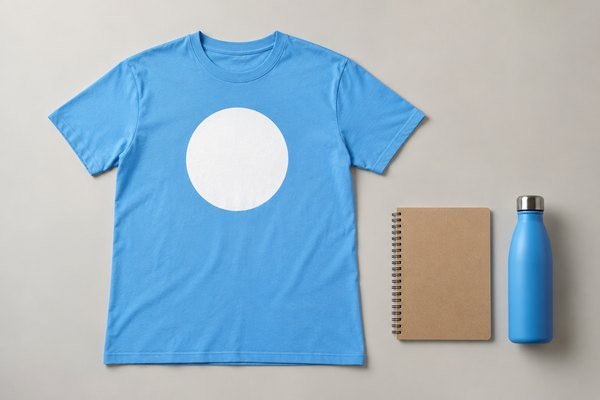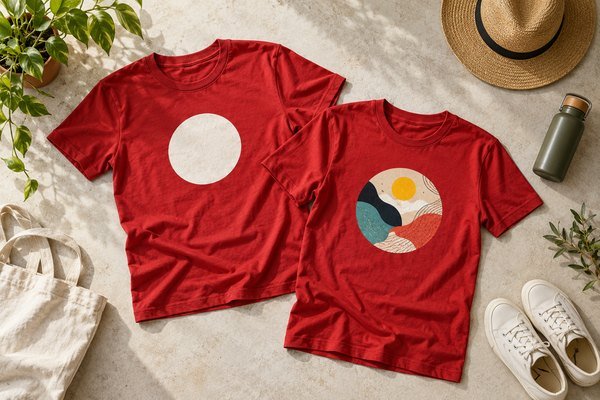
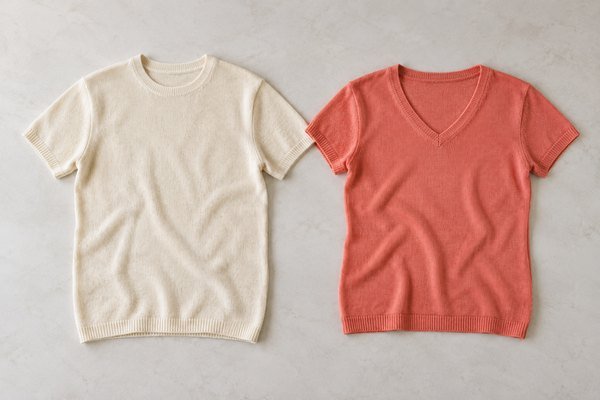
Crew neck or V-neck campaign T-shirts should be chosen through the audience and use brief. A neckline can change the garment’s appearance, the available decoration space and how comfortable recipients feel wearing it. The buyer also needs to consider whether offering two styles creates a useful choice or unnecessary order complexity. A familiar silhouette is not automatically the right one for every program.
Compare actual garments using defined measurements, wearer feedback and the planned artwork. Offer separate styles only when they serve a clear audience need, and control each pattern, size chart and quantity as its own approved specification.
Compare the intended appearance
Ask the campaign team whether the shirt is meant to look like a standard event giveaway, a staff uniform or a garment recipients may wear repeatedly. Review how each neckline supports that intention. A crew neck and V-neck can produce different visual relationships with the same logo.
Keep the discussion concrete by placing both options beside the actual artwork. Avoid deciding from unrelated catalog photos with different styling. The buyer should assess a comparable color, material and size range so the neckline is the meaningful variable.
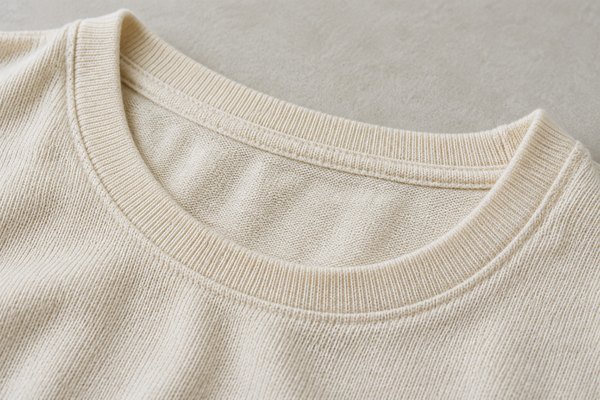
Compare the opening dimensions
Request neck width and depth with defined measurement points. A style name does not establish how open or close-fitting the garment will be. Two V-neck patterns can differ significantly, and two crew necks can also feel different.
Review samples with representative wearers who choose to participate. Ask about comfort during normal movement and whether the opening suits their preference. Do not assume all members of a group want the same neckline. A clear optional choice may be more useful than an imposed category.
Compare the print area
The neckline affects how much space is available for a chest graphic and how close that graphic appears to the opening. Define the intended position using garment reference points. Do not transfer placement measurements from one pattern to another without review.
If both styles use a common logo, ask whether the same print dimensions and position will work. Where an adjustment is needed, document it as a separate layout. A shared artwork file can still require different measurable placement instructions.
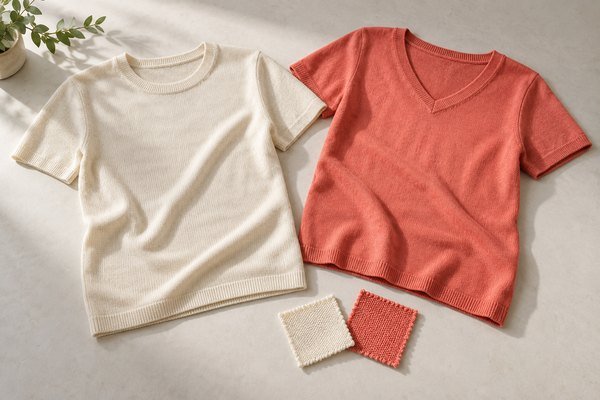
Compare fit as a complete pattern
Review shoulders, body width, length and sleeves alongside the neck. A buyer comparing only the neckline may unintentionally choose between two very different fits. Request the measurement chart for each option and compare the actual garments.
Keep size labels separate from measurement equivalence. A medium in one pattern need not fit like a medium in another. Give users usable information before collecting selections, and keep their chosen style and size together in the order data.
Compare the effect on order planning
Two silhouettes create additional quantity splits. Ask how those splits affect fabric purchasing, cutting, sampling and minimum quantities. A small group requiring a second style may create costs or lead-time implications that should be understood early.
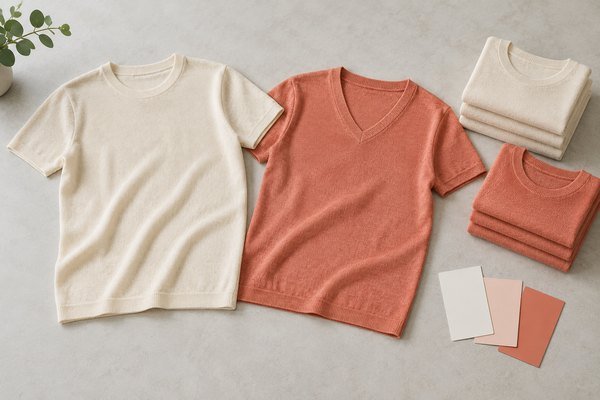
Use a simple selection matrix showing style, color, size and quantity. Check that the totals match the purchase order. Do not merge requirements merely because both products are described as campaign T-shirts. The factory needs an unambiguous allocation.
Compare after-care appearance
Include neckline shape and seam condition in the sample care review where repeat use matters. Record the agreed washing and drying procedure. Assess the finished garment rather than assuming the same body fabric guarantees the same result across patterns.
If the supplier changes rib, binding or construction, review the relevant sample again. A neckline modification can affect appearance and comfort without changing the overall material description. Keep the approved physical reference linked to the final specification.
Decide whether choice is worth the complexity
The audience recommendation is to offer meaningful options while keeping the production system manageable. If one style meets the program’s needs, a common garment can simplify ordering and issue. If wearer preference justifies alternatives, collect selections early and control the variants clearly.
Use the decision record to explain why the chosen arrangement serves the event. This helps later teams understand whether a proposed substitute remains appropriate. It also prevents a second style from being added informally after production planning is already complete.
Frequently asked questions
Is V-neck automatically a women’s style?
No. Define the actual pattern and intended audience, and avoid assuming preference from a style label.
Can both styles share the same size chart?
Only if the measurements actually match and are approved. Keep separate charts where patterns differ.
Does one neckline cost less?
Ask for the actual specification and quantities. Construction, material and order splits affect the quotation.
Review neckline options with Polltee
Send your audience profile, artwork and proposed quantity split. Ask Polltee for comparable complete samples and clearly identified measurement charts before choosing the final program.
Related buying resources
Review customization options · Read the related purchasing guide · Discuss your B2B project with Polltee