
Campaign T-shirt event kits can make issue easier when recipients need several coordinated items, but bundling creates another production and distribution task. A shirt, cap and bag may arrive from different processes with different quantity constraints. The buyer needs to define the finished kit, not merely list the components. Otherwise, the supplier and local team can each assume the other will sort and assemble the final combination.
Specify every component, the quantity relationship, assembly responsibility and receiving format. Review a complete kit sample, keep garment sizes identifiable and check the packed configuration. Shared branding does not make the parts automatically compatible or equally available.
Design the kit around a useful purpose
Identify what the recipient needs to do. A field volunteer kit may have a different purpose from a participant gift or an agency’s promotional bundle. Select components that support that use rather than adding items only to make the package look larger.
Ask whether recipients actually need every component. An unnecessary item adds sourcing, packing and handling work. The commercial value of a kit comes from a useful combination and a clear issue process, not just a higher component count.

Build a component list
Record shirt specification, cap style, bag dimensions and any other agreed item. Include materials, colors, artwork and relevant measurements. Identify which elements are common across the program and which vary.
Do not describe a cap only as matching the shirt. Different materials can produce different color appearances and decoration results. Approve the intended relationship physically. Each component should have its own reference even when the kit shares one campaign identity.
Confirm quantities at each level
State how many units of each item belong in one kit. Then calculate the required component totals from the kit quantity. Keep garment size splits visible. A total number of kits does not tell the factory how many shirts of each size are needed.
Discuss any spare allocation and what happens if one component is short. Do not allow an unapproved substitution simply to complete the bundle count. The buyer should decide which alternatives remain useful and how they will be identified.
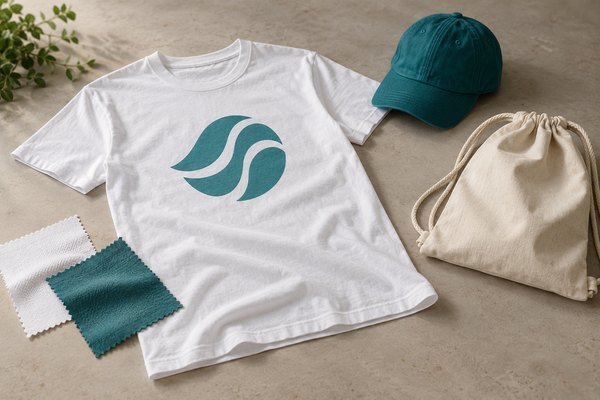
Review a complete physical kit
Inspect the proposed combination together. Check that the bag holds the items comfortably and that folding or presentation does not damage decoration. Confirm how the garment size can be identified without dismantling the whole kit.
A complete sample can reveal issues that separate component approvals miss. Ask whether assembly, labeling or instructions need adjustment. Keep the approved kit and its component references linked so a later change to one part receives an appropriate compatibility review.
Decide where assembly takes place
Agree whether the supplier assembles kits or ships components separately for local preparation. Compare the handling requirements and the buyer’s receiving capacity. Neither arrangement is automatically better for every route or program.
If the factory assembles, specify the sequence, identification and packing checks. If the local team assembles, provide clear component cartons and an assembly guide. Avoid a shipment that is technically complete but requires unplanned sorting before the event.

Separate kit identity from garment identity
A kit code can describe the whole combination, while the shirt still needs a style and size reference. Keep both levels in the packing data. Where kits vary by role or destination, define those versions separately.
Use labels that the receiving team can understand. An attractive outer bag may hide the size information or similar components. Test whether staff can identify the correct kit under normal issue conditions without opening every package.
Review shipment data for the assembled format
Obtain packed dimensions, weights and carton quantities for the actual configuration. Compare these with separate-component shipping if that option is being considered. Assembly can change volume and handling in ways that should be measured.
Confirm which packaging costs are included and whether special inserts or labels require separate development. Keep the transport budget tied to the final kit sample rather than an early estimate based on the shirt alone.
Plan replacement and leftovers
Decide whether spare shirts, caps or bags will be supplied separately and how unused components will be stored. A replacement shirt should remain identifiable by specification and size. Do not force the issue team to open several complete kits to solve one missing component.
The event-agency recommendation is to approve the combination as a product and an operation. A controlled kit can simplify distribution; an undefined bundle can transfer work to the busiest point of the program.
Frequently asked questions
Must every component come from the same production process?
No. The important issues are specification control, responsibility and coordinated readiness.
Can all kits use one carton label?
Only if the label clearly identifies the actual configuration and size allocation. Distinct variants need usable identification.
Is factory assembly always cheaper?
Compare actual assembly, packing, shipment and local-handling costs.
Prepare a kit specification
Send Polltee your intended use, component list, kit quantities and issue plan. Ask for a complete sample and a clearly defined assembly and packing proposal.
Related buying resources
Review customization options · Read the related purchasing guide · Discuss your B2B project with Polltee