Many campaign organizers struggle with the choice of T-shirt material. They want visibility and comfort but worry about cost. This decision can shape the whole campaign experience.
Cotton T-shirts are an excellent option for campaign events where long-lasting comfort, skin-friendliness, and premium brand image are priorities, but their higher costs can be a limiting factor for large-scale distribution.
Choosing the right T-shirt for a campaign is not just about the look. Comfort, cost, and brand image all play a big part. Understanding where to use cotton can help you make smart decisions that match your budget and goals.
Is comfort worth the cost?
Everyone wants their volunteers and supporters to feel good during the campaign, but budget limits are real. Is it worth spending more for comfort, or should you save costs?
Cotton T-shirts are worth the cost for events that require long wear, when brand image matters, or when you want people to keep wearing your shirt. For short-term, mass giveaways, consider alternatives.
Cotton T-shirts are comfortable because they are soft and breathable. I have seen that when a campaign lasts all day, people prefer to wear cotton. If the shirts are uncomfortable, volunteers complain, and some may even change out of them. This hurts team spirit and lowers brand visibility.
Cotton is gentle on the skin. For people who need to stand, walk, or cheer under the sun, this matters. Polyester and other synthetic fabrics can feel sticky and hot. When volunteers wear cotton, they are more likely to keep the shirt on, which means your campaign message gets seen more.
Cotton shirts also look better. The texture and quality give a more premium feel. For campaigns that care about image—like high-profile candidates or brands—cotton helps send the right message. When the goal is to create something people will wear again, comfort and quality are a good investment.
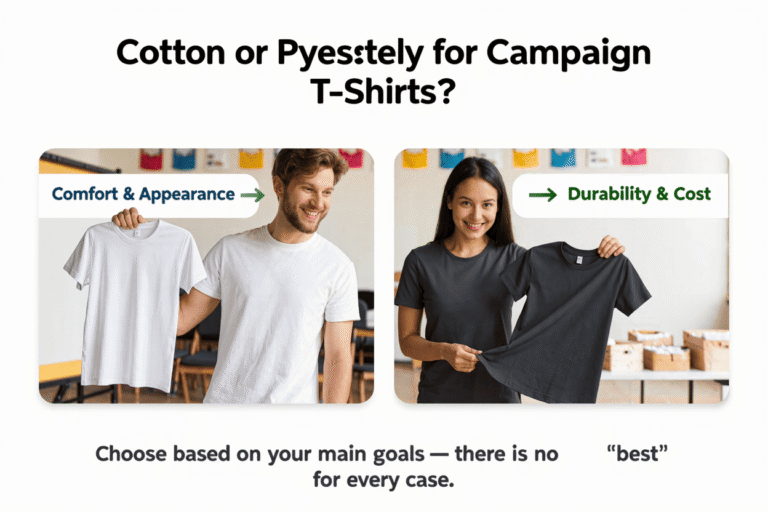
But cotton costs more. For big campaigns with thousands of shirts, the price adds up fast. At my company, I tell clients to think about their main goal. If comfort and image matter most, cotton is worth it. If the shirts are only for a short event or a one-time giveaway, it may not make sense to spend extra on cotton.
Here is a simple table to help weigh comfort and cost:
| Scenario | Cotton T-shirt | Synthetic T-shirt |
|---|---|---|
| All-day campaign events | Best choice | Less comfortable |
| Short-term giveaways | Costly | More affordable |
| High-profile appearances | Looks premium | Basic look |
| Mass distribution | Budget issue | Low cost |
How does cotton impact campaign brand image?
Campaigns want their T-shirts to make an impression. How does the material choice affect the way people see the campaign?
Cotton T-shirts give your campaign a premium, trustworthy look. They show that you care about quality and your supporters, which can improve how people remember your message.
I have noticed that when campaigns use cotton shirts, they are more likely to see people wearing them again after the event. This extends your brand message beyond one day. Supporters often reuse comfortable, good-looking shirts. This means your logo and slogan stay visible in daily life.
Cotton also makes the print look sharper and last longer if cared for properly. The texture supports better screen printing, so your campaign colors pop. High-quality images on a good shirt can make a big difference in photos, social media shares, and media coverage.
In branding, small details matter. Choosing cotton tells people you pay attention to quality. It can set you apart from other campaigns using basic, uncomfortable T-shirts. The value is not just in that one event, but in every future time someone wears your shirt. This repeated exposure can help build trust and recognition.
Here is a simple table comparing brand image effects:
| Factor | Cotton T-shirt | Synthetic T-shirt |
|---|---|---|
| Perceived quality | High | Medium-low |
| Print appearance | Crisp, sharp | Less defined |
| Repeat wear probability | High | Low |
| Social media appeal | Strong | Weaker |
How can you balance cost and experience for large campaigns?
Big campaigns need thousands of shirts. Costs rise quickly. How can you give the best experience without going over budget?
Divide your budget by audience. Use cotton T-shirts for key supporters and leaders. For mass handouts, choose more affordable options. This way, you get the most value for your money.
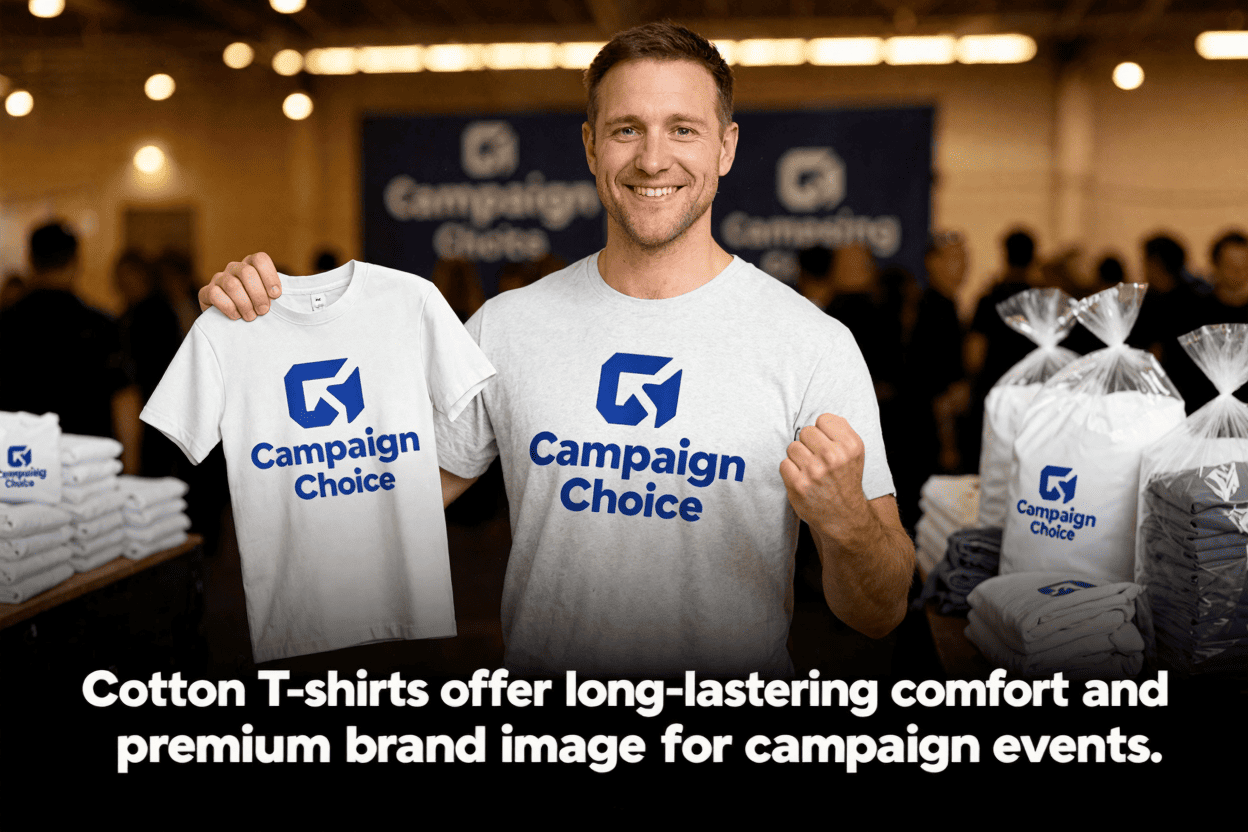
When clients come to me with limited budgets, I suggest segmenting their order. Not every T-shirt needs to be premium cotton. For VIPs, speakers, team leaders, or media-facing groups, use high-quality cotton. This ensures your most visible supporters look their best and feel comfortable.
For the general crowd, staff, or for short-term giveaways, polyester or blended fabrics can keep costs low. These shirts are cheaper and still look good for a short period. Most attendees do not expect a luxury item for free.
This approach stretches your budget. Key people get the comfort and image benefits of cotton. The rest of your shirts stay affordable. It also avoids waste—people only keep and wear shirts they find comfortable or meaningful.
I have seen campaigns that used all cotton, then regretted the cost. Others used only cheap shirts, and no one wore them after the event. Mixing materials helps you avoid both problems. Make a list of who gets which shirt before ordering.
Here is a table to help plan your order:
| Group | Recommended Material | Reason |
|---|---|---|
| VIPs/Leaders | 100% Cotton | Comfort, image, long-term use |
| General volunteers | Cotton blend | Balance, moderate cost |
| Mass handout | Polyester | Low cost, short-term use |
What are the best practices for ordering cotton T-shirts for campaigns?
Ordering cotton T-shirts for campaigns takes planning. How can you avoid mistakes and make the most of your investment?
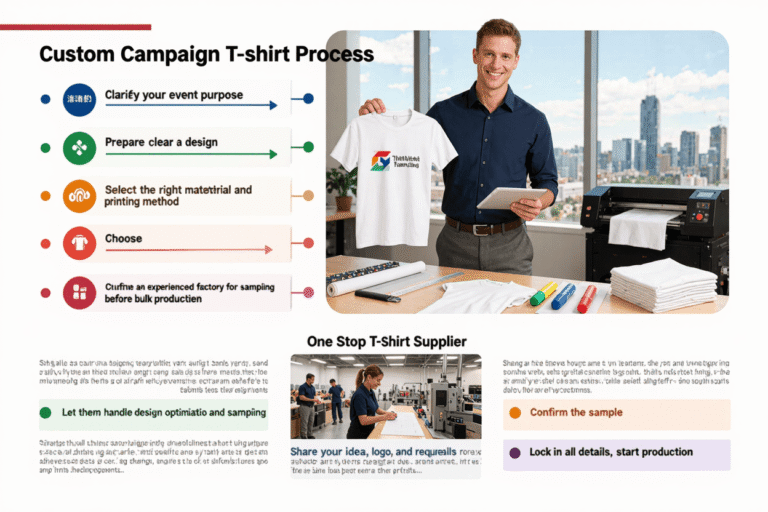
Start by defining your campaign goals and user groups. Order samples to check quality. Work with suppliers who can customize and offer phased delivery to fit your timeline and budget.
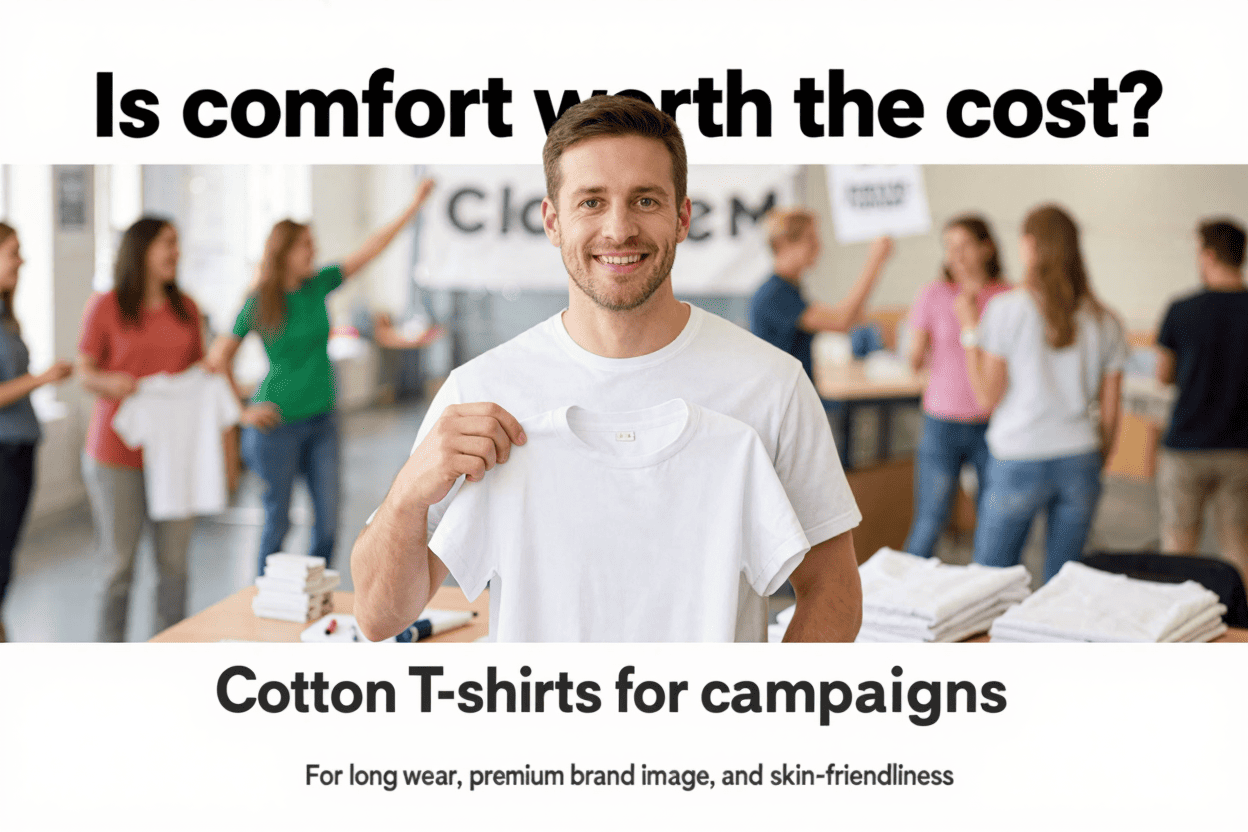
When I help clients with T-shirt orders, we start by listing every group who will get shirts. This includes core team, volunteers, VIPs, and mass giveaway participants. Knowing your audience helps decide how many cotton shirts you really need.
Get samples from your supplier before placing a large order. This lets you feel the fabric, check print quality, and see the fit. If possible, test for shrinkage and how the shirt feels after washing. Good suppliers can provide samples quickly.
Phased delivery is useful for bigger campaigns. You do not have to store thousands of shirts at once. Some suppliers, like us, can deliver key batches first, then send the rest as needed. This saves storage space and cash flow.
Make sure your supplier can handle custom tags, packaging, and labeling if you need them. For some events, even the inside label matters for your brand. Communicate your timeline and ask about rush options if needed for last-minute needs.
Table for planning your cotton T-shirt order:
| Step | Action |
|---|---|
| Define user groups | List everyone who will get a shirt |
| Order samples | Check comfort, look, and durability |
| Request phased delivery | Reduce storage, manage cash flow |
| Confirm customization | Tags, labels, packaging options |
| Communicate timeline | Leave time for production and delivery |
Conclusion
Cotton T-shirts are a smart investment for campaign comfort and brand image, but only if you match them to your goals, budget, and target groups.